


Three American Honda dealerships in Texas, Missouri, and Tennessee are now authorized to sell genuine Honda Racing Corporation components directly to road racing customers. It’s a small pilot program with enormous implications for privateer teams who have spent years scrounging for factory-level parts through back channels and gray-market connections.
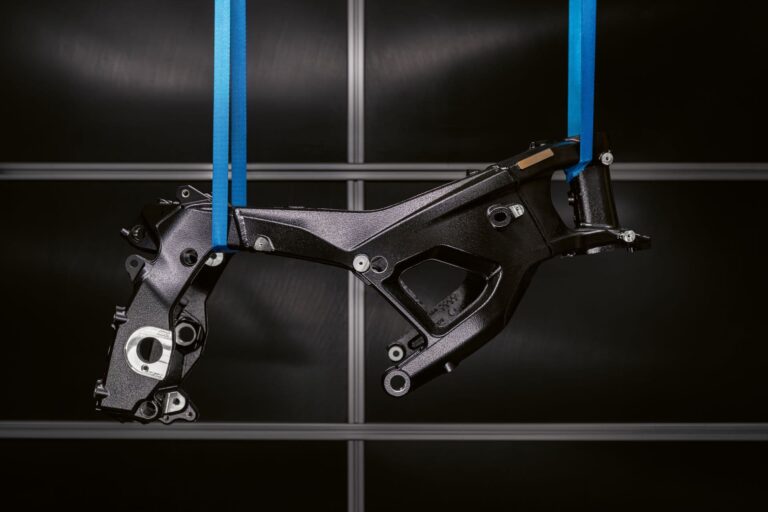
The HRC Performance Shop program, announced April 16 from American Honda’s Alpharetta headquarters, funnels engine internals, electrical components, chassis parts, and setup tools developed by HRC in Japan to U.S. customers campaigning 2025-and-newer CBR1000RR-R Fireblade machines. The initial scope is deliberately narrow. But American Honda is already telegraphing where this heads: model-specific race kits and, eventually, complete race-ready competition units.
That last part deserves a second read. Complete, fully built competition units sold through a dealer network would represent a fundamental shift in how Honda supports domestic road racing. For years, the Japanese manufacturers have watched European rivals like Ducati build entire business models around selling race-prepped machines to wealthy privateer teams. Honda, the company with more grand prix victories than anyone, has been curiously absent from that game in the U.S.
The three pilot dealers — Al Lamb’s Dallas Honda, Jones Honda in Columbia, and Southern Honda Powersports in Chattanooga — were chosen for existing racing credibility. Jones Honda already backs a MotoAmerica team. These aren’t volume showrooms pushing crossovers on weekends. They’re shops where mechanics speak in spring rates and ignition maps.
Brandon Wilson, Honda’s racing and advertising manager, framed the program as a natural escalation. American Honda expanded its Red Rider Rewards contingency program, increased factory support for MotoAmerica privateer squads like Real Steel and Jones Honda, and watched the CBR1000RR-R capture the Stock 1000 championship in 2024. The HRC Performance Shop is the infrastructure play that follows the podium results.
The timing matters. MotoAmerica’s 2026 season is already underway, and Honda’s superbike-class presence remains thin compared to Yamaha and Ducati. Privateers win championships, but only when they can get parts. A factory-backed supply chain eliminates the guesswork, the wait times, and the authenticity questions that plague aftermarket sourcing.
Still, three dealers across a country this size is a toe in the water. A Texas shop can’t efficiently serve a team in New England. American Honda says it will evaluate expansion to additional qualified dealers based on pilot results, which is corporate language for “we’ll see how the margins look.” The careful, footnoted distinction between HRC’s Japan-based motorcycle racing operation and HRC U.S., which handles automobile programs, suggests internal politics are being navigated as much as logistics.
The deeper story is Honda acknowledging something it resisted for decades: production-based road racing is a customer service business, not just a branding exercise. Ducati understood this when it built the Panigale V4 R around homologation requirements and sold crate engines to anyone with a checkbook. Kawasaki learned it supporting ZX-10R teams in every club racing paddock in America.
Honda is late. But Honda also won its first Isle of Man TT just two years after entering, so discounting the company’s ability to close gaps quickly would be unwise.
The CBR1000RR-R is a genuinely fast motorcycle that has underperformed its potential in American racing partly because support infrastructure lagged behind the hardware. If the HRC Performance Shop scales beyond three dealers and delivers on the promise of complete competition machines, the paddock math changes significantly.
For now, it’s a pilot. Three shops, one model, select parts. But the intent is unmistakable. Honda wants its superbike back in the fight, and it’s finally willing to build the supply chain to make it happen.
Share this Story