
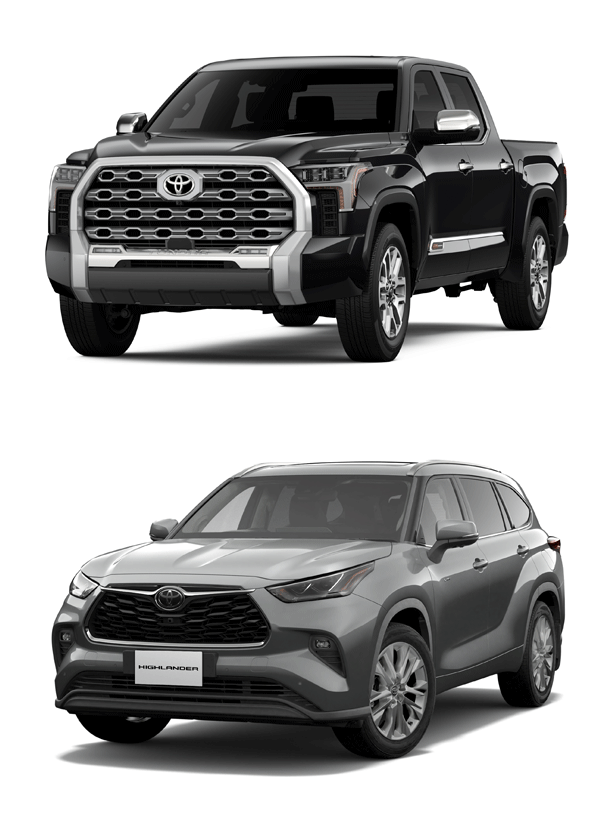


Toyota is about to do something it almost never does: ship full-size American trucks across the Pacific to sell in Japan.
The company announced it will begin selling U.S.-built Tundra pickups and Highlander SUVs through Japanese dealerships, a move that flips the usual script of Japanese automakers exporting vehicles to America. The Tundras will come from Toyota’s San Antonio, Texas plant, and the Highlanders from its Princeton, Indiana facility.
The timing is impossible to separate from the current trade war. With tariffs on Japanese-made vehicles entering the United States running at punishing levels, Toyota has been under enormous pressure to prove it is not just a Japanese exporter but a deeply embedded American manufacturer. Selling American-built Toyotas in Japan is the kind of gesture that plays well in Washington and in Nagoya at the same time.
Toyota has manufactured vehicles in the United States since 1986. It currently operates 10 plants across the country employing tens of thousands of workers. But the flow of product has always been one-directional for models like the Tundra — built in America, sold in America. Sending them to Japan is new territory.
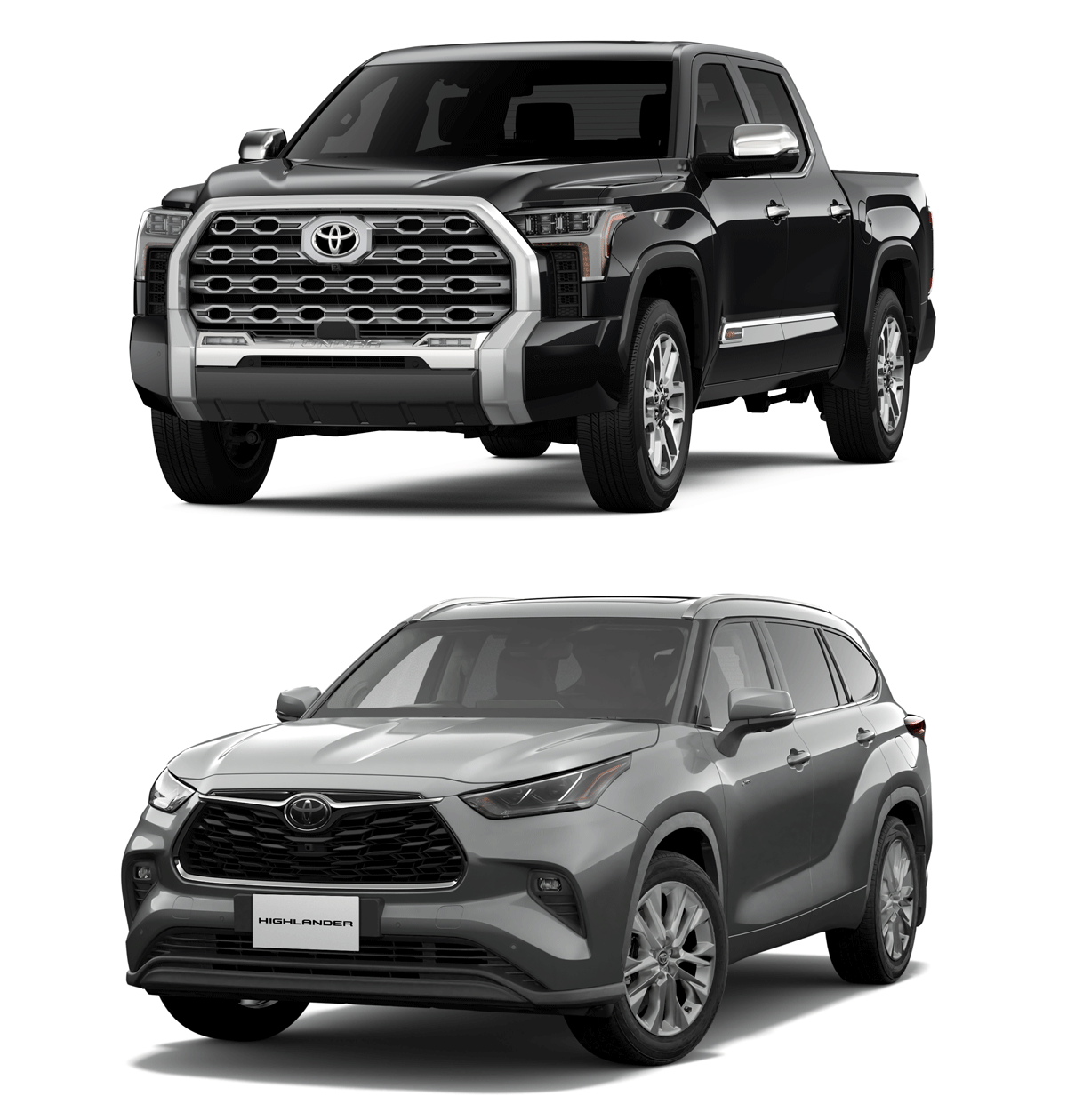
The Tundra is a particularly interesting choice. It was designed from the ground up for American tastes — big, body-on-frame, V6 twin-turbo or i-Force Max hybrid, built to compete with the F-150 and Silverado. Japan’s narrow streets and tiny parking spaces are not exactly Tundra country. The truck is a rolling billboard for American manufacturing more than it is a serious volume play in the Japanese domestic market.
The Highlander makes slightly more sense for Japanese consumers. Three-row SUVs have been gaining traction across Asia, and Toyota already sells the Kluger (the Highlander’s name in some markets) in select regions. But Japan’s best-selling vehicles remain kei cars and compact models. A mid-size American SUV is still a niche proposition there.
Which tells you this decision was not made by product planners studying Japanese consumer demand. It was made in boardrooms where trade politics and corporate strategy collide. Toyota is building a case — with real metal and real logistics — that it contributes to the American economy in ways that go beyond assembling cars for local consumption.
If American-made Toyotas are being exported, the argument that Toyota is an American job creator gets considerably harder to dismiss.
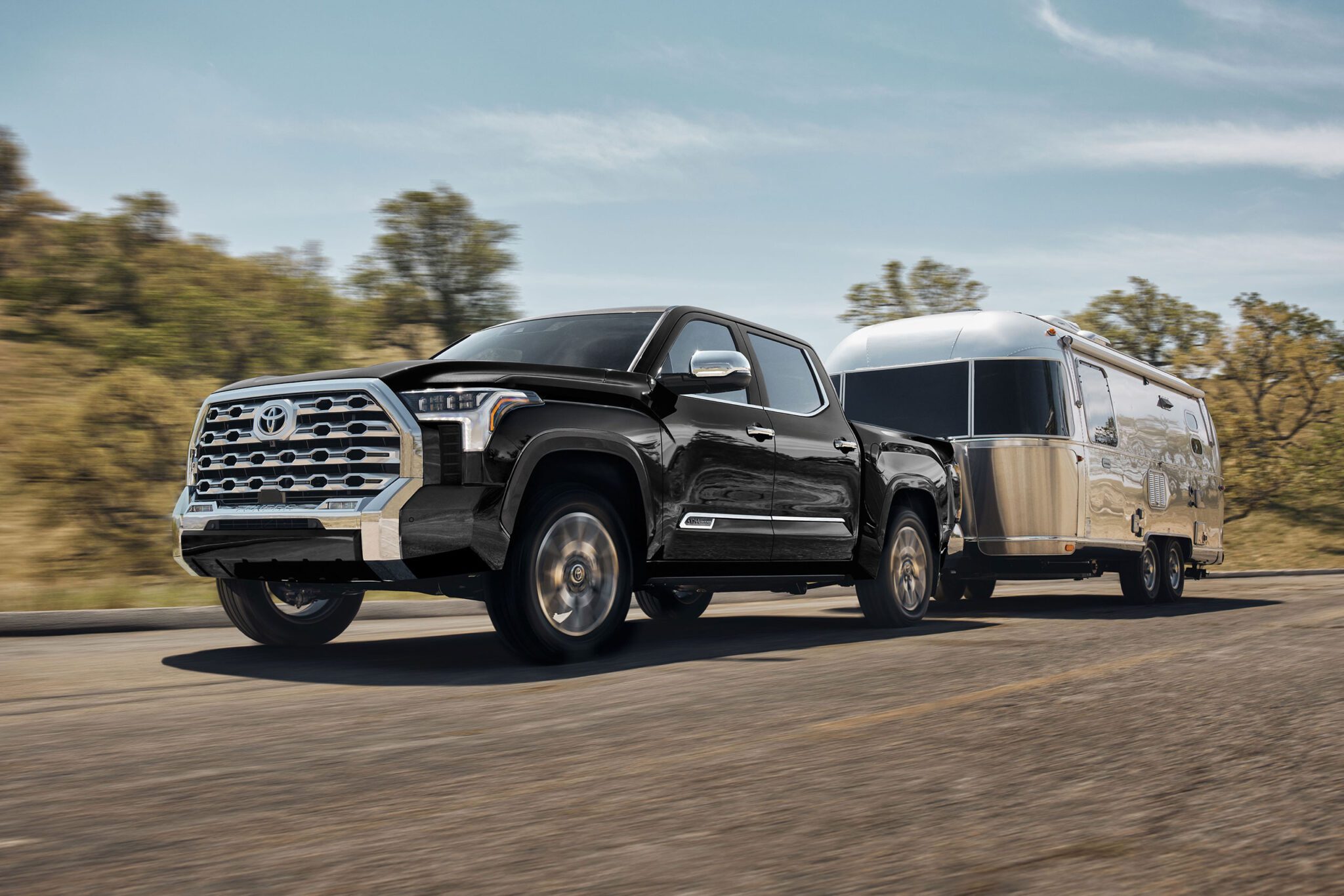
Toyota has not disclosed expected sales volumes for either model in Japan, which says plenty on its own. Nor has it announced pricing, which for a full-size truck shipped 5,500 miles across the ocean will be eye-watering by Japanese standards. Fuel costs alone would make a Tundra an eccentric daily driver in a country where regular gasoline runs north of $5 a gallon.
The company has been more aggressive than any other Japanese automaker in hedging against trade friction. It recently announced accelerated U.S. investment plans and has publicly emphasized its American manufacturing footprint at every opportunity. Chairman Akio Toyoda has personally cultivated relationships with American political figures, and the company’s lobbying operation in Washington is among the most sophisticated in the industry.
Selling American-made trucks in Tokyo is not going to move the needle on Toyota’s $300 billion global revenue. But it reshapes the narrative. Every Tundra that rolls off a carrier in Yokohama is a tangible rebuttal to anyone who frames Toyota as a foreign company taking American market share. The trucks themselves are almost beside the point. The trade politics are the product.
Share this Story