
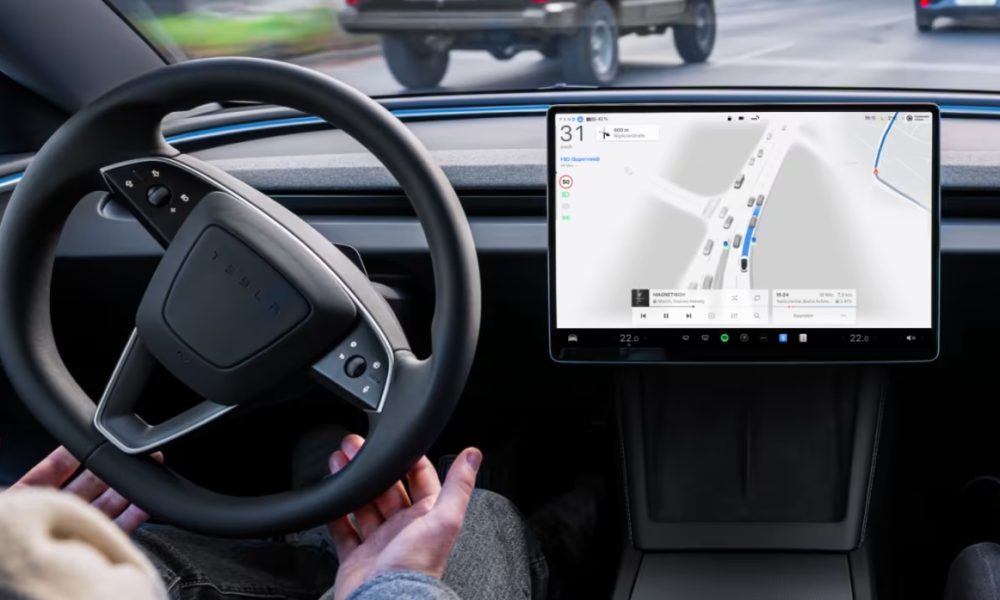


Lithuania became the second European Union country to receive Tesla’s Full Self-Driving suite on May 20, marking the moment a tightly controlled regulatory rollout starts looking like actual momentum.
Tesla confirmed the expansion with video clips of FSD navigating Lithuanian roads. Transport Minister Juras Taminskas offered cautious praise, noting the system’s potential for lane-keeping and speed adjustment on long drives while stressing that drivers must remain alert and ready to intervene. The diplomatic language tells you everything about where European regulators still stand — one foot on the accelerator, one hovering over the brake.
The Netherlands broke the seal just weeks ago, becoming FSD’s first European market after more than 18 months of testing that covered 1.6 million kilometers on European roads. The Dutch RDW authority’s approval was the critical domino. Under the UNECE framework and UN Regulation 171, that single national approval enables mutual recognition across the EU, meaning other member states can adopt the system without repeating the full certification gauntlet.
Lithuania moved fast on that mechanism. Belgium appears to be next. But the bigger prizes — Germany, France, Italy — remain uncommitted, with EU-wide progress not expected until later in 2026.
The bottlenecks are real and varied. Fragmented national regulations. Skepticism from officials who want to see performance data in icy conditions and edge-case scenarios.
Data privacy concerns that don’t exist in the same form in the U.S. or China. Liability frameworks that haven’t caught up to the technology. And a lingering frustration among some EU regulators about Tesla’s tendency to lobby publicly rather than through traditional channels.
None of this is new territory for Tesla. The company spent years butting heads with European type-approval authorities while FSD matured across North America. The system is now live in roughly ten countries — the U.S., Canada, Mexico, Puerto Rico, Australia, New Zealand, South Korea, and China, where it operates under the name “City Autopilot.”
Europe was always the holdout, and two countries in two weeks suggests the logjam is breaking.
Tesla is pricing European FSD at roughly €99 per month as a subscription. A one-time purchase option was also available, but May 20 was the final day to buy it outright. The shift toward recurring revenue mirrors Tesla’s broader strategy of monetizing its software stack long after the hardware leaves the factory floor.
The timing of the European push coincides with a complicated period for Tesla’s global ambitions. The company confirmed it has abandoned plans to build a factory in India after years of failed tariff negotiations, and its existing factories are running at approximately 60 percent capacity. Expanding FSD into new markets generates revenue without requiring new steel in the ground — a cleaner proposition when your manufacturing footprint is already underutilized.
FSD remains a Level 2 system everywhere it operates. Human oversight is not optional. Tesla frames it as supervised autonomy building toward greater capability, but every regulator in Europe wants that distinction made loudly and often.
Owners in approved markets report improved highway and urban driving, though the gap between “supervised assistance” and the “Full Self-Driving” branding continues to draw scrutiny.
Two countries in a few weeks is progress. But Europe has 27 EU member states, each with its own political appetite for autonomous driving technology. The mutual recognition framework was supposed to streamline this.
Whether it actually does — or whether the bigger markets slow-walk adoption while they negotiate their own terms — will determine if Tesla’s European FSD story is a breakthrough or a long grind.
Lithuania’s population is under three million. The Netherlands has 17 million. Tesla needs Berlin, Paris, and Rome. Everything before that is prologue.
Share this Story