
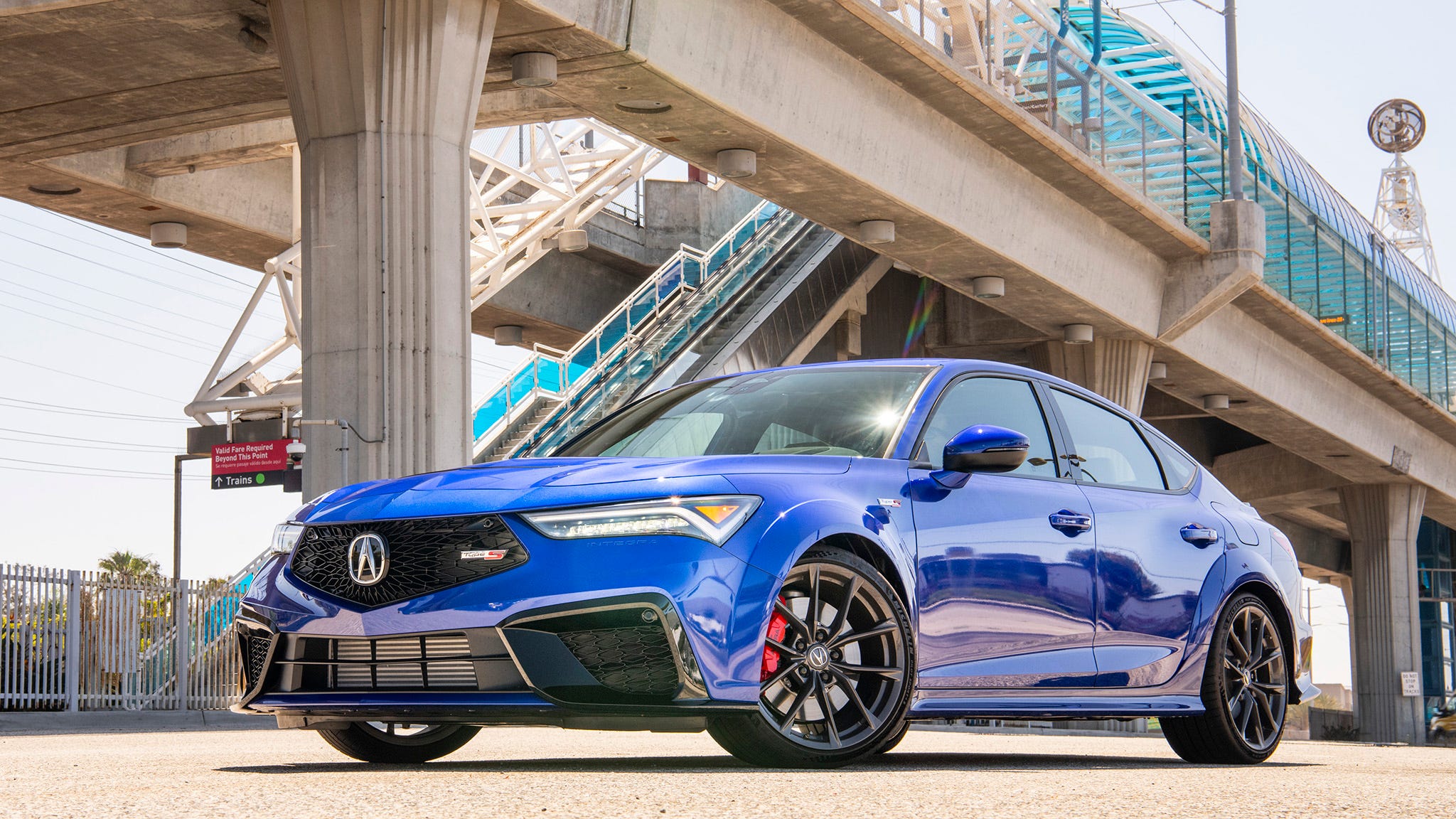


Honda Racing Corporation is about to blur the line between its competition shop and your driveway, and a hot lap around Daytona International Speedway made that uncomfortably clear.
During IMSA’s Rolex 24 weekend, MotorTrend’s Mac Morrison rode shotgun in an Integra Type S piloted by Chad Gilsinger, a Honda production chassis engineer who also happens to race. The car ripped through Daytona’s road course with the kind of composure that made Morrison question what had been done to it. The answer was almost nothing: HRC front-brake pads and floating front rotors, the same hardware bolted onto the Type S race car competing in SRO TC America’s TCX class.
That detail is the story. Not because aftermarket brake upgrades are revolutionary, but because Honda Racing Corporation is now positioning itself as a direct pipeline between its motorsport programs and the cars sitting in customer garages. These aren’t vague “racing-inspired” accessories cooked up by a marketing department. They’re literal competition parts, validated on a race car, packaged for street use.
The timing matters. Honda and Acura have spent years rebuilding credibility with enthusiasts through the Civic Type R and Integra Type S, two cars that over-deliver on their promises in a segment where rivals from Hyundai, BMW, and Toyota are fighting hard. The Type S, with its 320-hp turbocharged four-cylinder and limited-slip differential, already punches well above its price point. Bolting on race-proven brake components takes the proposition somewhere more interesting.
Jon Ikeda, the former Acura brand boss who now heads HRC U.S., framed it in existential terms. “To pull out of motorsports or to not put the effort in motorsports is a very dangerous thing, especially from our perspective, because that’s where Honda started from,” he said. He acknowledged the difficulty in quantifying racing’s return on investment but his message was clear. Racing isn’t a line item to be cut.
That philosophy is what separates Honda’s approach from the growing number of automakers who treat motorsport as a sponsorship exercise rather than an engineering program. Engineers like Gilsinger don’t just design parts and hand them off. They race, they feel what works and what breaks, and then they walk back into the production engineering office on Monday.
The feedback loop is short and brutal, exactly how it should be.
For the roughly 50,000 Civic Type R and Integra Type S owners on American roads, this creates something no spec sheet captures. Morrison described it as the “Honda/Acura culture thing,” the waves from other owners, the parking-lot conversations, the sense of belonging to a tribe that values driving above all else. He compared it to his experience owning a first-generation Porsche Cayman S, and that’s not a casual comparison.
HRC hasn’t yet revealed the full catalog of performance parts headed to market, or their pricing. But the trajectory is obvious. If the brake components from the TCX race car are the opening salvo, suspension bits, intake components, and exhaust pieces are logical next steps.
The infrastructure exists. The engineering talent is already doing double duty between the track and the production line.
Honda built its empire on engines and the people who love them. The Integra Type S is already one of the sharpest front-drive cars ever sold in America. Giving owners access to the same parts that race under floodlights at Daytona isn’t just a nice gesture. It’s Honda remembering exactly who it is.
Share this Story