
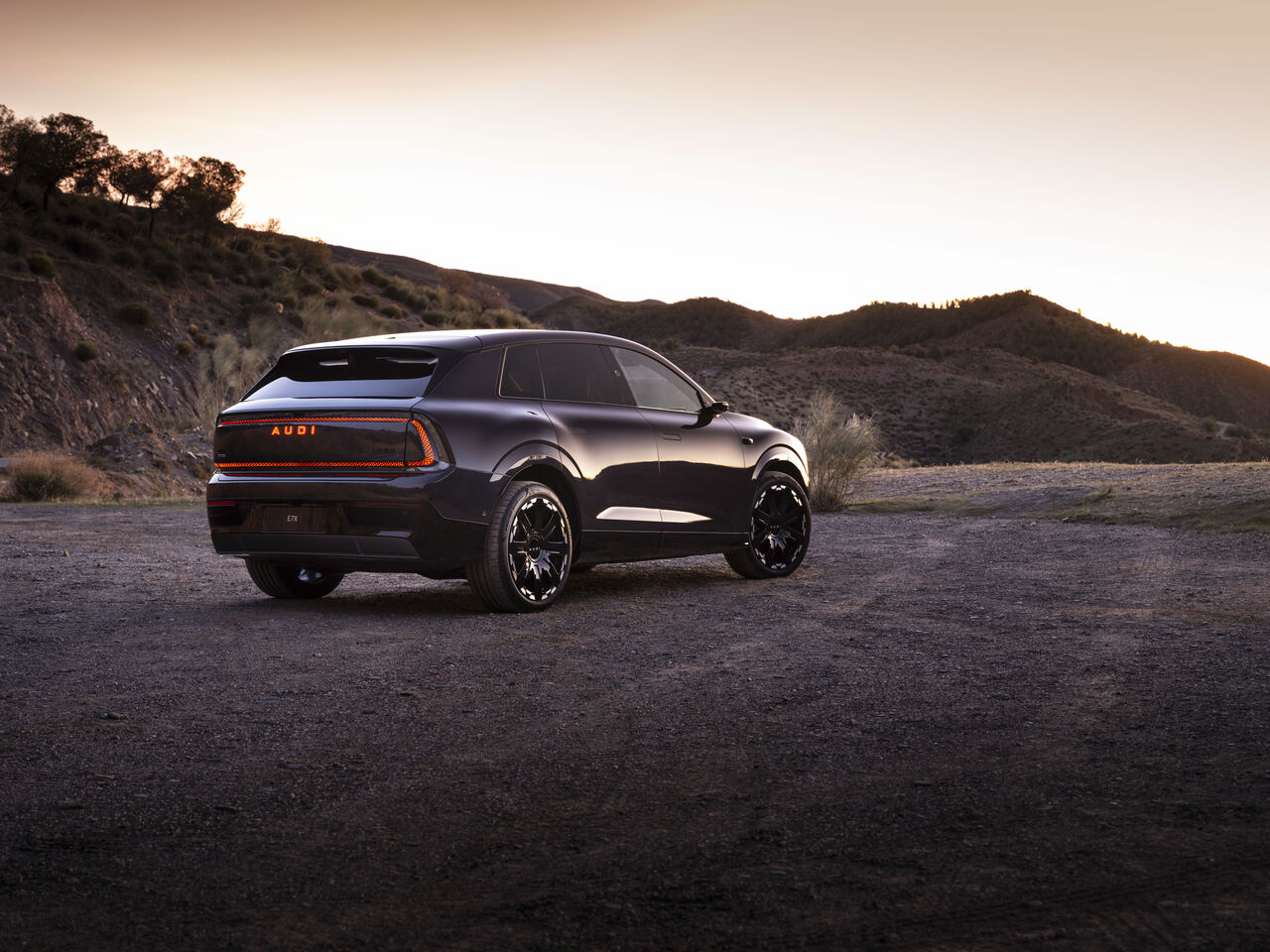


Audi is doubling down on its Chinese joint venture with SAIC Motor, announcing a new Shanghai-based Innovation & Technology Center and four upcoming models built on a next-generation platform. The move, revealed ahead of Beijing Auto China 2026, signals that the German premium brand sees no path to Chinese relevance without deeper local roots.
The new R&D center will be led by Audi but developed in cooperation with SAIC. Its mission is to engineer China-specific electrification tech, AI-driven smart cabins, and advanced driver-assistance systems tailored to local tastes. That last detail matters more than it sounds.
Chinese buyers have moved on from the days of revering European engineering for its own sake. They want screens, autonomy, and seamless connectivity — things BYD, Nio, and Xiaomi already deliver at aggressive price points.
Audi launched its sub-brand, styled as “AUDI” in all caps to differentiate it from the global marque, back in 2024. The first product, the E5 Sportback, hit Chinese roads in 2025. Next up is the E7X SUV, debuting at Auto China 2026, with a third model slated for 2027.
The freshly signed agreement adds four more vehicles on the next-generation Advanced Digitized Platform, an architecture purpose-built for intelligent connected vehicles. That’s seven models either launched or committed for a brand that didn’t exist two years ago. The pace tells you everything about the urgency inside Ingolstadt.
Audi’s ambition is to remain a strong player in China through the ICV era,” said CEO Gernot Döllner. He called the SAIC relationship “instrumental” in reaching new customer segments. SAIC president Jia Jianxu matched the enthusiasm, citing “the strength of our partnership” as proof the model works.
Fermín Soneira, who runs the Audi-SAIC cooperation project, called the tech center “a historic milestone.” The word choice is deliberate. Audi isn’t framing this as a hedge or an experiment. It’s presenting Shanghai as a second development nerve center for an entirely distinct product line.
The strategy borrows from a playbook Volkswagen Group has been quietly writing for years: accept that a single global platform can’t win everywhere. China’s software ecosystem, regulatory environment, and consumer expectations have diverged so far from Europe’s that trying to sell the same car in both markets is a losing game. BMW learned that lesson. Mercedes is learning it now.
Audi appears to have internalized it faster than either rival.
Still, execution will decide everything. The Chinese EV market is a meat grinder. Margins are thin, competition is relentless, and brand loyalty among younger Chinese buyers tilts heavily toward domestic players.
AUDI‘s legacy cachet counts for something with older demographics, but the AUDI sub-brand is chasing new customer groups — the same ones Nio and Zeekr already own.
Planting an R&D center in Shanghai puts engineers closer to the supply chains and software ecosystems that define Chinese EVs. It also means faster iteration cycles and fewer translation layers between what Chinese customers want and what German headquarters approves.
The risk is fragmentation. Running two parallel development tracks — one in Ingolstadt, one in Shanghai — demands coordination that large automakers historically botch. But Audi doesn’t have the luxury of caution.
Its China sales have been sliding for years against a domestic EV onslaught that shows zero signs of slowing. Four new models, a dedicated tech center, and a next-generation platform. Audi is writing checks its engineering will have to cash in the most competitive auto market on earth.

Share this Story