
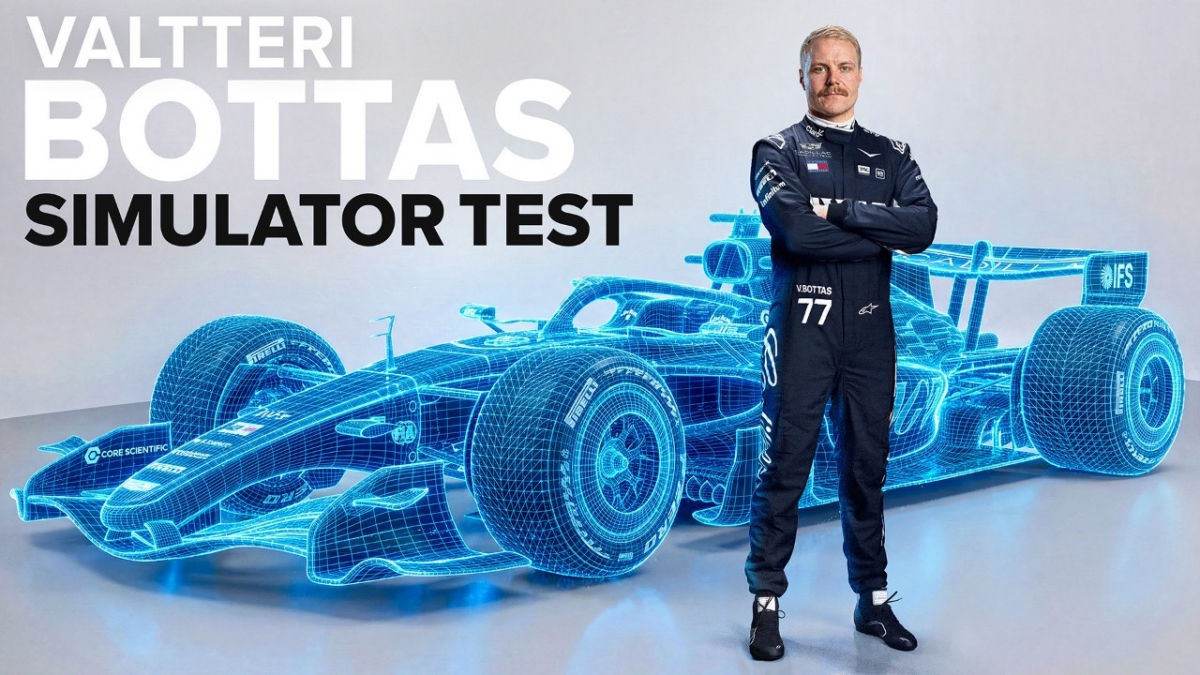


Days after each Grand Prix, Valtteri Bottas isn’t on a beach. He’s strapped into a simulator at GM’s Technical Center in Charlotte, North Carolina, cross-referencing what he felt in the car with what the team’s digital model predicted. Cadillac’s Formula 1 team calls it “correlation,” and it may be the single most important process in their entire operation.
The second season of Cadillac’s behind-the-scenes series, “What Makes Fast,” launched this week with a focus on what happens in the dead space between races. The answer is unglamorous but revealing: the team works the simulator relentlessly, trying to close the gap between virtual and real.
F1’s regulations severely limit actual on-track testing. That’s been the case for years, and it means the simulator isn’t a supplement. It’s the primary development tool.
Every setup change, every aero tweak, every suspension adjustment gets validated digitally before it ever touches tarmac. Bottas handles the race-weekend correlation runs, feeding back driver impressions that engineers then map against the sim’s outputs. If the car understeered through Turn 4 in Melbourne but the simulator said it wouldn’t, something in the model is wrong.
Finding those discrepancies and fixing them is the whole game. Simon Pagenaud, the team’s dedicated sim driver, grinds through the longer development stints. The former IndyCar champion and Indy 500 winner brings serious real-world credentials to a job that might sound like glorified gaming but is anything but.
Pagenaud’s role is to push the virtual car to its limits across thousands of simulated laps so the engineers can extract data without burning a single dollar of precious track time. This is where Cadillac’s ambitions as a new constructor will be won or lost. The established teams — Red Bull, Ferrari, Mercedes, McLaren — have spent decades refining their simulator correlation.
Their digital twins are eerily accurate. A new entrant building that accuracy from scratch is fighting an invisible war that the cameras never capture and the podium celebrations never acknowledge.
GM clearly wants people to see this side of the effort. The “What Makes Fast” series is a calculated transparency play, positioning Cadillac not as a logo on a car but as a genuine engineering operation doing genuine engineering work. Charlotte isn’t just a name on a building — it’s where a room full of people stare at screens and argue about tire models and aero loads.
Whether any of this translates into competitive lap times remains the open question. Correlation is only valuable if the baseline car has potential to unlock. But the infrastructure investment is real, the personnel are credible, and the process is sound.
Every new F1 team in the modern era has talked a big game about commitment and resources. Most of them flamed out when the gap between ambition and reality became too painful. Cadillac is betting that if they get the simulator right — if the digital car and the real car behave as one — they can compress a development timeline that normally takes the better part of a decade.
It’s a smart bet. It’s also an extraordinarily difficult one to collect on. The teams Cadillac is chasing aren’t standing still, and their simulators have a ten-year head start on truth.


Share this Story