
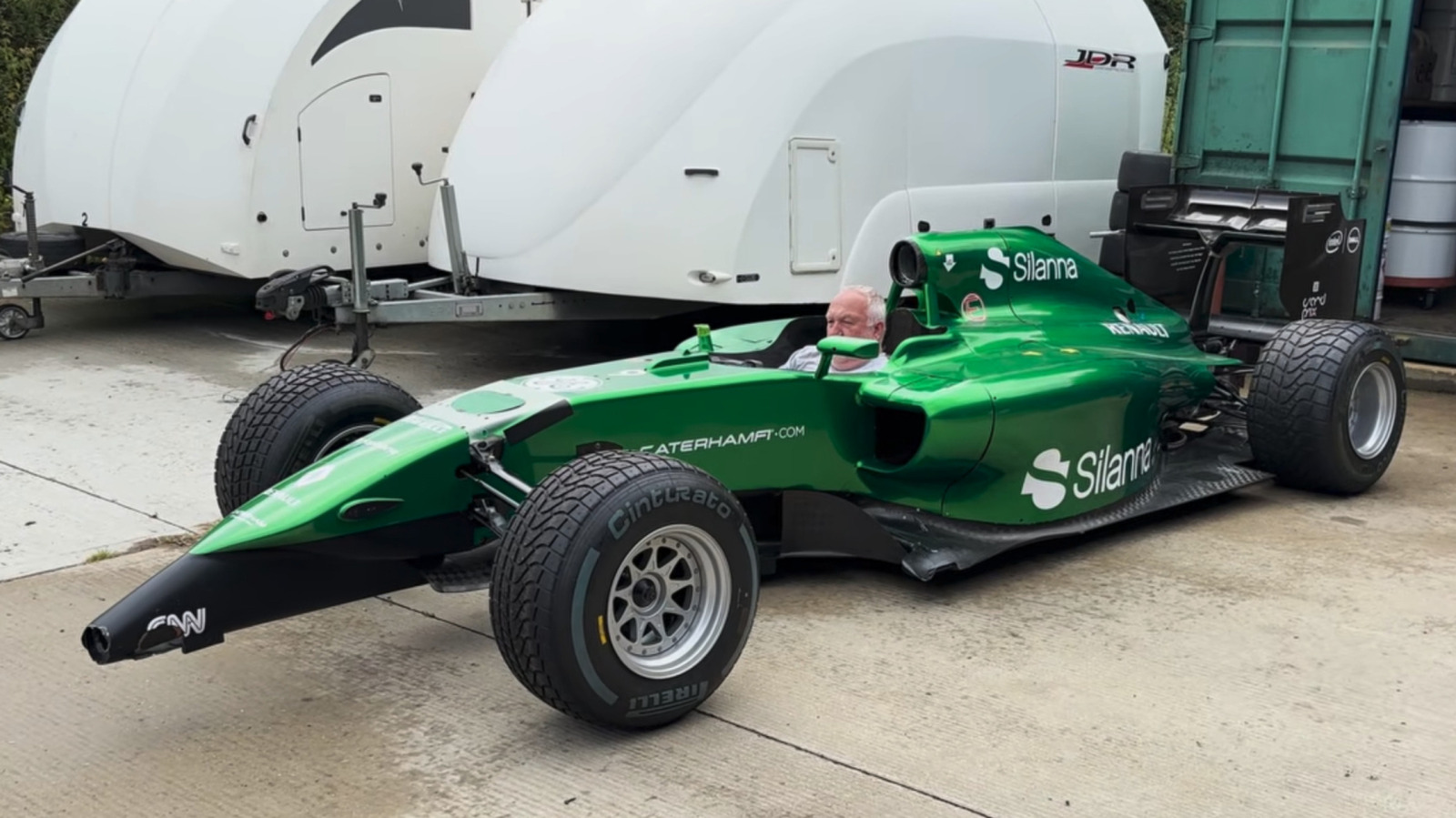


Kevin Thomas spent two hours in a bidding war over a wrecked carbon fiber tub. He won it for £5,000. That purchase — the mangled monocoque from Marcus Ericsson’s 2014 Hungarian Grand Prix crash — became the foundation of a ten-year obsession that most people would have abandoned in month three.
Thomas, an electrician from Burgess Hill, England, had no formal engineering education. What he had was a childhood fixation on Formula 1 machinery, a previous project building a static BAR Honda display car, and the restless dissatisfaction of a man who realized a car that doesn’t move isn’t really a car at all.
His timing was fortunate. The Caterham F1 team collapsed financially in 2014, and by 2015 debt collectors were auctioning off everything from wings to wiring harnesses. Thomas showed up with modest funds and competed against buyers with deeper pockets. He got the tub. He did not get much else.
That’s when the project turned from ambitious to borderline absurd. Thomas needed an engine. He called Renault, the original supplier for Caterham’s power units. They cheerfully quoted him €2.4 million per quarter — roughly $2.8 million — and informed him he’d also need to hire and pay for two Renault engineers to babysit the thing.
For a retired electrician working out of his garage, that conversation lasted about as long as you’d expect.
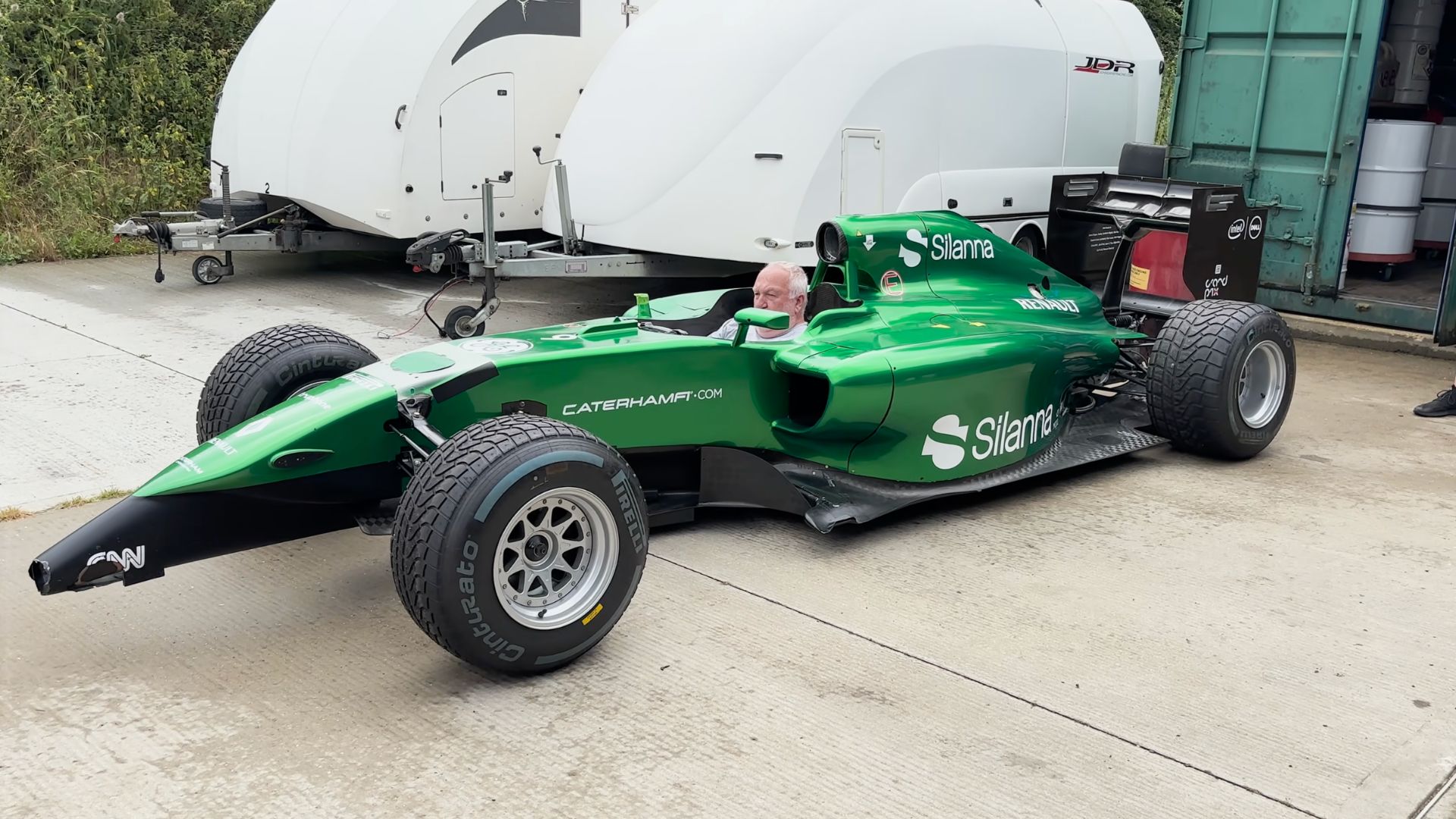
So he adapted. He sourced a Honda power unit capable of 11,000 rpm from a Formula Renault car. It wasn’t the original screaming V8, but it fit — after Thomas hand-fabricated custom brackets, measured every mounting point manually, and reverse-engineered the rear end of a Formula 1 chassis with tools most shops would laugh at.
The rear wing came from Williams F1. The steering and suspension arms were custom-fabricated in his workshop. He used a personal 3D printer to manufacture sections of the rear wing’s aerodynamic profile, sidestepping the ruinous cost of carbon fiber fabrication.
He installed a chain drive system for power delivery, an air shifter so the driver could change gears without a clutch pedal, and an exhaust system designed to echo the sound of the real thing.
Every single component required research, phone calls, dead ends, and creative substitution. Parts came from auctions, online marketplaces, and in at least one case, relentless badgering. The steering wheel — the one piece Thomas refused to compromise on — required him to hound a single source so persistently that the man finally gave it up on one condition: Thomas was never to contact him again.
Thomas documented the entire build across more than thirty episodes on his YouTube channel, Boosted Lifestyle. The series captured every stage from bare chassis inspection to the moment the engine fired for the first time in his garage. That sound must have justified a decade of weekends spent chasing unobtainable parts.
The car completed its first road test on local streets before Thomas began refining it for track use. The total cost came to approximately £150,000 — around $200,000. That’s roughly what a well-optioned Porsche 911 Turbo S costs. A genuine retired F1 car, if you can even find one the teams will let you drive, runs into the millions.
Thomas plans to put the car on a proper circuit in 2026. It will be the first time that particular monocoque has turned a wheel on track since Ericsson put it into the barriers twelve years ago. The car is not 100 percent original.
It is, however, 100 percent real — a machine that moves, steers, shifts, and sounds like the thing it was built from. One man, no engineering degree, ten years, and the kind of stubbornness that separates people who talk about building things from people who actually do.
Share this Story