
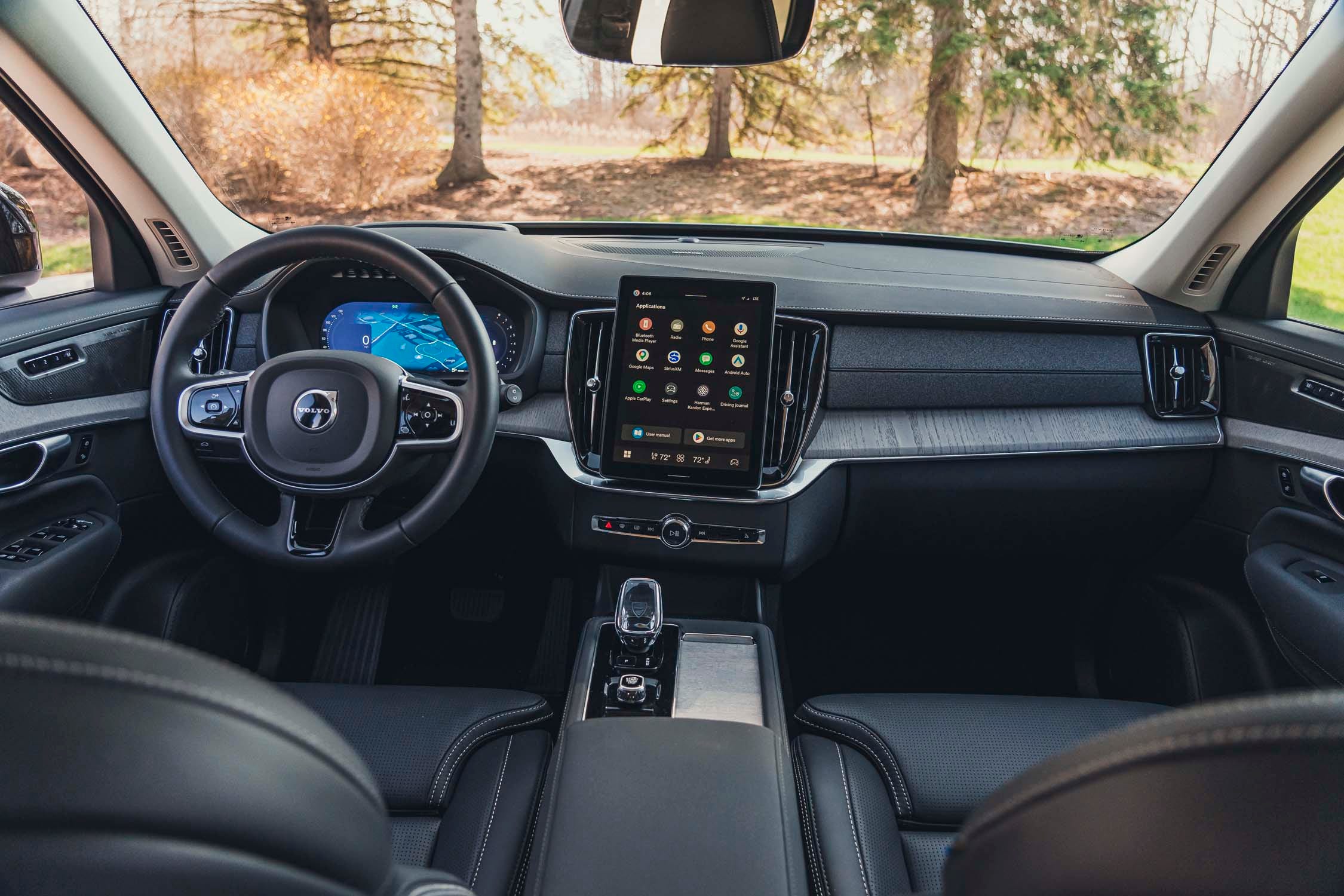


Car and Driver just inducted a 2026 Volvo XC90 B6 Ultra into its long-term test fleet for 40,000 miles. That alone tells you something. In a market drowning in electric SUV launches and flashy redesigns, one of the most respected outlets in automotive journalism chose to spend a year with a vehicle whose basic architecture dates back a decade.
The XC90 first arrived in 2015. It has been refreshed, massaged, and incrementally improved since then, but the bones are the same. Volvo knows it. Buyers know it. And yet the thing keeps selling, which is either a testament to how right they got it the first time or an indictment of how slowly Gothenburg moves.
This particular test car wears the B6 Ultra trim, which represents the top of the non-plug-in range. It rolls on mild-hybrid power, all-wheel drive, and a sticker that climbs well past $60,000. The interior is wrapped in Charcoal Ventilated Nappa Leather, and the cabin looks like a place where adults can sit without apology.
The center stack is dominated by an 11.2-inch touchscreen running Google’s built-in infotainment suite. Native Google Maps handles navigation, projecting turn-by-turn directions into the digital gauge cluster. The system is fast and responsive by all accounts.
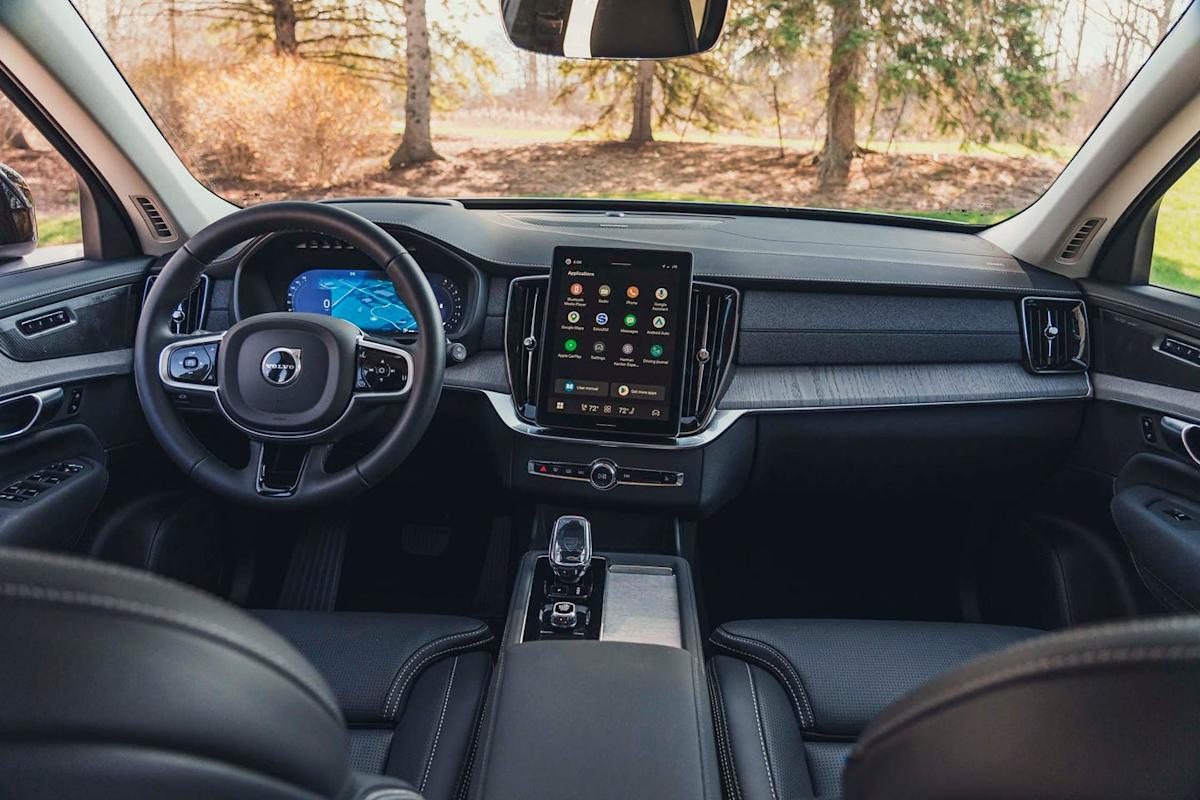
Here’s the rub: Apple CarPlay and Android Auto still require a wired connection. In 2026. On a luxury SUV. Volvo has been dragging its feet on wireless smartphone integration for years, and the fact that it still hasn’t sorted this out on a flagship three-row is the kind of detail that separates Scandinavian stubbornness from Scandinavian design.
The crystal gear shifter remains one of the most polarizing elements in the cabin. Volvo calls it a celebration of Scandinavian craft. It looks like an ice cube that wandered off from a cocktail party. Whether you love it or merely tolerate it, it’s become an XC90 signature, along with the twist-to-start ignition knob that replaces a conventional push button.
The test car is configured as a seven-passenger with a second-row bench seat, though captain’s chairs are available for those who’d rather carry six in greater comfort. The leather seats are well-bolstered and supportive, a Volvo hallmark that has never really wavered even as the brand has chased electrification with the EX90.
That’s the tension running beneath this entire long-term test. Volvo desperately wants the world to pay attention to its electric future, the EX90, the EX30, the whole “electric by 2030” narrative that has since been quietly softened. But the XC90, powered by gasoline and a 48-volt mild-hybrid system, remains the vehicle that actually moves metal in American driveways. It’s the profit engine that funds the transformation.
Forty thousand miles will reveal whether this aging platform still holds together with the kind of integrity Volvo’s safety-first reputation demands. Long-term tests are where reputations get confirmed or quietly dismantled. Squeaks, electrical gremlins, warranty claims, none of that shows up on a press launch.
The XC90 has been living on borrowed time for years. Every product cycle, someone predicts it’s finally done. And every year, it comes back with another mild update and another wave of buyers who value restraint over reinvention. The next 40,000 miles will tell us whether that loyalty is earned or just habit.
Share this Story