
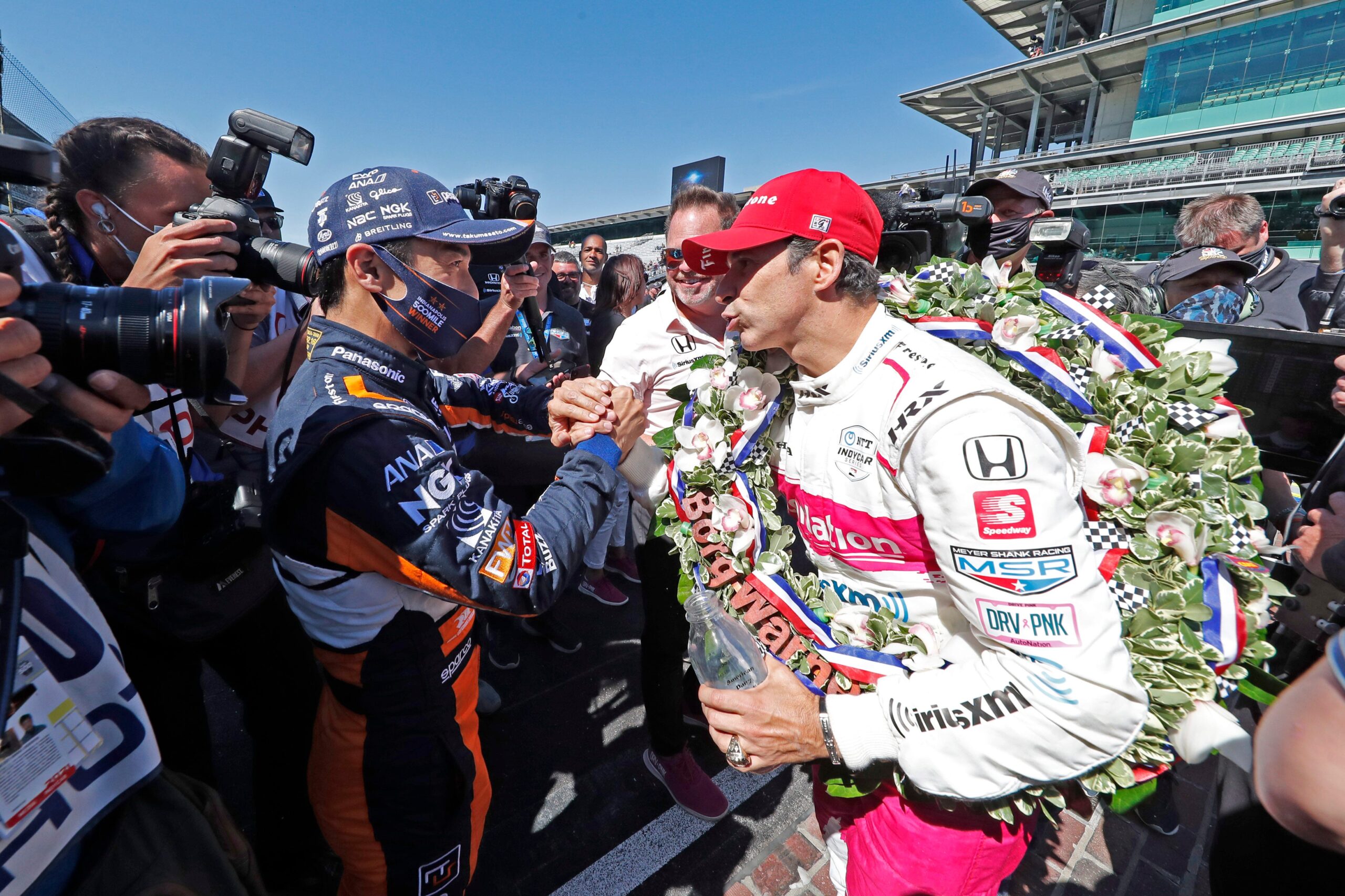


Helio Castroneves has won the Indianapolis 500 four times. Takuma Sato has won it twice. Between them, they’ve kissed the bricks on six occasions, led hundreds of laps under pressure that would crack lesser drivers, and yet both men say the same thing: the track decides.
“I do believe the track picks who is the winner,” Castroneves said in a media roundtable this week. I’ve been the witness of both scenarios — have a best car, didn’t win, have not a good car, end up winning.
Sato, speaking separately, landed in the same place. “End of the day, you still need the luck,” the Japanese driver said. “Something you just need some luck.”
It sounds like superstition. Maybe it is. But when two drivers with a combined 45 Indy 500 starts tell you the Brickyard has a mind of its own, you listen.
Both are back for the 2026 race as one-off entries, older and presumably wiser, running without the safety net of a full-season program. Castroneves co-owns Meyer Shank Racing now, fielding teammates Felix Rosenqvist and Marcus Armstrong. But ownership sentiment evaporates at the drop of the green flag. “When I’m out there with my helmet, there’s not much about teammates, right? You gotta go on your own.”
Sato starts 12th and is already scheming. He sees warm weather as his best friend — hotter conditions chew through tires faster, and managing degradation stint by stint opens doors for a driver who knows how to nurse rubber. “Hopefully we have a warm Sunday, so that you can have much more variety of where you put the peak stint by stint, 30 laps each.”
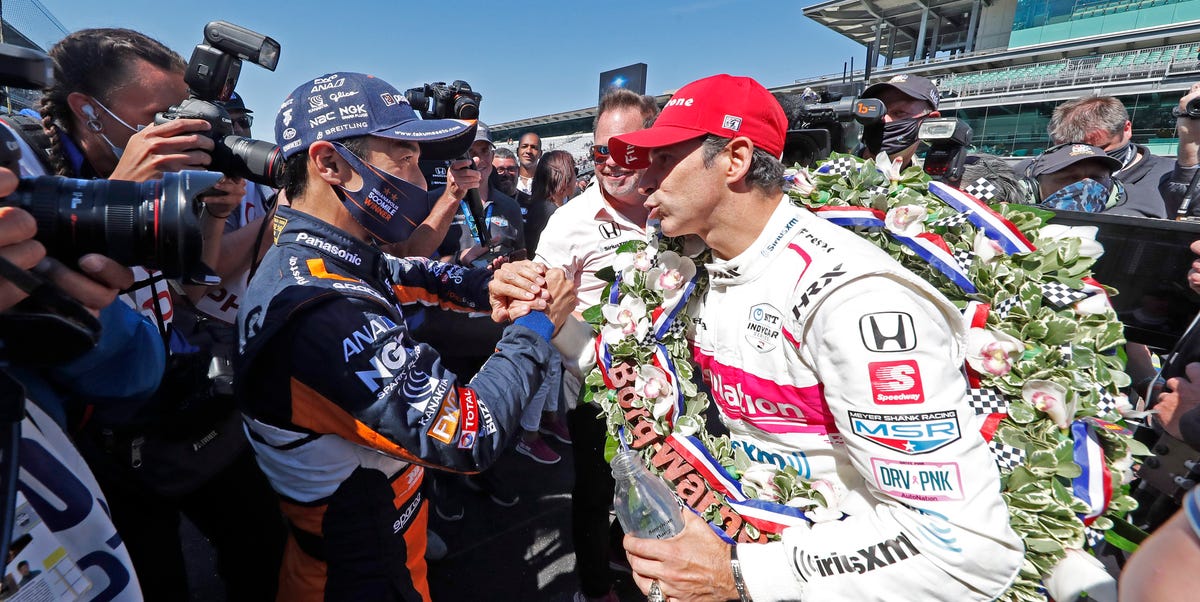
The field itself presents a different kind of challenge. Neither driver competes full-time in IndyCar anymore, which means the competitors around them are partially unknown quantities. Castroneves called it his biggest hurdle. “Some of them I haven’t raced. I’ve been watching the races, obviously, and I’ve seen the dynamic. You’ve gotta understand, this is not like a short oval.”
Sato has done his homework more carefully. He keeps a list — drivers sorted by how they behave on track, who can be trusted in close quarters and who cannot. “There are drivers you can work with, even on different teams,” he said, declining to name names. The last 20 laps, though, change everything. “The last 20 laps is a different scenario.”
The speed gap between teams has shrunk so much that raw pace alone won’t separate anyone. That’s where experience matters — knowing when to push, when to save, when to pounce.
Both drivers spoke about Indianapolis with a reverence that goes beyond the usual athlete-talks-about-big-game clichés. Sato has raced Formula One at Suzuka, Spa, the Nürburgring, Monaco. None of it compares. “Over 300,000 people, and that is a mega feeling. There’s nothing like it.”
Castroneves put it more simply: “This place is magical, and you see that come alive on Sunday.”
There’s a tension running underneath all the warm feelings. These are aging warriors walking back into a young person’s fight, armed with knowledge the field doesn’t have but lacking the seat time everyone else does. Alex Palou sits on pole. The full-time drivers have months of momentum behind them.
Castroneves and Sato have six trophies, a notebook full of observations, and a belief that the speedway might smile on them one more time. Whether that’s faith or delusion depends entirely on what happens Sunday. Indianapolis has a long history of not caring which one it rewards.
Share this Story