
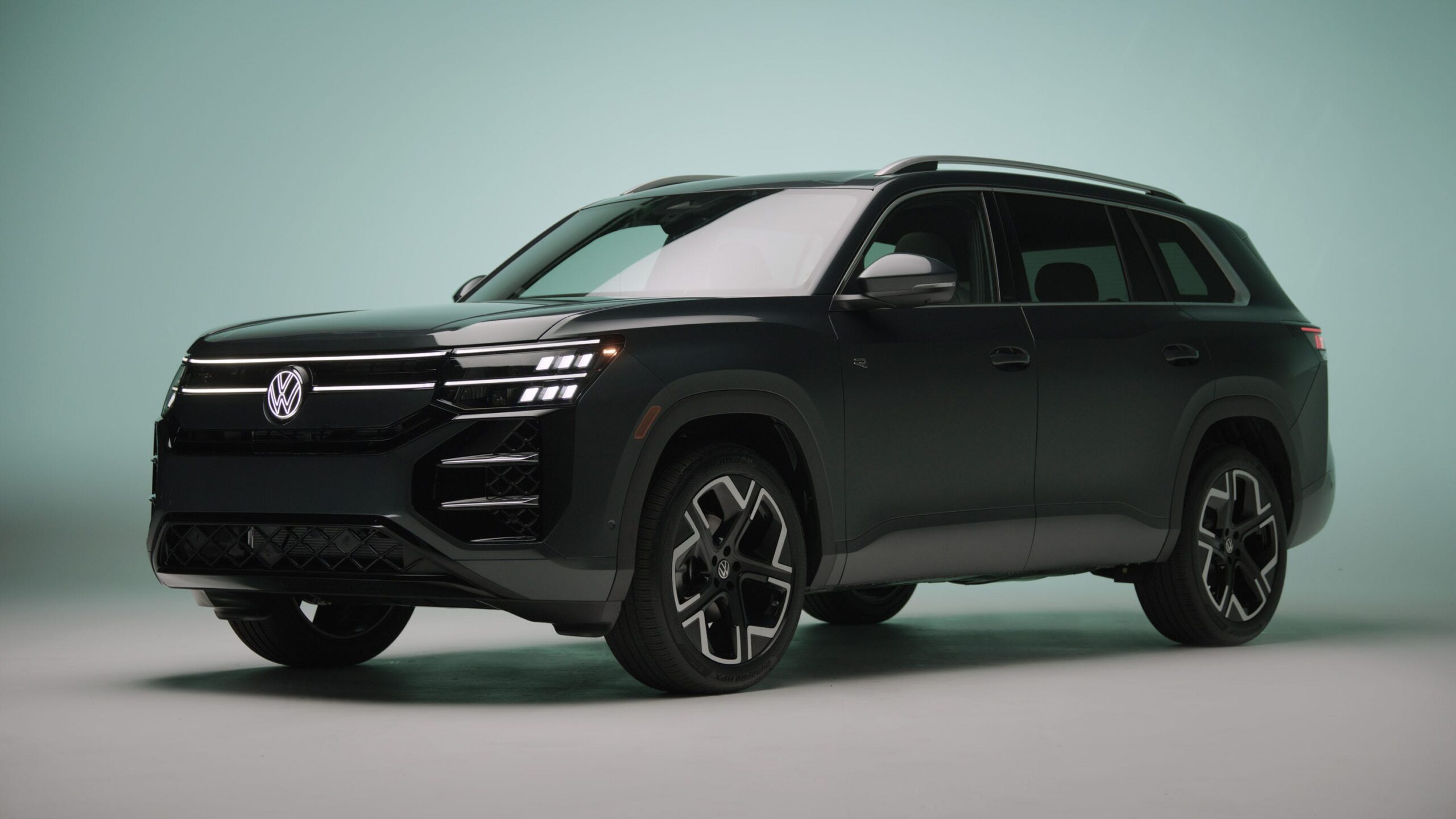


Volkswagen is asking $2,350 more for the base 2027 Atlas than it did for last year’s model. That’s not a small bump for a nameplate that built its reputation as the sensible, value-driven three-row in a segment dominated by the Hyundai Palisade, Kia Telluride, and Toyota Highlander.
The second-generation Atlas starts at $43,135 for the front-wheel-drive SE. Want all-wheel drive? That’s another $2,000. Want the new 15-inch touchscreen VW has been showing off? You can’t get it in the base trim. You’ll need to step up to the SE with Technology at $47,135, a $1,930 increase over the comparable 2026 model.
Every single trim level got more expensive, not just the entry point. The SEL R-Line jumped $2,540 to $53,635. The range-topping SEL Premium R-Line now commands $58,135, up $2,030. Both come standard with all-wheel drive, which softens the sting slightly but doesn’t erase it.
VW will argue you’re getting more for the money, and the spec sheets back that up to a point. The base SE now includes real wood trim, 10-color ambient lighting, a nine-speaker audio system, dual wireless phone chargers, and front and rear parking sensors. That’s genuinely generous standard equipment.
The digital gauge cluster measures 10.3 inches across the lineup, and even the entry-level touchscreen is a 12.9-inch unit.
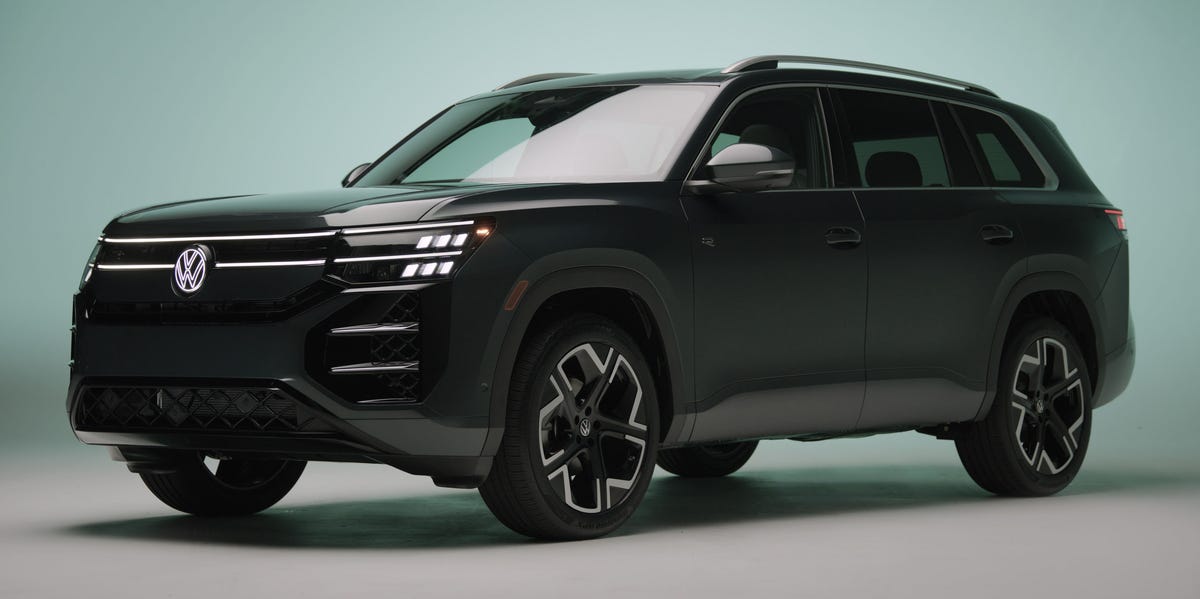
Move into SEL R-Line territory and VW starts throwing around features that would have been flagship-only a few years ago: heated and ventilated second-row outboard seats, Varenna leather, a panoramic sunroof, head-up display, and 30-color ambient lighting. The SEL Premium R-Line piles on nappa leather, massaging front seats, 21-inch wheels, a 14-speaker Harman Kardon system, and power-folding mirrors with puddle lights that project the VW logo onto the ground.
The question is whether any of that moves the needle against the competition. A well-equipped 2025 Hyundai Palisade Calligraphy starts around $53,000. A loaded Toyota Grand Highlander sits in similar territory. VW is now pricing the Atlas right alongside rivals that already have stronger resale values and deeper dealer networks.
Underneath the new sheetmetal, VW has revised the 2.0-liter four-cylinder it shares across much of its lineup, promising more power and better fuel economy. The company hasn’t released final EPA numbers yet, but those figures will matter enormously when the Atlas reaches showrooms this fall.
The Atlas continues to roll off the line in Chattanooga, Tennessee, which insulates it from the tariff chaos battering imports. That’s a genuine competitive advantage right now, particularly against the Korean three-rows built overseas.
Still, VW is playing a dangerous game. The original Atlas succeeded precisely because it undercut the establishment on price while offering a cavernous interior and straightforward packaging. Creeping toward $60,000 at the top end puts the Atlas in territory where buyers start cross-shopping premium badges. A base Audi Q7 isn’t that far away.
The 2027 Atlas is a better vehicle than the one it replaces. The cabin looks richer, the tech is more current, and the standard equipment list is long. But “better” and “worth more” aren’t always the same thing, and VW is betting customers will pay a premium for a nameplate that earned its following by being the affordable choice.

Share this Story