
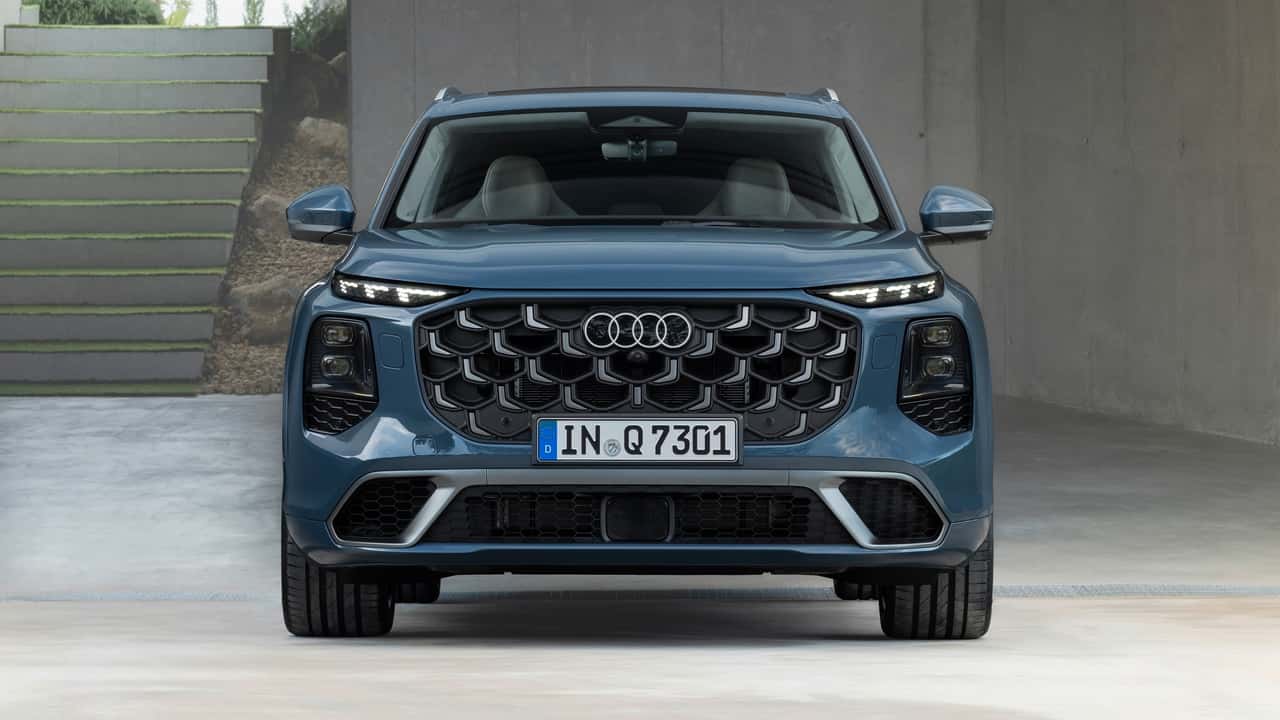


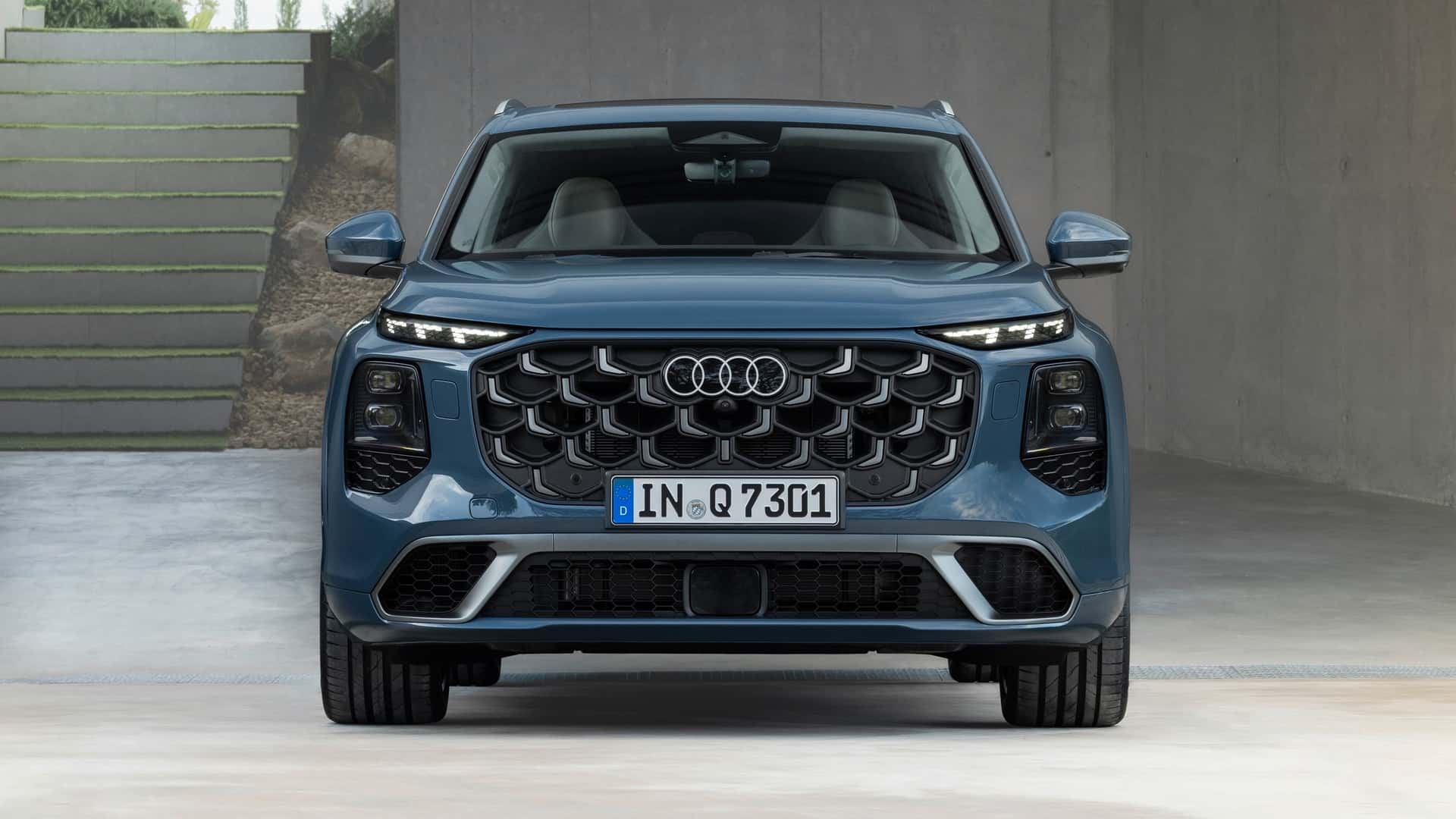
Audi’s refreshed SQ7 now starts at $98,700. That’s $4,900 more than the outgoing model and close enough to six figures that the psychological barrier barely exists anymore. By the time a buyer ticks a few option boxes, they’re driving a $100,000-plus family hauler.
The standard 2027 Q7 doesn’t escape unscathed either. Its base price climbs $3,300 to $70,900, putting it above the newly redesigned BMW X5 at $69,800. Both SUVs arrive later this year as clean-sheet efforts, making this the most direct price comparison the two nameplates have faced in years.
Audi justifies the increase with a twin-turbocharged 2.9-liter V6 making 429 horsepower and 442 pound-feet of torque, standard across the range. Zero to 60 drops to 4.8 seconds, shaving 0.7 seconds off the previous model. The SQ7 keeps its twin-turbo 4.0-liter V8, now cranking out 591 horsepower and hitting 60 in 3.7 seconds. Those are legitimate sports sedan numbers wrapped in a three-row SUV body.
That third row is the Q7’s quiet trump card in this segment. Neither the BMW X5 nor the Mercedes-Benz GLE offers seven seats in standard form, which makes the Q7 a slightly different animal despite competing on the same dealer lots. Whether buyers actually use that third row or simply like knowing it’s there, it gives Audi a structural argument for the premium.
Mercedes complicates the comparison. The current GLE 350 starts at $62,250, nearly $9,000 less than the Q7, but it does so with a turbocharged 2.0-liter four-cylinder making just 255 horsepower. Step up to the GLE 450 with its inline-six hybrid and the price jumps to $72,250, suddenly more expensive than either the Audi or the BMW. Mercedes hasn’t released 2027 pricing yet for its overhauled GLE, but expect the entry-level four-cylinder to continue anchoring the lineup’s affordability story.
The real tension here isn’t between Audi and its competitors. It’s between Audi and the market’s tolerance for escalating prices. A decade ago, a loaded Q7 cost what a base Q7 costs today. The SQ7 flirting with $100,000 would have been unthinkable for a vehicle that shares showroom space with the A4 and Q5.
There’s evidence Ingolstadt’s bet is paying off. Luxury SUV sales have proven remarkably resilient even as prices climb. Buyers who cross-shop $70,000 vehicles tend not to flinch at $3,300.
The SQ7’s near-600-horsepower V8 positions it against performance SUVs like the BMW X5 M60i, which starts at $90,500 and makes 523 horsepower. Viewed through that lens, the SQ7’s price-to-power ratio actually looks competitive.
Both models go on sale in the fourth quarter of 2025 as 2027 model year vehicles. Audi has wrapped the mechanical upgrades in new sheetmetal and the latest interior tech, though specifics on the cabin’s digital architecture are still filtering out.
The pattern across the German luxury triad is unmistakable: more power, more tech, more money. The Q7 started life in 2007 at $49,900. Twenty years later, it costs $21,000 more to get in the door. The SQ7 is one option package away from requiring a comma after the first digit. For buyers in this segment, six figures isn’t a ceiling anymore. It’s just another line item.


Share this Story