
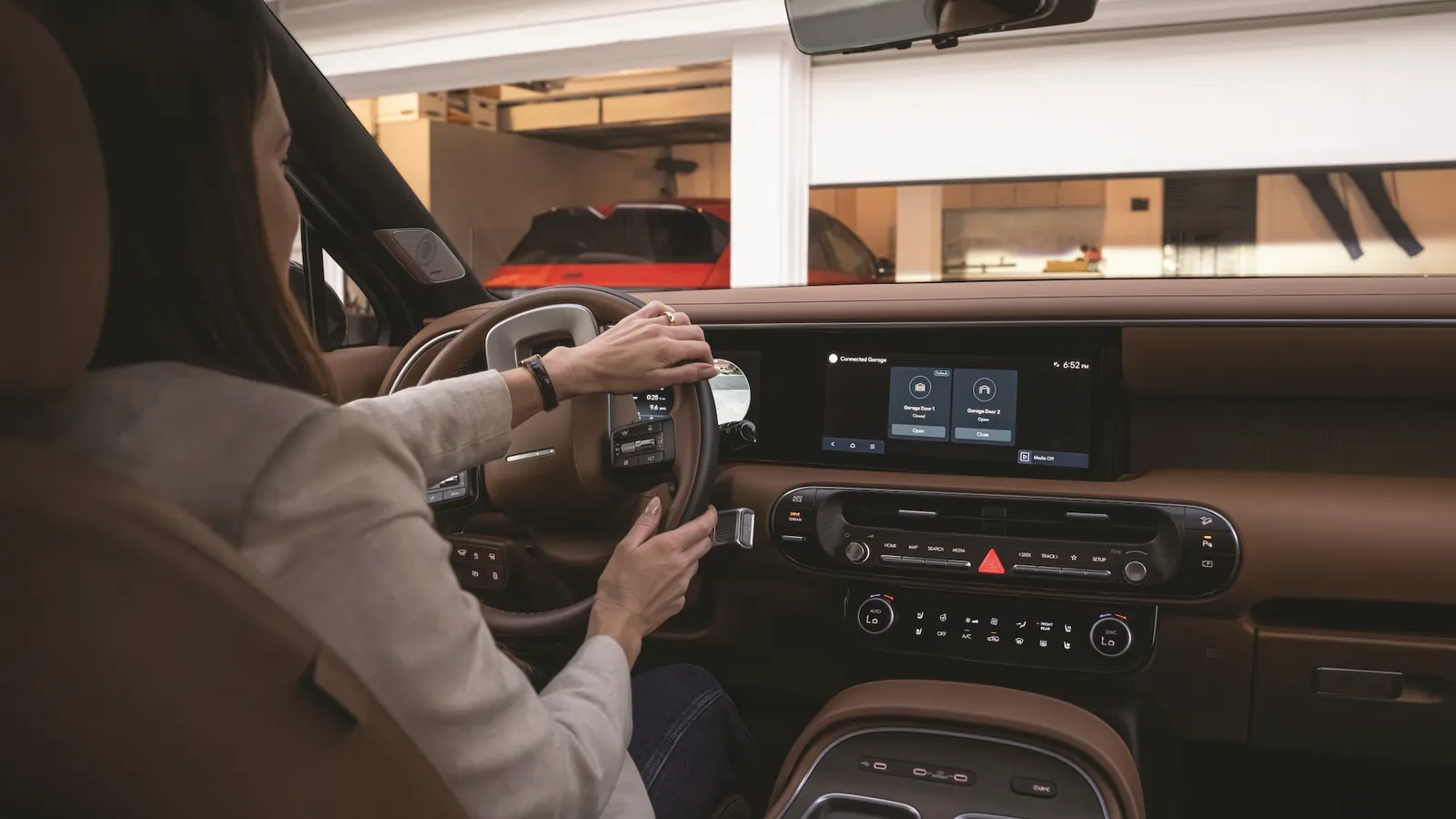


Hyundai Motor America just announced a partnership with Chamberlain Group to bake myQ connected garage technology into vehicle infotainment screens across select 2024-2026 models. Open your garage door from your touchscreen. Close it when you forget. Let geofencing do it automatically when you pull into the driveway.
It sounds like the future. It also sounds like another subscription waiting to happen.
The automaker is offering a three-month complimentary trial. After that? Hyundai won’t say what it costs. That silence is louder than any press release quote about “seamless integration” and “peace of mind from the road.”
The technology itself is straightforward. Chamberlain Group, parent company of LiftMaster, developed myQ as a cloud-based smart garage platform that doesn’t require additional hardware in the vehicle. Customers create a myQ account, link it to their Hyundai Bluelink connected services account, and the garage doors sync automatically.
Geofencing triggers the door to open or close based on vehicle location. A close door reminder pops up on the touchscreen if the auto-close gets interrupted. Shifting into reverse can trigger the door via the backup camera, and there’s even a valet mode that disables the feature when you hand your keys to a stranger.
Hyundai is hardly first to the party. Chamberlain Group already has myQ partnerships with Tesla, Kia, Nissan, Honda, Acura, Mercedes-Benz, and Volkswagen. This is less a breakthrough than a box-checking exercise — Hyundai joining a club most of its competitors already belong to.
Manish Mehrotra, CIO at Hyundai Motor North America, said the integration “reflects our focus on delivering intuitive, reliable technology that supports customers throughout their ownership journey.” The word “journey” in corporate statements should trigger the same skepticism as “complimentary trial.”
The broader pattern here is unmistakable. Automakers are layering connected features into vehicles and then monetizing them through recurring subscriptions. Heated seats, remote start, GPS navigation, driver-assistance calibration — functions that used to come standard or as one-time purchases are being carved into monthly revenue streams.
Chamberlain Group’s myQ already charges consumers for its premium app features outside the automotive context. The company knows how to monetize convenience. So does Hyundai, which requires a Bluelink subscription for most of its connected services beyond the initial complimentary period.
Stack the subscriptions. Bluelink for remote start and vehicle diagnostics, myQ for garage door control, SiriusXM for satellite radio, navigation updates. The monthly cost of owning a connected car is quietly creeping upward, and most buyers don’t calculate the total until they’re already locked in.
None of this diminishes the genuine utility. Forgetting to close a garage door is a real problem, and a geofenced auto-close triggered by driving away is a legitimately useful solution. Valet mode shows someone thought about edge cases.
But the question isn’t whether the technology works. It’s whether car owners will keep paying for a feature that a $30 Wi-Fi garage controller from Amazon already handles through a free app on the phone sitting in their cupholder.
Hyundai positioned this as part of its ownership experience strategy, arriving on the heels of its new Pleos Connect infotainment platform launch in May and a broader push to differentiate through software. The intent is clear: make the car the hub, not the phone.
That only works if the value justifies the cost. And until Hyundai reveals what that cost actually is, the three-month trial feels less like generosity and more like a carefully designed hook.



Share this Story