


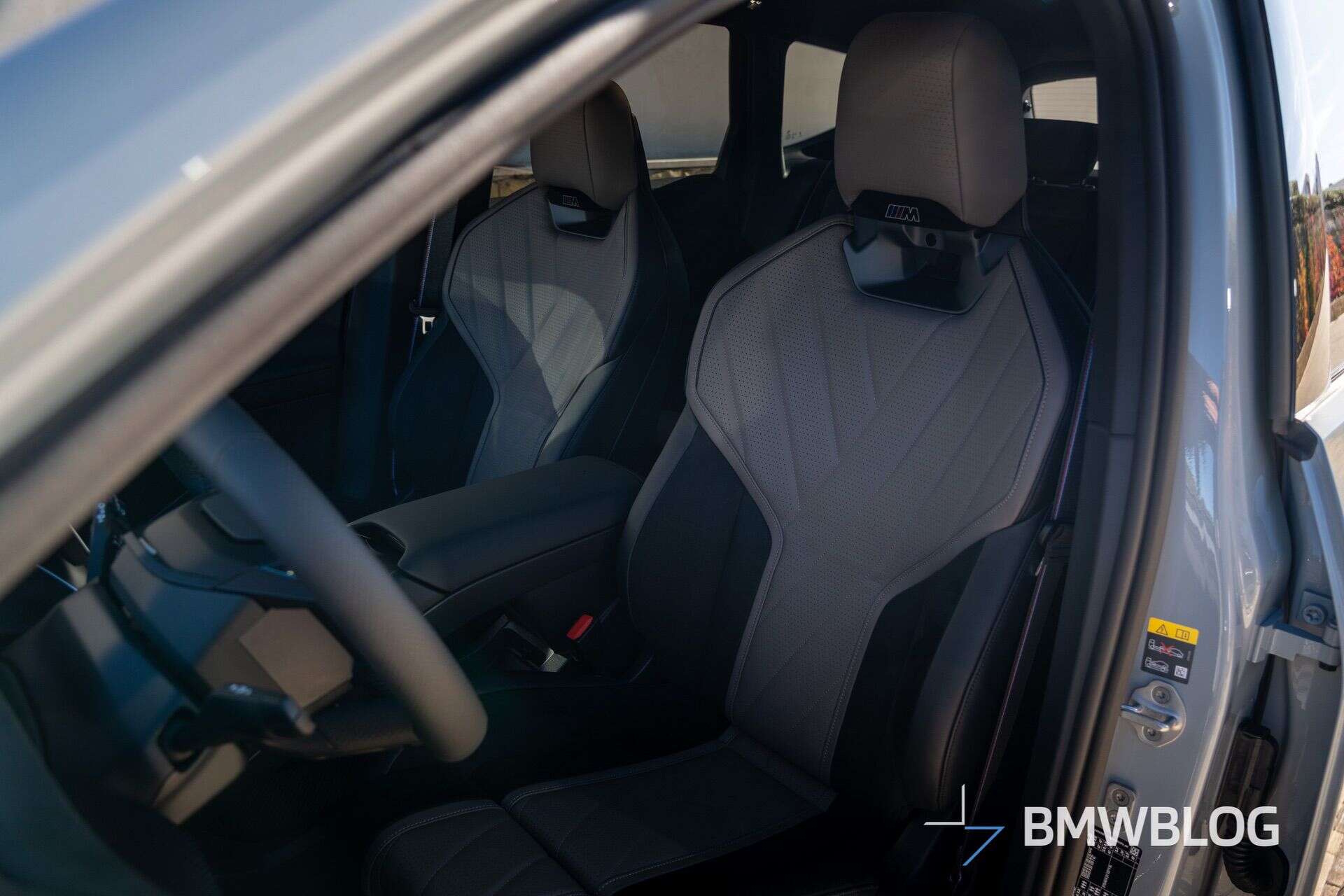
The 2026 BMW iX3’s most desirable seat option — sculpted M Sport buckets with aggressive shoulder bolstering, extended thigh support, and an illuminated M logo nestled between the headrest and backrest — costs €1,500 in Europe. In North America, you can’t buy them at any price.
BMW confirmed the omission directly to BMWBLOG, offering the kind of non-answer that amounts to a shrug: “If feedback indicates there is a need, we could certainly consider offering them in the future.”
North American buyers who spring for the M Sport Pro Package get a consolation prize. Sport comfort seats in Black Veganza with blue contrast stitching and M PerformTex upholstery. Nice enough materials.
But the deep bolstering and that glowing M badge? Absent. The package does pile on other hardware — 20-inch bicolor wheels, red-caliper M Sport brakes, Iconic Glow lighting, an aero kit, and Driving Assistant Plus — but for enthusiasts who spend hours planted in those seats, the omission stings.
This is a familiar BMW playbook. Launch a new model with a conservative North American spec sheet, gauge demand, then drip out the premium hardware later, often timed to a hotter variant. BMWBLOG speculates — and the logic tracks — that the true M Sport seats will arrive with the anticipated iX3 M60, expected in 2027.
That lines up neatly with BMW’s habit of reserving its best interior appointments for performance flagships, then cascading them downward once the halo car justifies the tooling.
The seat story is a footnote to a much larger bet. The iX3 is the first vehicle built on BMW’s Neue Klasse platform, the dedicated EV architecture the company named after the 1960s models that turned it from a niche builder into a global force. Consumer Reports notes a BMW-claimed 434 miles of EPA range, 800-volt architecture capable of 400-kW DC fast charging, and a 463-hp dual-motor all-wheel-drive powertrain in the launch trim.
The iX3 50 xDrive starts at $61,500 and begins deliveries in late September.
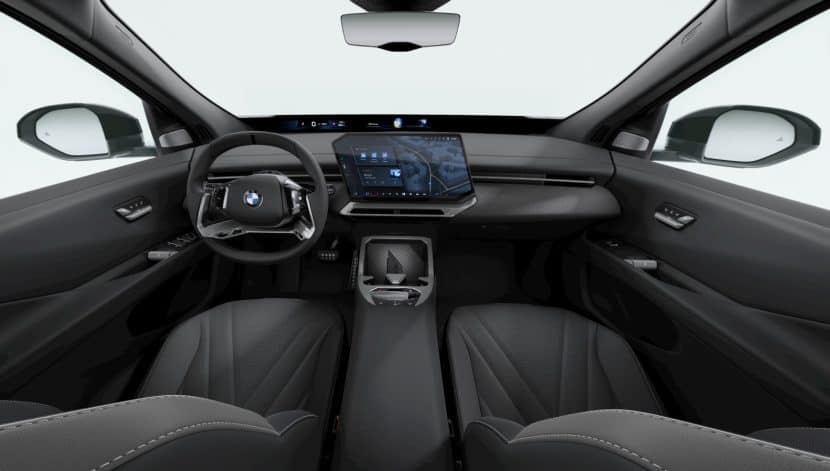
The tech underneath is genuinely new. Four high-performance computers manage everything from infotainment to drivetrain calibration, running a new BMW Operating System X. The company says this architecture will eventually spread across nearly 40 models.
A massive 17.9-inch rhombus-shaped touchscreen dominates the cabin, paired with a pillar-to-pillar Panoramic iDrive display that projects information onto a printed surface for 3D effects.
Not everything is progress. Physical climate controls are gone. The steering wheel uses touch-sensitive pads — the same technology Volkswagen is actively abandoning after widespread complaints about accidental inputs.
BMW’s own AI-driven personal assistant learns user habits and routines, which means extensive data collection on where you go and what you do. BMW says it can be disabled. That’s reassuring right up until you realize disabling it strips out features the car was designed around.
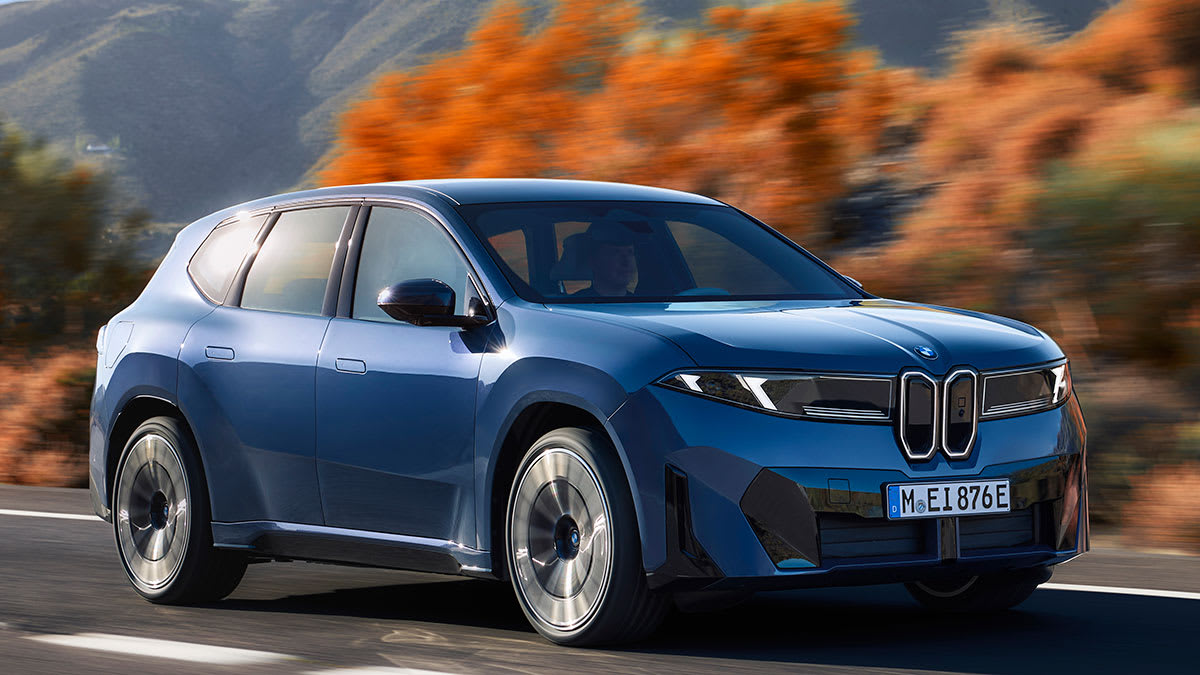
The exterior tells a quieter story. The bloated kidney grilles are dead, replaced by a restrained pair that evokes the 2002. Fewer character lines, cleaner surfaces, flush door handles. It’s the first BMW in years that looks like it was designed by someone who wasn’t being paid by the crease.
But circle back to those seats. BMW knows exactly what it’s doing. European customers get the full equipment catalog from day one. North American buyers get a carefully curated subset, with the most emotionally compelling pieces held back.
It creates desire. It creates a reason to wait for the M60. And it ensures a second wave of press coverage when the seats finally arrive stateside, framed as BMW “listening to customer feedback.
The iX3 is the most important BMW in a generation. Its platform, its tech, and its design will define the brand’s electric future. The seats North America didn’t get are a rounding error in that equation — but they reveal how BMW still thinks about its two biggest markets. Europe gets the full menu. America gets the prix fixe.
Share this Story