


BMW has never built a modern production car on a ladder frame. Not once. Every 3 Series, every X5, every 7 Series for decades has ridden on a unibody or monocoque structure — road-focused, comfort-oriented, purpose-built for pavement. So a patent showing a body-on-frame chassis designed for electric vehicles lands like a flare over Munich.
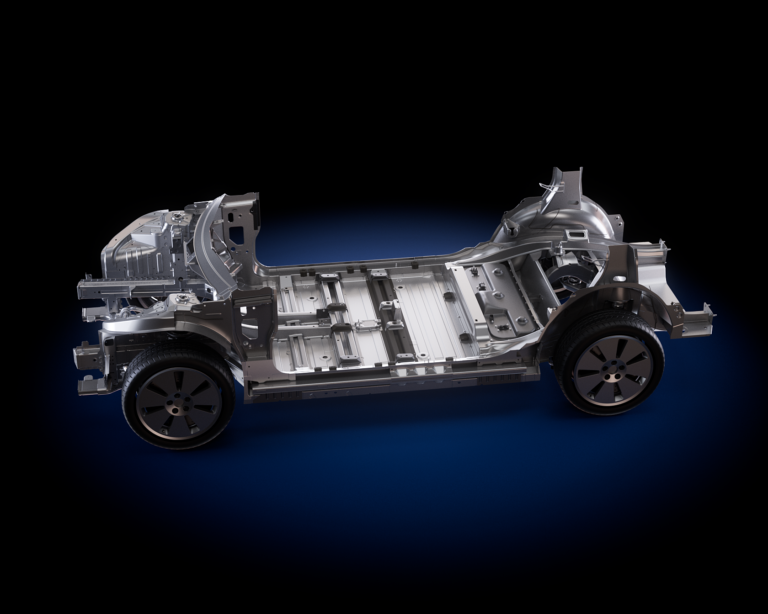
The filing, number DE 10 2024 130 768.4, was submitted in 2024 and published quietly at the end of April 2026. CarBuzz’s research team spotted it first. The document describes a modular ladder frame with cast central, front, and rear sections — not the dozens of welded stampings you find under a Toyota Tundra, but large castings bolted together with cross members for reinforcement.
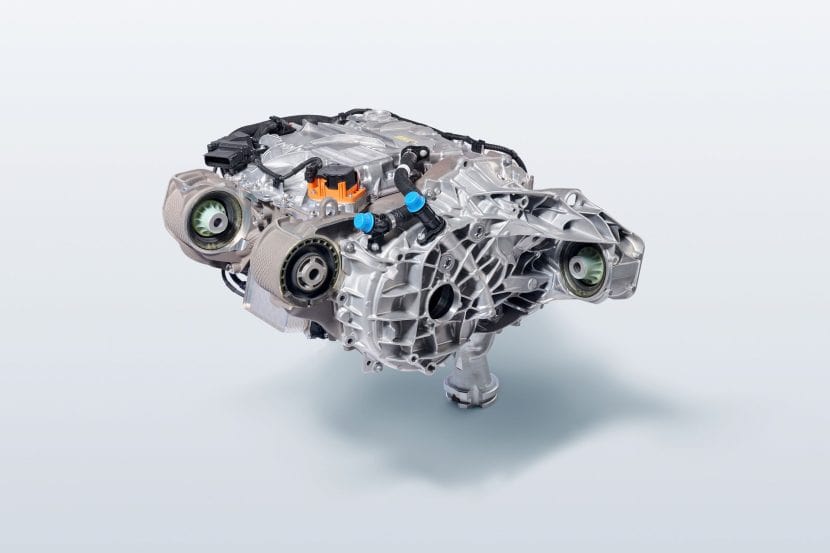
The battery pack drops into the center section. Electric motors and suspension attach to the front and rear modules. Rear-drive or all-wheel-drive configurations require no fundamental redesign.
Lengthening the wheelbase means extending the center rails or adding a section. It’s a skateboard chassis wearing a ladder frame’s boots.
Combustion engines are nowhere in the document. Not as an option, not as a footnote. The patent addresses EV architecture exclusively — battery mounting, motor placement, electric drivetrain packaging. That’s a deliberate omission from a company still selling millions of combustion-powered cars.
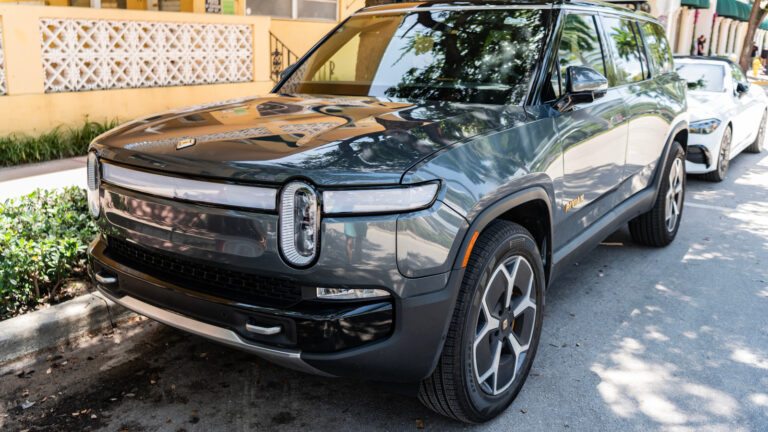
The materials list is ambitious. Beyond steel and aluminum, BMW mentions fiber-reinforced plastic, including carbon fiber, for longitudinal and cross beams. Whether carbon fiber survives the cost-cutting gauntlet between patent and production is another matter entirely, but it signals the engineers are worried about the weight penalty that body-on-frame EVs carry. Rivian’s R1T tips 7,148 pounds. Nobody at BMW wants to build something heavier.
The obvious question is what this platform is for. BMW has been rumored for months to be developing a vehicle internally called the Rugged, chassis code G74 — a direct competitor to the Mercedes-Benz G-Class and Land Rover Defender. Both of those trucks use body-on-frame construction. Both print money for their manufacturers.
The patent’s modularity language fits a program intended to spawn multiple body styles, not a one-off. The scalability — adjust length easily, swap battery sizes, bolt on different drivetrains — reads like a platform business case, not a science project.
But a ladder-frame BMW faces a problem no patent can solve: heritage. The G-Class has been in continuous production since 1979. The Defender nameplate stretches back to 1983. Buyers in this segment aren’t just purchasing capability — they’re purchasing mythology. BMW would arrive with a blank page and a roundel, which means the truck itself would have to be extraordinary.
There’s also the standard caveat. Automakers patent technologies they never produce. Filing protects intellectual property, blocks competitors, and sometimes just reflects an engineering team’s curiosity. BMW’s own document lists potential applications including sedans, hatchbacks, and convertibles — a breadth that suggests either impressive flexibility or the absence of a committed production target.
Still, the specificity here is hard to ignore. Cast construction to reduce manufacturing complexity. EV-only architecture. Modular sizing. These aren’t abstract concepts sketched on a napkin. They’re engineering decisions that cost real money to develop and real effort to patent.
If the G74 is greenlit and rides on this platform, BMW would be making the most significant architectural departure in its modern history — trading its unibody DNA for body-on-frame construction in a segment it has never contested. The timeline fits: a 2024 filing, a 2026 publication, and a potential production window around 2030.
Whether Munich has the nerve to actually build the thing is the only question that matters now.
Share this Story