
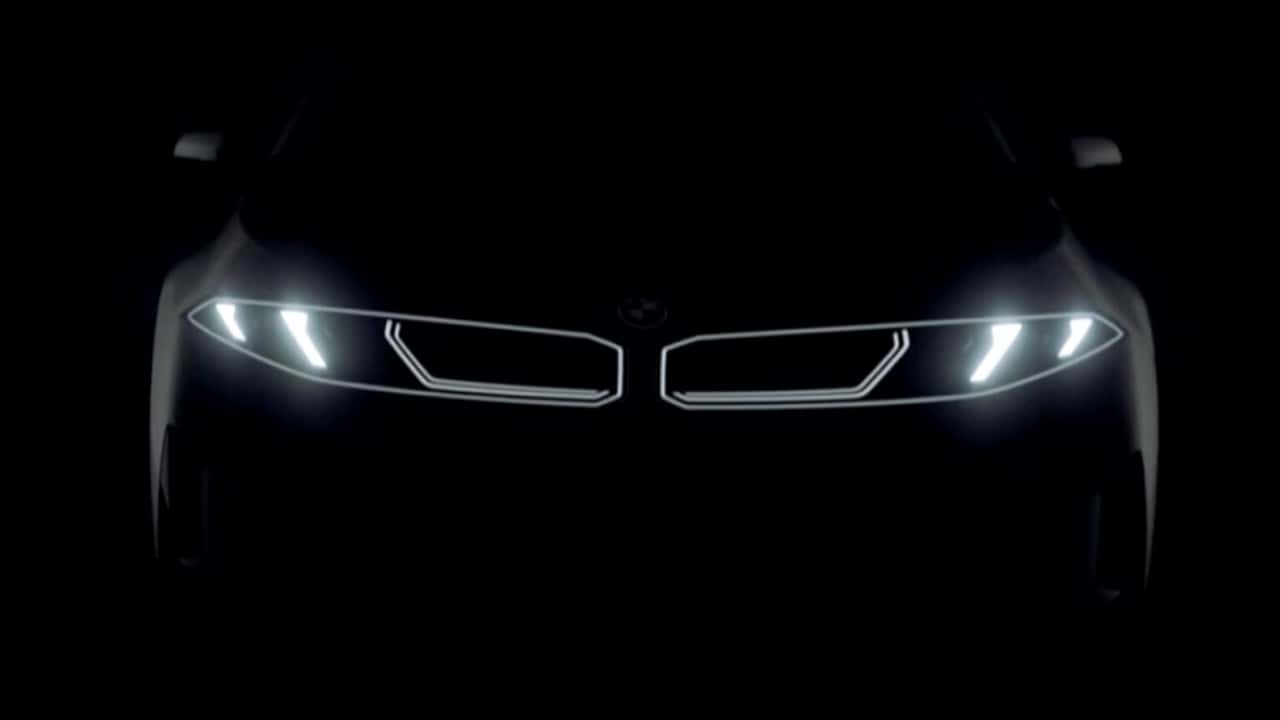


BMW dropped a teaser this week for the Neue Klasse i3 sedan, confirming a March 18 debut date for what may be the most consequential electric car the company has ever built. Not the most expensive. Not the most powerful. The most consequential.
The i3 — and yes, BMW is recycling that nameplate from the quirky city car it killed off in 2022 — will be only the second vehicle built on the Neue Klasse architecture, following the iX3 SUV that launched last year. But sedans are where BMW made its reputation. This is the electric 3 Series, and it carries weight the iX3 never could.
From the teaser images, the proportions look right. Long hood, short overhangs, rear-drive stance. The kidney grille has gone wider and more horizontal, stepping away from the polarizing vertical treatment on the iX3 and closer to what BMW previewed with its Vision Neue Klasse concept back in 2023.
Slim headlights give it a sharper, more technical face. The rear looks cleaner and more production-ready than anything the concept promised.
The platform underneath is the real story. Neue Klasse introduces sixth-generation cylindrical battery cells using NMC chemistry. BMW claims a 20 percent jump in energy density over the prismatic cells used in current models.
That translates directly into range: the i3 is expected to deliver over 800 kilometers on a charge. If that number holds up anywhere close to real-world conditions, it puts BMW squarely in Tesla Model 3 territory — and then some.
An 800-volt architecture enables charging speeds up to 400 kW. BMW’s sixth-generation eDrive system promises 30 percent more range, 30 percent faster charging, and 25 percent greater efficiency than the outgoing tech. Single and dual-motor configurations will be available.
Inside, the i3 follows the iX3’s lead with a minimalist, button-free cabin anchored by a 17.9-inch central touchscreen. A dashboard-wide projection display stretches pillar to pillar. BMW plans to roll this interior philosophy across its lineup, including the next-generation X5 and a facelifted 7 Series, both due in 2026.
That timeline matters. BMW is not easing into this transition. The Neue Klasse rollout is accelerating, and the i3 sedan sits at its center because the 3 Series has always been the volume play, the car that pays the bills.
For decades, it was the benchmark sport sedan. Then BMW got distracted by SUVs, controversial grille designs, and an EV strategy that felt like it was written by committee.
The i3 sedan is a chance to reset. An 800-kilometer range, 400 kW charging, and a design that actually looks like a BMW — that combination didn’t exist in the lineup twelve months ago.
But promises on paper and cars on the road are different things. The iX3 launched to mixed reviews on software refinement and real-world charging consistency. BMW needs the i3 to be bulletproof on delivery, not just impressive on spec sheets.
Tesla’s Model 3 has owned the electric sport sedan conversation for seven years largely by default. Mercedes has the EQE but never figured out how to make people care about it. The i3 is BMW’s clearest shot at reclaiming a segment it once defined.
March 18 is two weeks away. The teaser is over. Now BMW has to show up.

Share this Story