
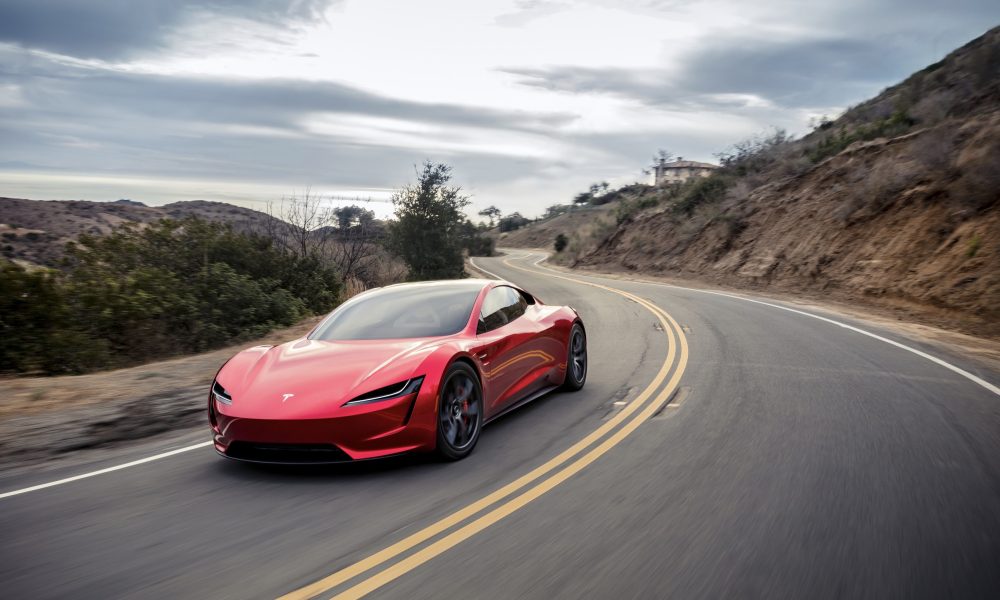


The Tesla Roadster will be built at Gigafactory Texas. That’s the news Lars Moravy, Tesla’s VP of Vehicle Engineering, dropped on the Ride the Lightning podcast this week. It’s a nice detail, but it’s also a consolation prize.
Buried in that same conversation was another timeline slip. Moravy said fans would “start to see a lot of things unfold in the next months” — plural — effectively confirming that the May unveiling Elon Musk hinted at during Tesla’s earnings call isn’t happening. Again.
The Roadster was first shown in 2017. Deliveries were promised for 2020. We are now deep into 2026, and the car remains a ghost.
COVID supply chain problems started the slide, but at some point the excuse shifted from logistics to ambition. Musk, Franz von Holzhausen, and Moravy have all talked about pushing the car’s capabilities beyond anything currently imaginable, including SpaceX-derived cold gas thrusters that could allegedly let the thing hover. That’s a bold claim for a car nobody outside Tesla has driven.
The company hasn’t been idle, of course. The refreshed Model Y hit a historic global sales milestone. The Cybercab entered production at Giga Texas in April.
Tesla’s energy storage business is booming, with a $200 million battery deal just inked for a Meta data center project in Wyoming. There’s a lot happening. The Roadster just isn’t part of it yet.
Musk has said the Roadster will be “the best of the last of the human-driven cars.” It’s a great line. But great lines don’t keep deposit holders warm for nine years.
Meanwhile, Ferrari just demonstrated what happens when a storied automaker actually pulls the trigger on its flagship EV and gets it wrong. The Luce, unveiled over the weekend, has been savaged. Designed by Jony Ive’s LoveFrom studio and priced at roughly $640,000, the car drew comparisons to a Nissan Leaf with a body kit.
Ferrari’s stock dropped more than seven percent on the first trading day after the reveal. Former Ferrari chairman Luca di Montezemolo, not known for public criticisms, essentially said the whole project could have been avoided. He pointed to Porsche’s struggles with EV demand as a cautionary tale.
Coming from the man who ran Ferrari for over two decades, that’s not a hot take. That’s a funeral oration.
Ferrari had already scaled back its EV commitments before the Luce reveal, responding to soft demand for electrified powertrains in the ultra-luxury segment. The car now feels less like a statement of intent and more like an obligation the company wishes it could walk away from.
Two supercars. Two very different problems. Tesla can’t seem to finish building one. Ferrari built one nobody wants to look at.
The Roadster’s perpetual delay has at least preserved its mystique. Every year it doesn’t ship, the expectations ratchet higher. That’s a dangerous game — overpromise long enough and no car can survive first contact with reality.
Right now, Tesla’s vaporware is generating more goodwill than Ferrari’s actual hardware. There’s a lesson buried in these two stories. In the supercar world, being late is embarrassing, but being wrong is fatal.
Tesla still has time to get the Roadster right, assuming “the next months” doesn’t become “the next years” once more. Ferrari, staring down a hostile reception and a cratering stock price, doesn’t have that luxury.
Giga Texas will build the Roadster. Someday. For now, that factory is busy producing Cybercabs — vehicles Tesla can actually sell. The halo car remains exactly that: a bright light hovering just out of reach.
Share this Story