
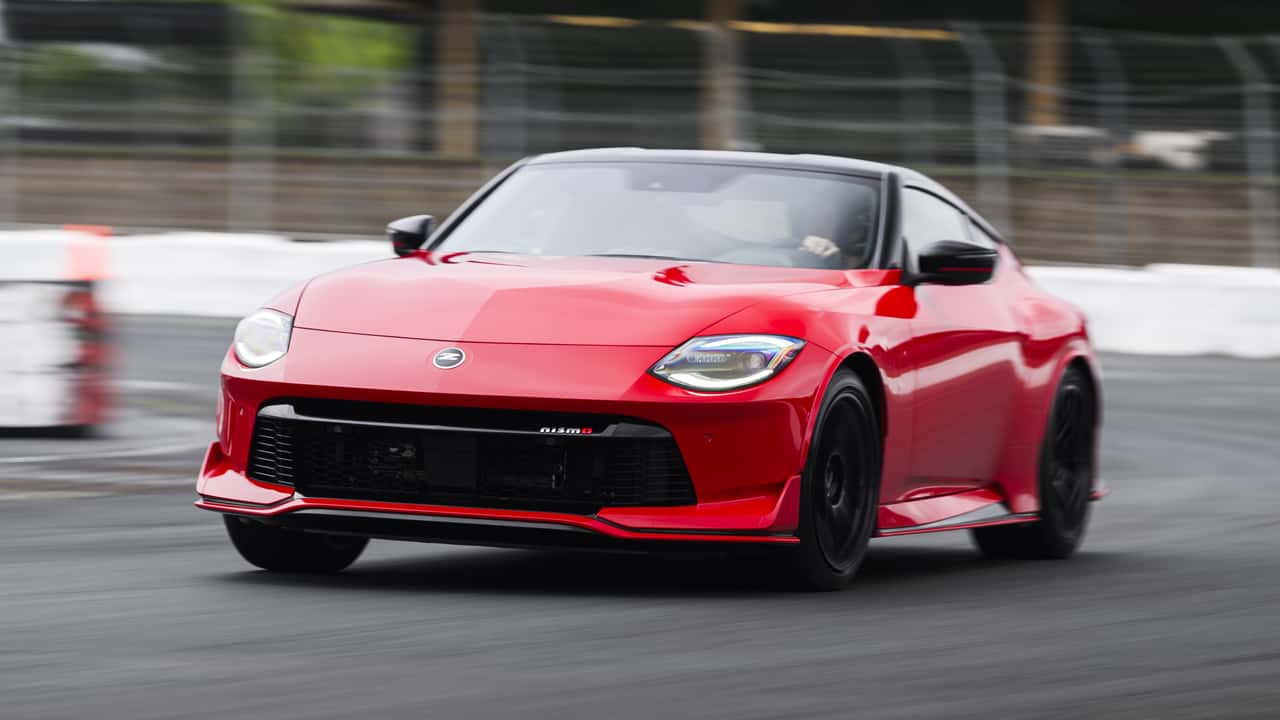


The 2027 Nissan Z starts at $45,735, a $1,510 bump over the outgoing model. That’s the price of admission for a refreshed nose, a retro “Z” badge, and a new shade of green Nissan calls Shinkai Green Pearl. But the most interesting change on the updated Z is one you’ll never see from the outside.
Nissan redesigned the Z’s fuel tank to combat fuel starvation during sustained high-G cornering on track. It’s the kind of fix that tells you exactly who’s been complaining — owners who paid nearly $50,000 for a sports car and then discovered it couldn’t reliably feed its engine through a fast sweeper. That this wasn’t sorted from day one, when the Z launched for 2023 as a car explicitly marketed to driving enthusiasts, is a quiet admission worth more than any press release language.
The rest of the lineup gets predictable price increases. The mid-tier Z Performance now rings in at $55,725, and the Z Nismo tops the chart at $68,505. The Nismo, notably, finally gets the six-speed manual transmission that should have been there from the start. Selling a $68,000 track-focused halo car without a stick shift option was always a strange omission for a nameplate built on analog driving thrills.
Under the hood, nothing changes. The standard twin-turbo 3.0-liter V6 still makes 400 horsepower, and the Nismo version still pushes 420. Both remain paired with either the six-speed manual or a nine-speed automatic, depending on trim. The powertrain has never been the Z’s problem — it’s everything around it that needed attention.
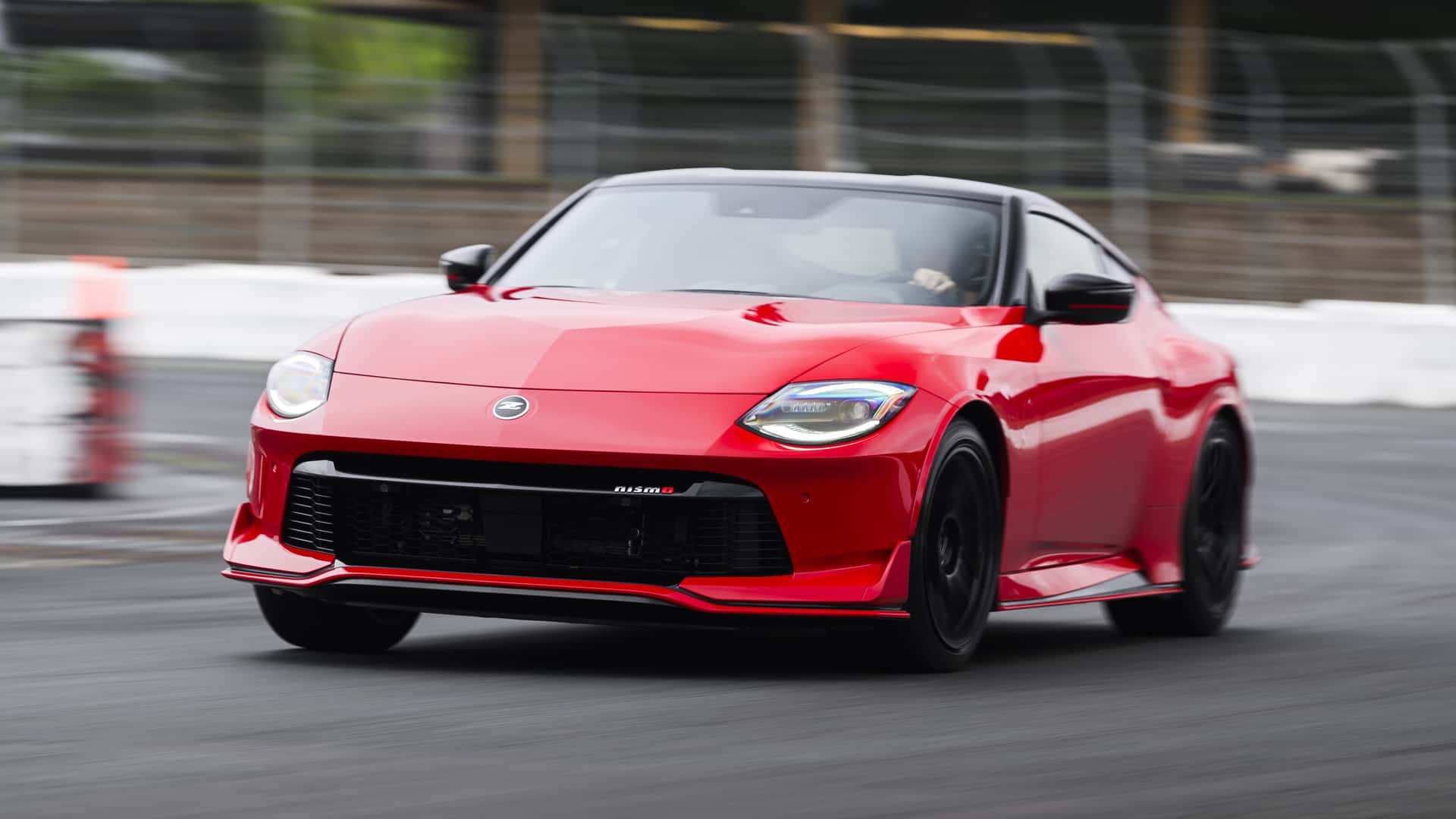
Performance models get bigger shock absorbers aimed at improving ride quality and body control, new 19-inch forged wheels, and a Qi2 wireless charger. There’s also a tan interior option for buyers tired of staring at black everything. These are incremental improvements, the kind automakers make when a full redesign is still years away.
The updated front fascia is genuinely sharper. Swapping the corporate Nissan logo for a standalone “Z” emblem on the nose is a small touch that lands exactly right. It signals that this car exists apart from the crossover-heavy lineup surrounding it, a product Nissan clearly still believes in even as the brand fights for financial survival on multiple fronts.
But context matters. At $45,735 to start, the Z now sits in crowded territory against the Toyota GR Supra, the Ford Mustang EcoBoost, and even base Corvette money if you stretch. The Z’s twin-turbo six is potent and characterful, but the car’s aging interior and infotainment have been weak spots since launch. A wireless charger and new wheel design don’t change that calculus much.
The fuel tank fix is the real story here. It’s the kind of engineering correction that separates a showroom ornament from a legitimate track tool. Enthusiasts who’ve been waiting for Nissan to iron out the Z’s rough edges now have one fewer excuse to hold off. Whether a $1,500 price hike for what amounts to a mid-cycle polish is reasonable depends entirely on how badly you want that “Z” on your nose instead of a horse, a bow tie, or a pair of Toyota logos.
The 2027 Z arrives at U.S. dealers later this summer. It’s a better car than the one it replaces. It’s also a reminder of how long it took to get there.


Share this Story