
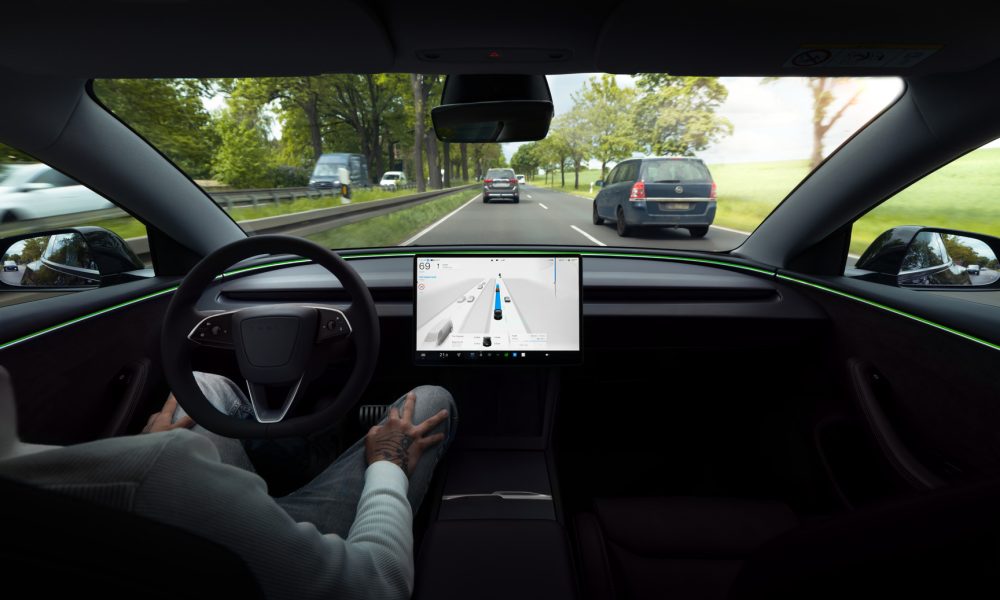


Parking is overwhelmingly the most frequent reason Tesla owners grab the wheel from Full Self-Driving. Not a near-miss with a pedestrian. Not a blown red light. Parking.
Elon Musk dropped that data point weeks ago, and now he’s building a strategy around it. The CEO confirmed on X that Tesla plans to roll out FSD updates allowing vehicles to remember individual driver interventions and adapt to personal preferences. We’re talking about where you park, how you enter the spot, which highway lane you prefer, and even which driveway is actually yours.
The trigger was a post from Tesla community figure Whole Mars, who complained that FSD ignores his enabled carpool lane setting. Musk responded that the car would soon “remember your specific interventions and match each person’s individual preferences.” Two follow-up posts made clear that parking behavior sits at the center of the effort.
This is Tesla trying to close a gap that has nothing to do with safety-critical performance. FSD has gotten genuinely competent at the hard stuff — navigating complex intersections, reading traffic flow, handling unprotected left turns. The interventions that pile up now are almost entirely preference-based.
The car lingers in the left lane. It picks the wrong parking spot. It pulls into a neighbor’s driveway. None of these are dangerous, but every single one forces the driver to take over, and every takeover is a data point against the case for unsupervised autonomy.
Left-lane camping alone is illegal in more than 30 states. Tesla hasn’t confirmed whether lane preference memory will be part of this update, but the implications are obvious. If FSD can’t stay out of the passing lane without being told, regulators are going to have questions about letting it drive without anyone in the seat.
There’s some evidence the cars are already learning at a primitive level. Teslarati’s own testing found that FSD handles one specific “Except Right Turn” stop sign — one driven past frequently — with real confidence, while others encountered less often still trip it up. The neural network appears to weight repeated exposure, and formalizing that into a deliberate preference-learning system is the logical next step.
The timing matters. Tesla is pushing hard toward unsupervised FSD deployment in major cities. Its Hollywood Diner, which just turned one year old, was built around the idea that a Cybercab could pull in, place a food order from its touchscreen, charge, and leave — no human required at any point in the transaction. That business model collapses if the car can’t park itself in the right spot without intervention.
Every preference-based takeover is a crack in the unsupervised driving thesis. If a human has to correct the car’s parking choice or lane selection even once per trip, that trip isn’t autonomous. It’s supervised.
Tesla can publish all the miles-per-intervention statistics it wants, but if the interventions that remain are the mundane, repetitive, easily predictable kind — the kind a human driver handles without thinking — the technology looks incomplete in exactly the wrong way.
Teaching the car to remember that you always back into the garage, always avoid the left lane on I-95, and always park on the far side of the grocery store lot sounds trivial. It isn’t. It’s the difference between software that drives and software that drives like it knows you. The first is a technology demo. The second is a product people will actually trust enough to let go of the wheel.
Musk framed this as a pathway to eliminating interventions. He’s right that it addresses the highest-volume problem. Whether Tesla can pull it off at scale, across millions of drivers with millions of idiosyncratic habits, without introducing new failure modes — that’s the part he didn’t mention.
Share this Story