


On October 15, two flagship sports cars broke cover on the same day. One of them flipped through the air. The other sat still and let people look at it.
Nearly a month later, the man running Porsche has picked his side. Speaking at a conference in Berlin this week, Michael Leiters said Porsche wants to “completely steer clear from any kind of effects and shows.”
He didn’t name Tesla. He didn’t need to.
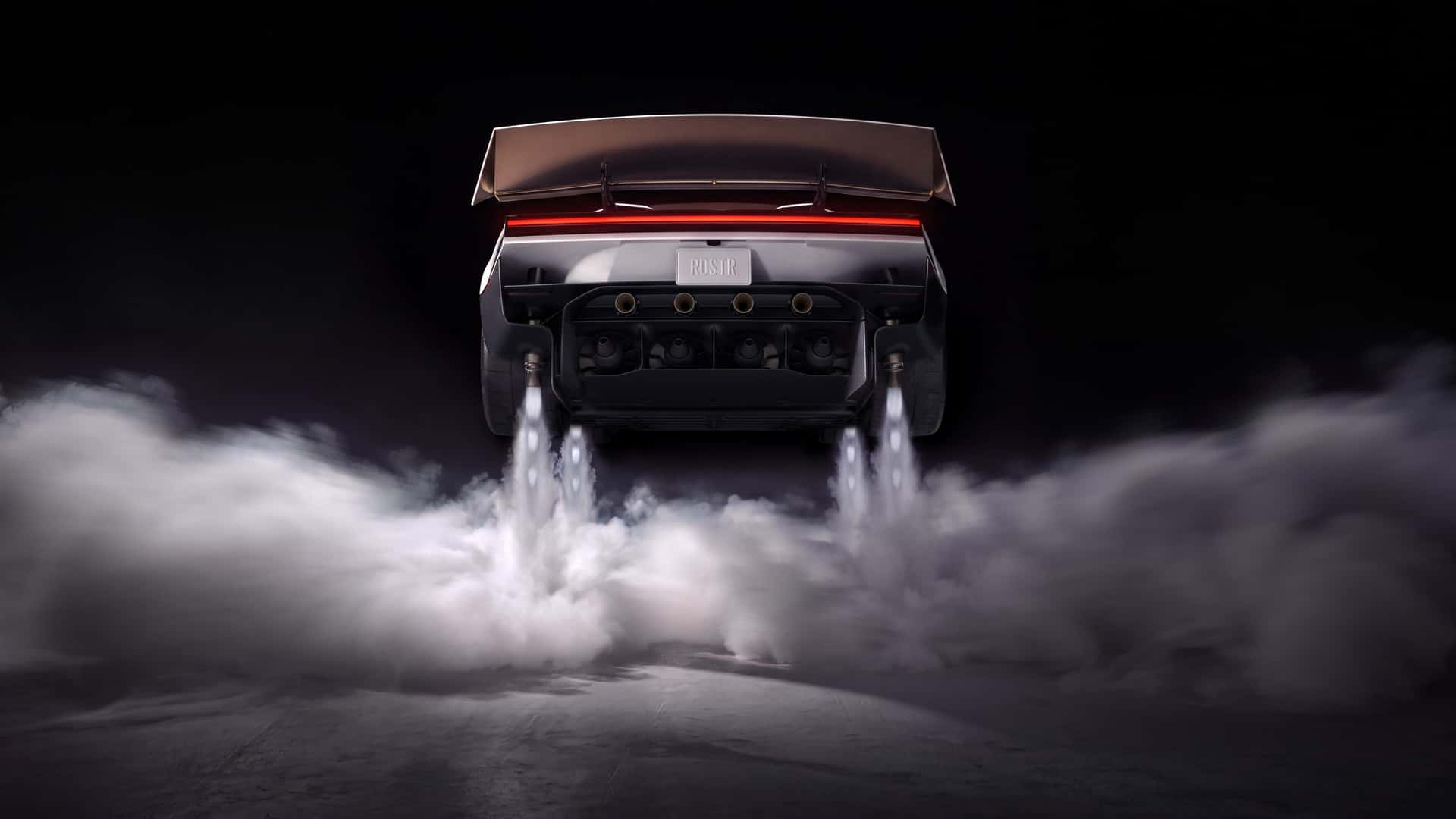
Tesla’s next-generation Roadster arrived with a ramp, a launch, a midair rotation and a clean landing on all four wheels. The trick ran on compressed-air thrusters developed with help from SpaceX engineers.
It made for a great clip. It also arrived almost nine years after Tesla first showed the Roadster prototype in 2017.
The lineup is ambitious. A Performance model gets suction fans. A Thrust variant gets rear-mounted cold-gas thrusters, and Tesla claims it hits 60 mph in under 0.9 seconds.
A single-seat Rocket version wears thrusters all around, though it won’t be road-legal.
What Tesla didn’t show was a price. Or a firm production schedule.
Elon Musk has floated 2028. Anyone who placed a deposit on the last promise has heard a target date before.
Porsche’s answer was the Mission S, a mid-engined concept positioned above the 911. The engine remains under wraps, but the signs point to eight cylinders, either a V8 or a flat-eight.
The car is being engineered to take a hybrid or a pure combustion powertrain. A manual gearbox is on the table if enough buyers ask for one.
None of that will flip over a ramp. Leiters says it doesn’t have to, because the two cars chase different customers.
According to Leiters, the response from potential buyers has been “overwhelming.” He has reason to lean on that word. The Mission S sits at the center of his plan to push Porsche further upmarket.
A production version would put Porsche back in the supercar segment for the first time since the 918 Spyder bowed out in 2015. That aims it straight at Ferrari.
The bigger target sits on the balance sheet. Porsche is wrestling with financial strain and falling sales in China, and the company’s stated plan is to sell fewer cars at higher prices.
Exclusivity and average transaction price are the levers. Volume is not.
So when Leiters talks about “tangible technological innovation” over spectacle, he is also describing a business model. Porsche needs wealthy buyers to believe the next car is worth more than the last one. A stunt doesn’t write that check.
Not every rival executive shares his distaste. Ferrari CEO Benedetto Vigna gave Tesla’s Roadster reveal a perfect 10 out of 10.
That’s the same Ferrari whose turf the Mission S is built to invade. Maranello’s boss applauded the show. Zuffenhausen’s boss wants nothing to do with one.
There is an awkward symmetry in all of it. Porsche’s upmarket concept and Tesla’s long-delayed hypercar landed on the same date, and only one of them owned the headlines that week.
Leiters is now the one explaining why that was the plan.
Neither car is confirmed for showrooms. The Mission S still needs a production green light. The Roadster still needs a price, a factory slot and a date that holds.
One company is selling a flight. The other is selling restraint. Buyers have yet to write a check for either.
Share this Story