


BMW Group Plant Landshut is now writing the software that will teach humanoid robots how to work a factory floor. The Bavarian component plant, which produces everything from engine parts to body castings, has been designated as BMW’s central hub for developing AI-driven robotics software. These are the digital brains that could eventually let two-legged machines handle tasks currently done by human hands.
The announcement, made July 21, builds on pilot projects BMW already has running at its Leipzig and Spartanburg plants. But where those efforts test specific hardware, Landshut’s job is different. It’s building the underlying software stack — the perception, decision-making, and motion-planning layers that make a humanoid robot more than an expensive mannequin.
BMW is betting on open software platforms that blend traditional deterministic programming with newer Vision-Language-Action models. VLA models integrate what a robot sees, what it’s told, and what it does into a single AI framework. The goal is a modular ecosystem where different robotic systems can share learned skills across tasks and locations.
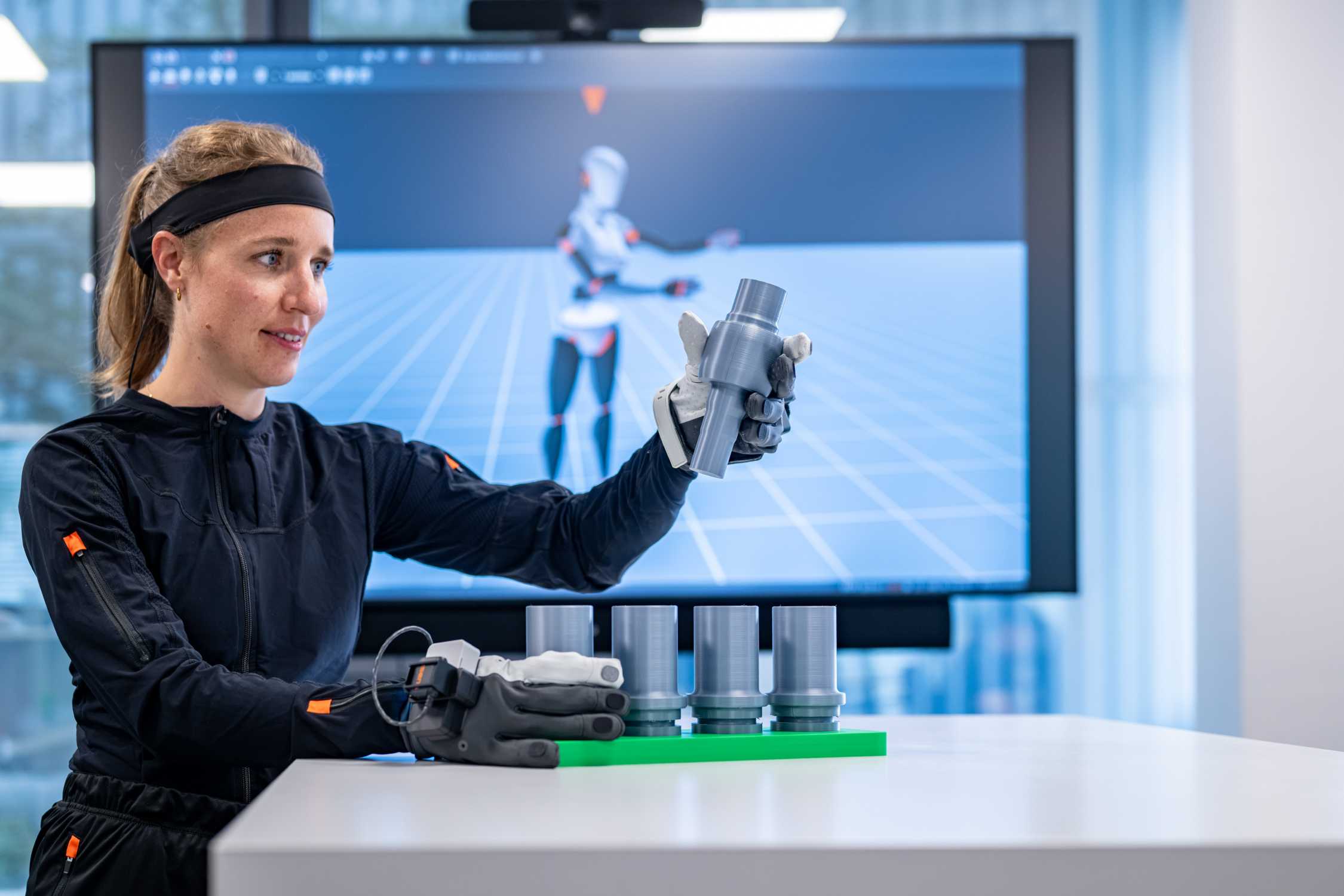
The data pipeline is built on a learn-by-watching approach. Human workers demonstrate tasks while wearing motion capture suits and data gloves, with camera systems recording every movement. That data gets converted into generalized behavioral models — BMW calls them “policies” — that can theoretically be applied across different robots and different jobs.
It sounds futuristic. It is futuristic. But BMW is being unusually careful not to oversell it.
“We are not just testing what is technically possible, but also where humanoid robotics can truly deliver reliable benefits in component production,” said Christoph Jagoda, BMW’s Physical AI project manager at Landshut. That’s a notable hedge from a company that could easily have framed this as a revolution.
The practical focus is on tasks requiring flexibility, fine motor skills, and spatial awareness — recognizing environments, determining object positions, planning efficient movements, gripping and placing components. These are precisely the jobs that traditional industrial robots, bolted to the floor and repeating the same motion a million times, have never handled well.
BMW isn’t going it alone. A startup called Athenyx Robotics, spun out of RWTH Aachen University’s Laboratory for Machine Tools and Production Engineering, is co-developing what they call an “intelligence stack.” The University of Applied Sciences Landshut is also involved, contributing to simulation and data generation work.
The automotive industry’s relationship with humanoid robotics is still in its courtship phase. Tesla has Optimus. Hyundai owns Boston Dynamics. Mercedes has tested Apptronik’s Apollo robots.
BMW’s approach is less about building or buying a particular humanoid platform and more about owning the software layer that makes any platform useful. It’s a play for control of the intelligence, not the hardware.
That distinction matters. If the software is truly platform-agnostic and transferable, BMW avoids being locked into a single robotics supplier. It’s the same strategic logic that has driven automakers to develop their own battery management systems and autonomous driving stacks rather than ceding that territory to tech companies.
New approaches are tested outside active production first, then piloted, then scaled. It’s staged, deliberate, and — if you’ve watched enough factory automation hype cycles come and go — refreshingly modest in its promises.
Plant Landshut’s broad manufacturing portfolio gives it a natural advantage as a proving ground. The variety of parts and processes means any software validated there has already been stress-tested across diverse conditions.
Whether humanoid robots will actually earn their keep on automotive production lines remains an open question. The physics of manufacturing don’t care about press releases. But BMW is clearly positioning itself to have the answer before its competitors do — not by buying the flashiest robot, but by writing the code that tells it what to do.
Share this Story