
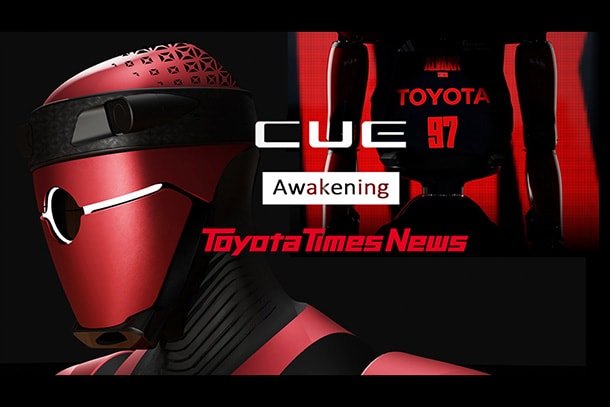


On April 12, a humanoid robot walked onto the court at Toyota Arena Tokyo during an Alvark Tokyo home game, picked up a basketball, dribbled it, and moved across the floor with disturbingly fluid motion. The crowd roared. This was CUE7, and it represents something far more significant than a halftime gimmick.
Toyota’s AI basketball robot project started in 2017 as a volunteer effort inside the Toyota Engineering Society. Engineers working on their own time, building artificial intelligence from scratch, no outside frameworks, no shortcuts. The kind of skunkworks project that big companies used to kill with quarterly reviews but that Toyota apparently let breathe.
The results have been stacking up. In 2019, CUE sank 2,020 consecutive free throws, a Guinness World Record for most consecutive free throws by a humanoid robot. In 2024, it drained a shot from over 24.5 meters, earning a second Guinness record for the longest shot by a humanoid robot.
Shooting baskets from a fixed position is impressive. But CUE7 is a different animal entirely.
The development team calls it a “full model change,” borrowing language straight from Toyota’s automotive playbook. The robot doesn’t just shoot anymore. It moves, it dribbles, and it navigates the court with what Toyota describes as smooth, human-like movements. The leap from stationary sharpshooter to mobile ball-handler represents an enormous jump in real-time sensor processing, balance control, and decision-making under dynamic conditions.
That’s the quiet part worth paying attention to. Every problem CUE7 solves on a basketball court — spatial awareness, object manipulation while in motion, reactive balance adjustments — maps directly onto problems Toyota needs to solve elsewhere. Autonomous driving, warehouse robotics, elder care. The basketball is a proof of concept wearing sneakers.
One member of the development team put it bluntly: “I think we can build something that will make people say, ‘Japan still has Toyota.'” That sentence carries weight beyond corporate pride. Japan’s technology sector has watched South Korea, China, and the United States sprint ahead in AI, semiconductors, and electric vehicles.
Toyota itself has taken heat for years over its cautious approach to battery-electric cars. This statement reads less like confidence and more like a declaration of intent from engineers who feel they have something to prove.
And they might be right to feel that way. While Boston Dynamics makes viral videos and Tesla pitches Optimus as the future of labor, Toyota’s engineers have been quietly iterating on a robot that performs a genuinely complex physical task with precision that borders on eerie. Seven generations of development over eight years, all driven by volunteers inside the company who apparently refused to let the project die.
The technology itself is where the tension lives. Toyota is the world’s largest automaker, locked in a generational bet on hydrogen, hybrids, and a measured transition to full electrification. Its critics say it moves too slowly. Its defenders say it moves deliberately. CUE7 suggests there are pockets inside the company pushing boundaries that the corporate strategy doesn’t always advertise.
A basketball robot won’t sell a single Camry. But the AI architecture that lets a humanoid machine dribble a ball while walking across a gymnasium floor could end up inside vehicles, factories, and homes. Toyota has a habit of playing long games. This one started with a free throw and now involves a robot that can handle the ball on the move.
Eight years, seven generations, two world records, and a machine that just learned to dribble. The scoreboard is still running.
Share this Story