
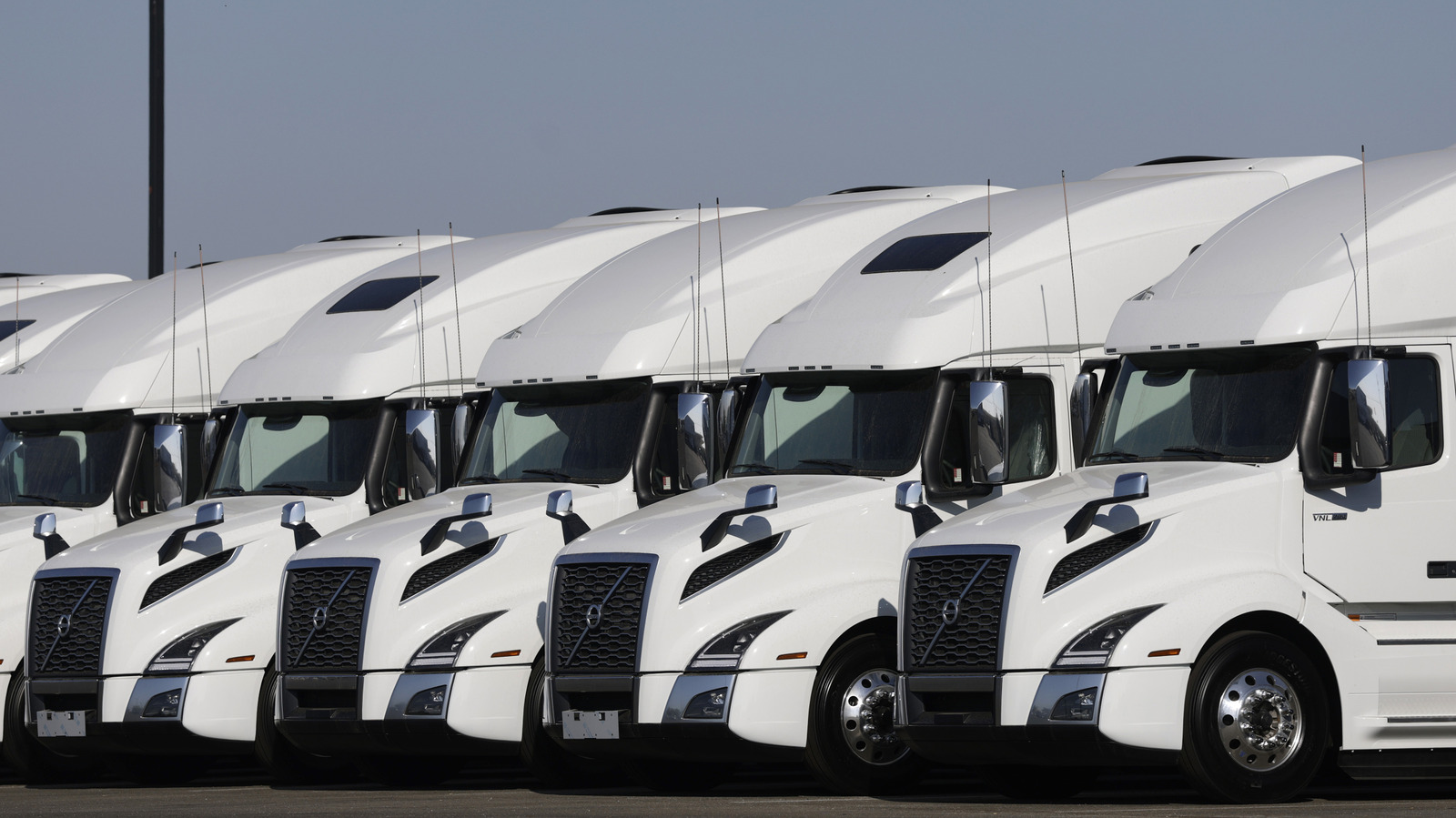


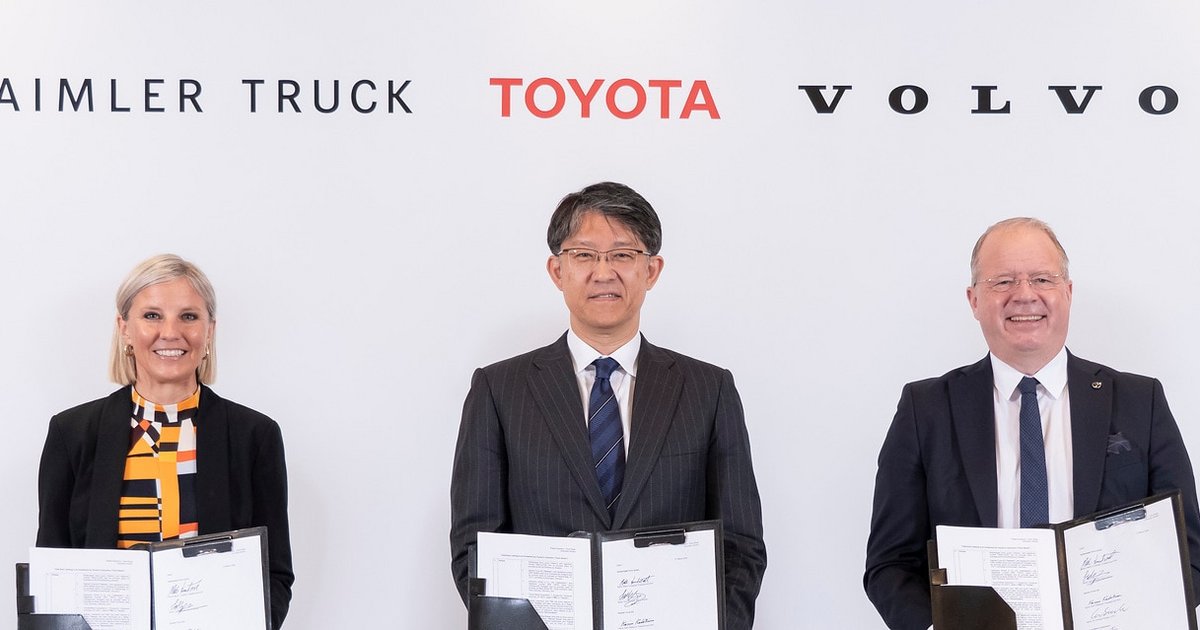
Three of the largest vehicle manufacturers on earth just locked arms around a technology that has no refueling network to support it. Toyota signed a non-binding memorandum of understanding in Tokyo on March 31 to join Daimler Truck and Volvo Group as an equal shareholder in Cellcentric, the fuel cell joint venture Daimler and Volvo founded in 2021.
Toyota will participate through a capital increase, bringing its 30-plus years of fuel cell development into a company with roughly 560 employees, 700 patents, and facilities in Germany and Canada. The goal is to develop, produce, and sell fuel cell systems for heavy-duty trucks and off-road applications worldwide.
The executives delivered their lines on cue. Daimler Truck CEO Karin Rådström called it a way to “further scale hydrogen technology.” Volvo’s Martin Lundstedt said it sends “an important signal to customers, suppliers, and others in the ecosystem.” Toyota’s Koji Sato invoked the dream of “a hydrogen society.
Now here’s the uncomfortable math. When Cellcentric launched five years ago, it projected fuel cell truck production by 2025 and broader hydrogen adoption between 2027 and 2030. Neither happened. The company’s own website now points to 2050, a quarter-century delay baked quietly into the timeline while the press releases stayed upbeat.
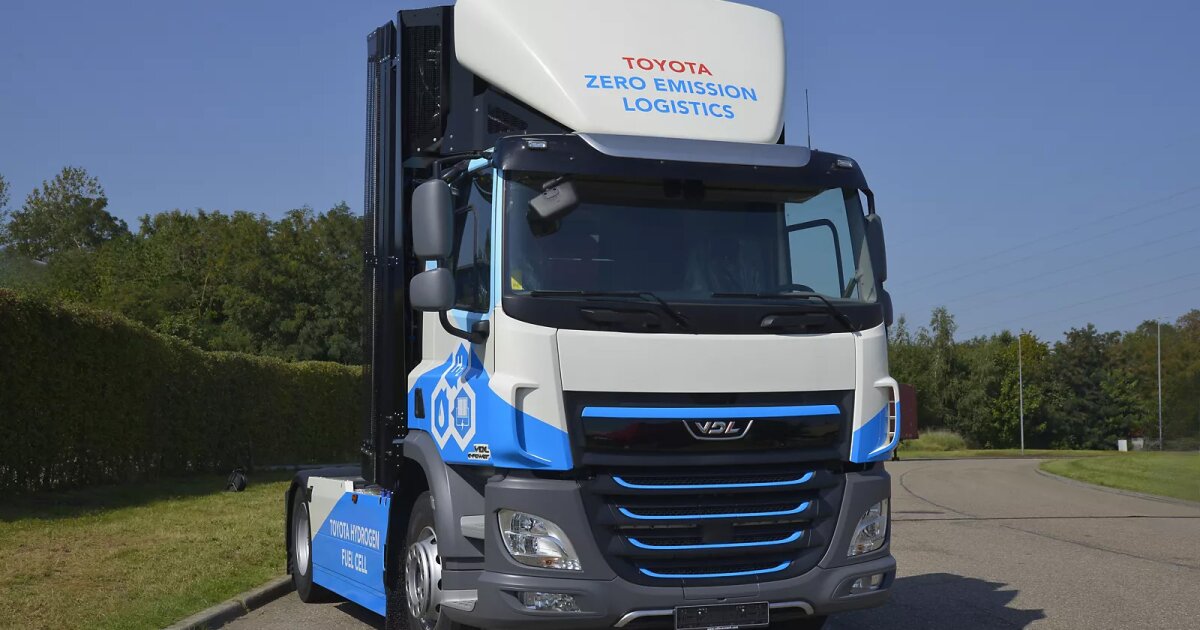
The technology itself isn’t the bottleneck. Cellcentric’s NextGen fuel cell delivers 500 continuous horsepower and meaningful efficiency gains. Adding Toyota’s manufacturing expertise and unit-cell know-how should sharpen that edge further.
Nobody doubts these three companies can engineer a brilliant fuel cell stack. The problem is everything outside the truck.
The United States has roughly 54 hydrogen fueling stations, almost all in California. Europe is marginally better but still nowhere close to the density required for long-haul commercial routes. Building that infrastructure demands billions of dollars, political will, and a customer base that doesn’t yet exist because the trucks don’t exist either.
Battery-electric trucks, meanwhile, keep closing the gap. EV chargers are being installed at record pace. Charging speeds improve every year and batteries get cheaper. The runway for hydrogen narrows each time a fleet operator plugs in a Freightliner eCascadia or a Volvo VNR Electric and finds it good enough.
That doesn’t mean hydrogen is dead for heavy transport. Long-haul routes, extreme payloads, and cold climates still present genuine challenges for batteries. A fuel cell rig that can match diesel range without the emissions penalty has a real case, if someone builds the stations.
Cellcentric says it intends to collaborate with “industry associations and partners across the entire hydrogen value chain” to develop supply and infrastructure. That’s the corporate equivalent of hoping someone else writes the check. Toyota, Daimler, and Volvo are among the most capitalized industrial companies in the world.
If they’re not willing to build the stations themselves, the way Tesla built Superchargers when no one else would, then they’re asking governments and energy companies to take the risk on their behalf.
The agreement remains non-binding, subject to board approvals and regulatory clearance. Equal shareholding among three global giants sounds like strength. It can also mean three-way paralysis when hard spending decisions arrive.
Toyota just put its name next to two European truck titans on a bet that hydrogen will power the freight economy of the future. The fuel cell can do the job. The fuel can’t get there yet. And a 2050 target date is less a business plan than a prayer that somebody, somewhere, solves the chicken-and-egg problem before these companies run out of patience, or their shareholders do.
Share this Story