
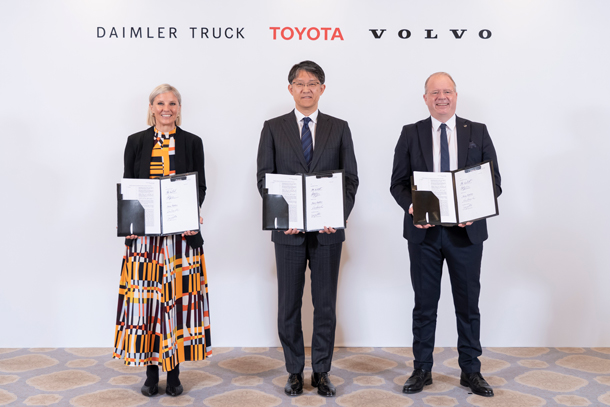


Three years ago, Daimler Truck and Volvo Group launched cellcentric as a 50-50 joint venture to develop hydrogen fuel cell systems for heavy-duty trucks. Now Toyota wants in, and the two European heavyweights are making room at the table.
Toyota Motor Corporation announced its intention to join cellcentric as an equal shareholder alongside Daimler Truck and Volvo Group. If completed, the deal would restructure the venture into a three-way split, giving the world’s largest automaker a direct stake in what was designed to be Europe’s flagship hydrogen trucking play.
The move is striking for several reasons. Toyota has spent more than three decades developing its own hydrogen fuel cell technology, arguably more than any other automaker on Earth. The Mirai sedan, now in its second generation, remains the most visible consumer hydrogen vehicle anywhere. Toyota’s fuel cell stacks already power buses in Japan and have been tested in commercial truck applications through partnerships in North America.
So why buy into someone else’s venture?
The answer lies in scale, cost, and the brutal economics of hydrogen infrastructure. No single company, not even Toyota, can will a hydrogen ecosystem into existence alone. Fuel cell technology for long-haul trucking demands a different set of specs than passenger cars — higher durability, more power, longer range between refueling.
Commercializing those systems means sharing the enormous capital burden of development, testing, and manufacturing. Cellcentric was established in 2021 with exactly that logic. Daimler Truck, the world’s largest truck manufacturer, and Volvo Group, the second largest, decided that competing on fuel cell development made less sense than pooling resources.
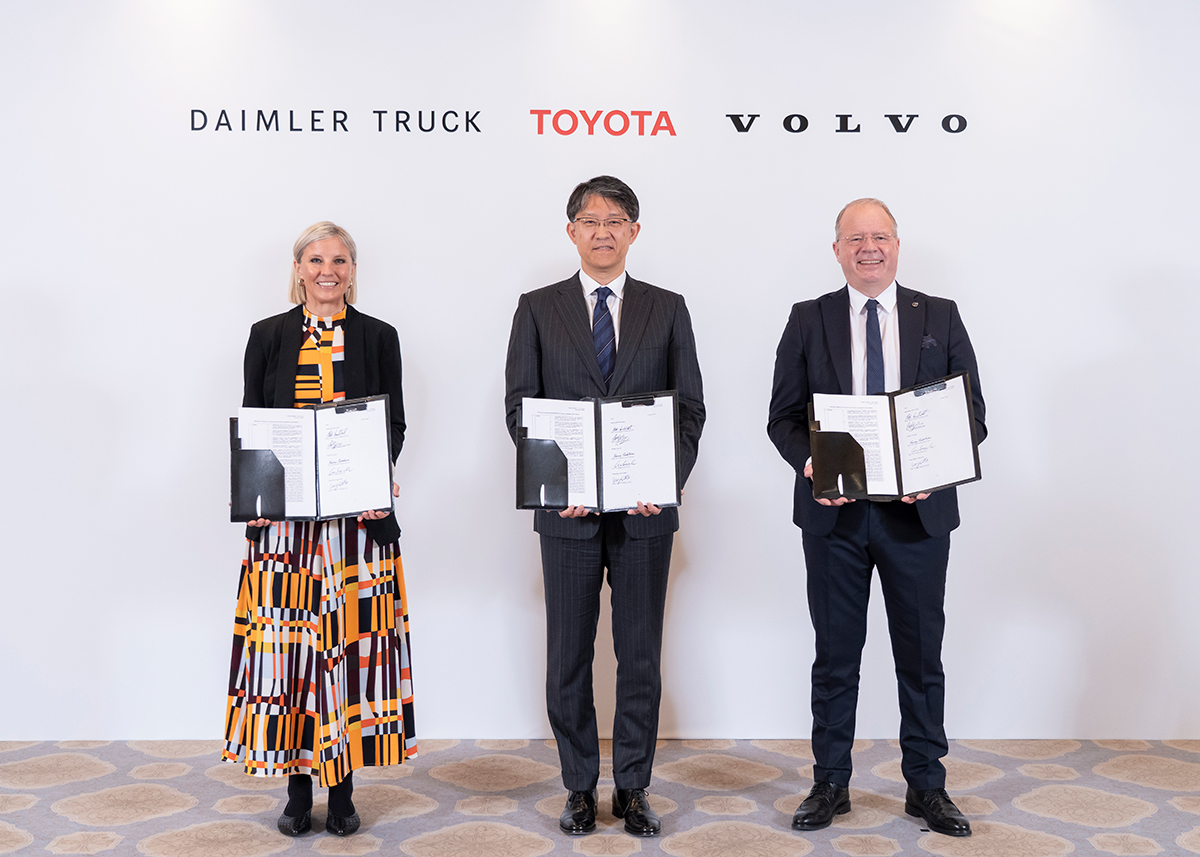
Their stated goal: production-ready hydrogen fuel cell systems for heavy-duty applications by the second half of this decade. Adding Toyota brings something neither European partner possesses in the same measure — decades of accumulated fuel cell IP and real-world deployment experience. Toyota’s fuel cell stack technology is widely regarded as among the most mature in the industry.
The company has also invested heavily in hydrogen production and storage research, areas where cellcentric needs every advantage it can get. For Toyota, the partnership opens doors to the European commercial vehicle market without building a truck brand from scratch. It also signals a philosophical shift.
Toyota has historically preferred to develop core technologies in-house, licensing or supplying components to partners on its own terms. Joining as an equal shareholder — not a technology licensor, not a supplier, but a co-owner — represents a different posture entirely.
The timing matters too. Battery-electric trucks are gaining ground fast in short-haul and regional applications, with companies like Tesla, BYD, and even Daimler’s own eActros pushing hard. Hydrogen’s best case rests in long-haul, heavy-payload routes where battery weight and charging time become liabilities.
But that case only holds if fuel cell costs come down dramatically and refueling infrastructure actually materializes. Three of the world’s most resource-rich vehicle manufacturers betting together on hydrogen trucking sends a signal to policymakers, infrastructure developers, and fleet operators. It says the industry is not hedging lightly.
The transaction remains subject to regulatory approvals and final agreements. No financial terms were disclosed. But the structural message is clear: the hydrogen truck race just consolidated around a new power trio, and the competitive math for every other player in this space just changed.
Whether hydrogen ultimately wins the long-haul argument is still an open question. What is no longer in question is how seriously these three companies intend to find out.
Share this Story