
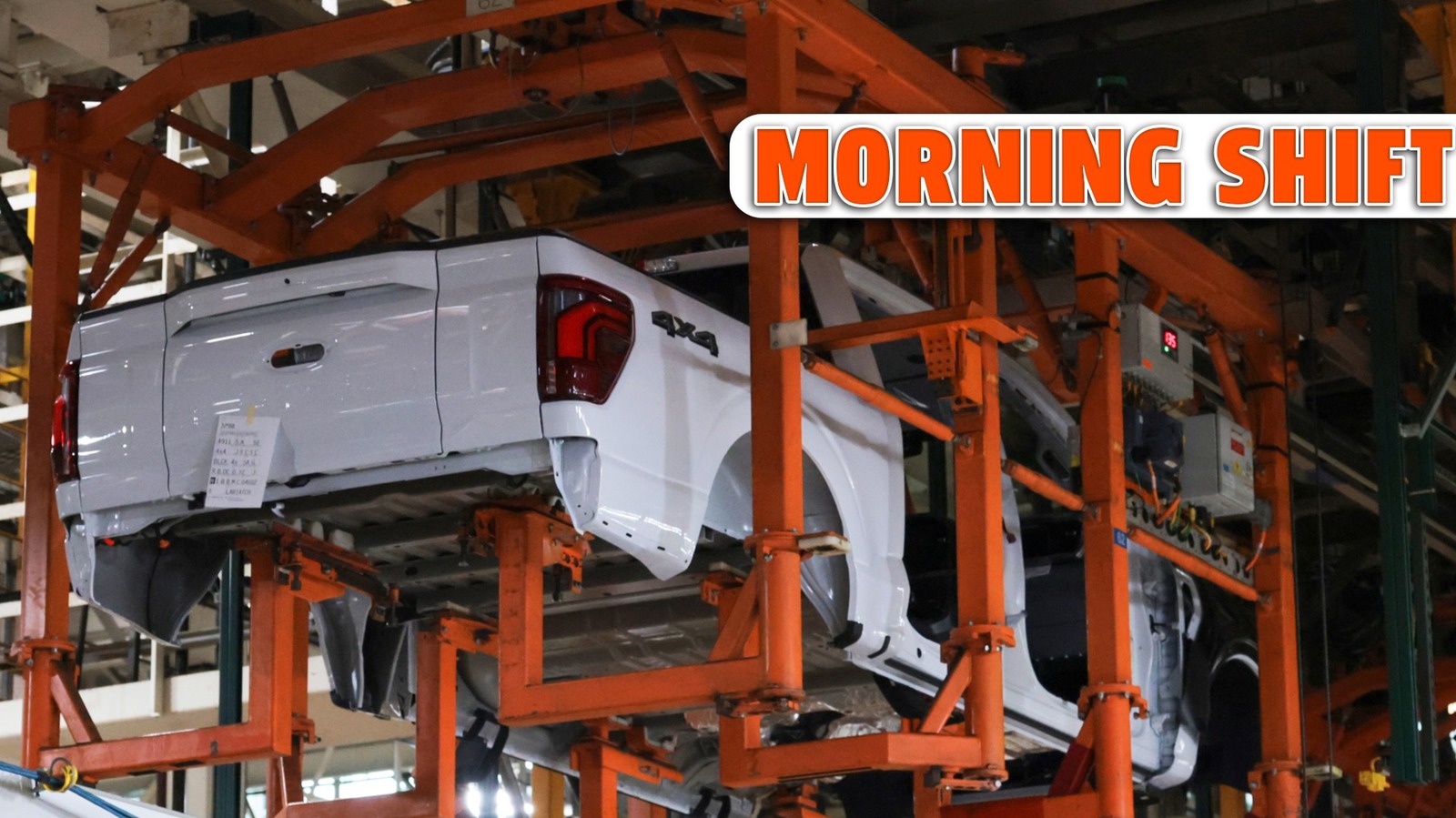


Ford sold 159,901 F-Series pickups in the first quarter of 2026, a 16 percent decline from a year ago. The company is still number one. But the gap is shrinking, and the wolves smell blood.
A massive fire at an aluminum supplier in New York last year threw Ford’s truck production into chaos, and the automaker hasn’t fully recovered. At the end of Q1, Ford had a 55-day supply of F-Series pickups on hand, below the 60-day industry benchmark for healthy inventory. The company says it’s down roughly 60,000 pickups compared to this time last year but insists it has the trucks to meet demand.
Its rivals aren’t waiting around to find out.
General Motors announced it will ramp up heavy-duty Chevy Silverado and GMC Sierra production at its Flint, Michigan plant starting in June. GM sold 127,545 Silverados in Q1, essentially flat year-over-year, plus 75,607 Sierras. Combined Silverado and Sierra sales last year were the best in two decades, and GM says sustained demand is driving the production increase.
Ram is pushing even harder. Stellantis’ truck brand posted a 24.8 percent sales increase in Q1, moving 98,425 units, its biggest quarterly gain in three years. Ram CEO Tim Kuniskis credits the return of the 5.7-liter HEMI V-8 engine to the 1500 lineup, two model years after it was discontinued.
The problem is that Ram’s factories can’t build HEMI-equipped trucks fast enough to meet the surge in orders.
Kuniskis is candid about the difficulty of luring buyers away from Ford. “Ford in particular is over 80% loyalty,” he told the Detroit Free Press. “It may be generational loyalty.” But he’s trying anyway, leaning on aggressive warranty packages and the visceral appeal of a big V-8 in an era of downsized turbo engines.
And Ram isn’t stopping at the 1500. Stellantis last week unveiled North American plans for a compact Rampage pickup to challenge the Ford Maverick, a midsize truck called the Dakota, and a range-extended Ram 1500. That’s a full-spectrum assault on Ford’s truck portfolio, not just a shot at the crown jewel.
Ford’s response has been characteristically defiant. Said Deep, the automaker’s Director of North America Communications, told the Free Press that “leaders lead” and that “for nearly 50 years, millions of truck owners have spoken.” The F-Series is closing in on a half-century as America’s best-selling truck, and that’s a legacy no quarterly sales dip erases overnight.
But legacies don’t build themselves on momentum alone. They require product on dealer lots, and Ford’s supply chain has been unreliable for going on two years now. The aluminum fire was a single catastrophic event, but the recovery has been grinding and slow, the kind of protracted weakness that competitors build strategies around.
GM adding shifts in Flint isn’t a whim. Ram reviving the HEMI isn’t nostalgia. These are calculated moves timed to exploit a specific vulnerability, and Ford knows it.
The full-size pickup market remains the most profitable segment in the American auto industry, with average transaction prices well north of $55,000. Every point of market share is worth billions. Ford can’t afford to cede ground, even temporarily, because truck buyers who switch and have a good experience don’t always come back, generational loyalty or not.
Kuniskis understands this dynamic intimately. Poaching is expensive, he admits. But when your rival’s factories are struggling and your dealers have inventory, the math changes.
Ford’s 50-year streak is not in immediate jeopardy. Even with a 16 percent sales decline, the F-Series outsold the Silverado by more than 32,000 units last quarter. But the trajectory matters more than the snapshot.
GM and Ram are accelerating. Ford is playing catch-up on its own production line. That’s not where a leader wants to be.


Share this Story