
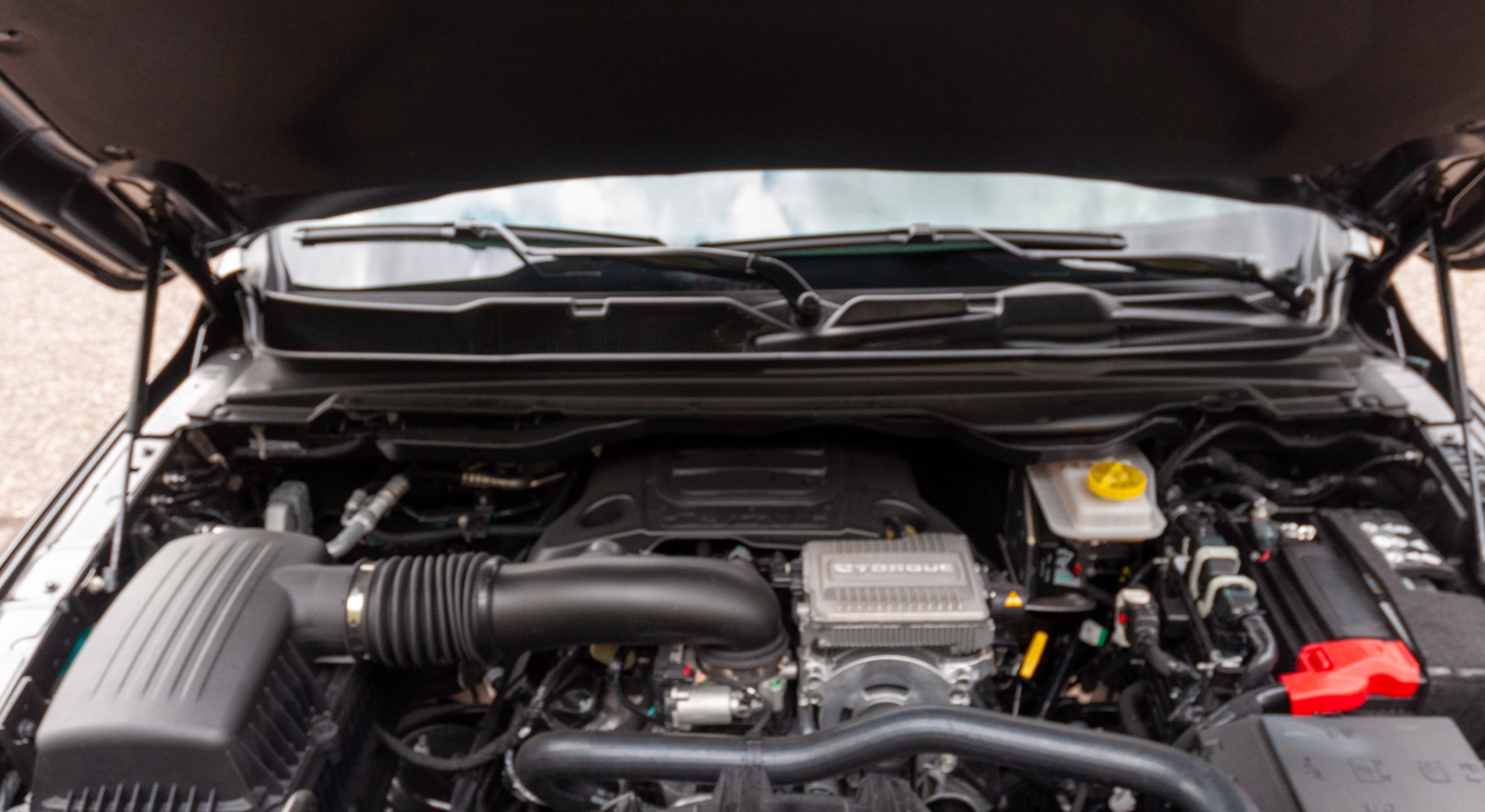


Forty percent of pickup truck buyers won’t even consider a brand that doesn’t offer a V8 engine. That’s the number Stellantis CEO Antonio Filosa dropped Thursday in Detroit, and it explains everything about why Ram got the Hemi back before Dodge did.
Filosa, the man tasked with pulling Stellantis out of its tailspin, framed the V8’s return as part of a “Freedom of Choice” powertrain strategy. Once the Trump administration relaxed emissions targets, Stellantis moved fast. Less than a year, by Filosa’s telling, to get the Hemi back under the hood of Ram pickups.
Speed like that from a company this large suggests the decision was already half-made and waiting for permission.
Here’s the wrinkle that makes this story more complicated than a simple V8 victory lap. Filosa himself acknowledged the quiet part: those 40 percent of buyers demanding V8 availability don’t necessarily buy one. They want to know it’s on the menu.
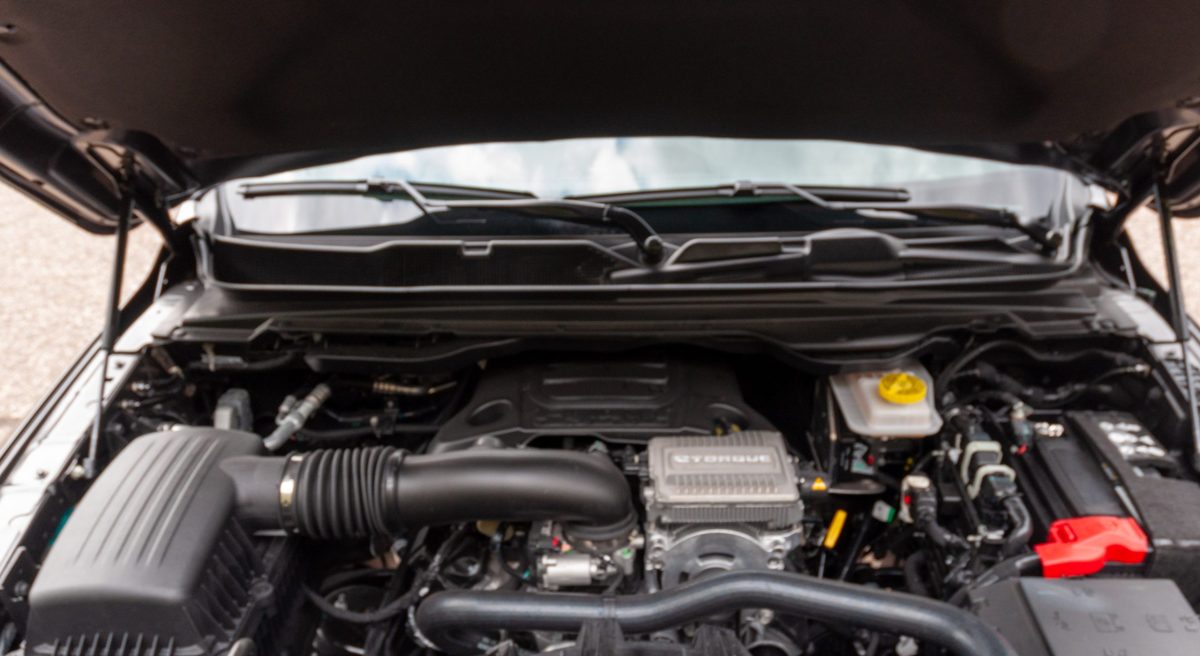
It’s a brand litmus test, not a powertrain preference. Only about 25 percent of Ford F-150s sold carry a V8. The F-150 dominates the full-size truck market with twin-turbo V6s doing the heavy lifting.
Ram’s own Hurricane twin-turbo inline-six makes more power and burns less fuel than the Hemi it replaced. By every objective measure, the six-cylinder is the better engine.
None of that matters to the showroom psychology Filosa is describing. A truck brand without a V8 feels incomplete to a significant chunk of buyers, the way a steakhouse without a ribeye feels wrong even if you’re ordering the salmon. Ram learned this the hard way when it briefly went all-six across the lineup and watched consideration rates suffer.
Filosa provided no sourcing for the 40 percent figure. No study, no survey methodology, no sample size. That’s worth keeping in mind.
But the strategic bet Stellantis is making on it is real, and it mirrors what General Motors is doing across town. GM is developing a brand-new small-block V8 for its pickups arriving in 2027, a serious investment that only makes sense if the company sees V8 availability as a competitive necessity rather than an engineering one. Two of Detroit’s three truck makers are now racing to keep V8s alive in a market where most buyers choose something else.
Ford, meanwhile, keeps selling F-150s by the truckload with EcoBoost V6s and hasn’t flinched.
Filosa was careful to hedge. He insisted Stellantis isn’t abandoning its EV strategy, pointing to the Jeep Recon launching this year as an electric vehicle first, with a gas version following 12 to 18 months later. He also noted that if EV demand surges in North America, Stellantis can lean on its more advanced European electrification programs to scale up quickly.
That’s a revealing admission. It says Stellantis sees North America as an internal combustion market for now and Europe as the electric one. The company is running two playbooks on two continents, betting it can pivot between them fast enough to avoid getting caught flat-footed in either direction.
The Hemi’s return isn’t really about the Hemi. It’s about what a V8 signals to buyers who may never check the option box. Stellantis is spending real money and real engineering hours to satisfy a feeling, and whether that feeling is worth 40 percent of your addressable market is the billion-dollar question Ram just answered with its checkbook.
Share this Story