
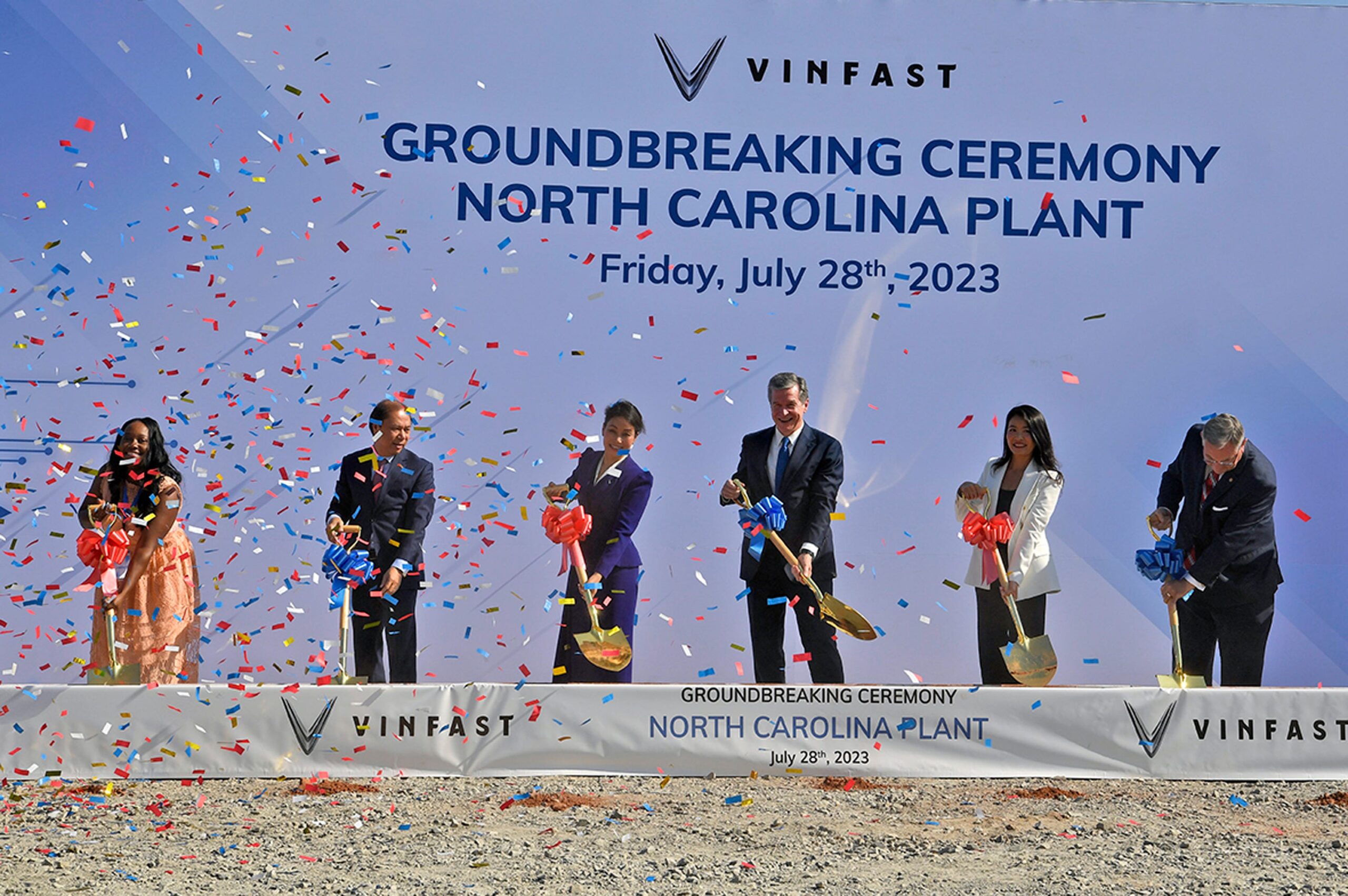


Three years ago, VinFast cleared and graded a massive parcel in Chatham County, North Carolina, promising an 800,000-square-foot factory, $3 billion in investment, and 7500 jobs. Today that parcel is still dirt, and the state wants its money back.
North Carolina attorney general Jeff Jackson announced a lawsuit against the Vietnamese automaker yesterday, seeking to recover taxpayer funds spent on site preparation and reclaim the land itself. The state had agreed to provide $450 million to support the project. VinFast was supposed to have a functioning factory built by July 2026 and 1750 employees on payroll by year’s end.
It’s nearly June. Nothing has been built.
The deal was struck in March 2022, during the gold-rush era of EV factory announcements when states were tripping over each other to land manufacturing commitments. North Carolina rolled out the incentives. VinFast rolled out the bulldozers. Then the bulldozers left.
VinFast repeatedly pushed back its groundbreaking timeline after the initial site clearing in 2023. North Carolina formally notified the company in January that it had defaulted on the agreement. VinFast’s response was to argue it still intended to build the factory — just by 2028, two years past the contractual deadline.
That answer didn’t satisfy Jeff Jackson. “VinFast agreed to build a factory and create jobs for North Carolinians — it didn’t do either,” he said. “When North Carolina makes a deal, we build in protection for taxpayers. VinFast broke the deal, so we’re using that protection to find a project for this site that will create jobs.”
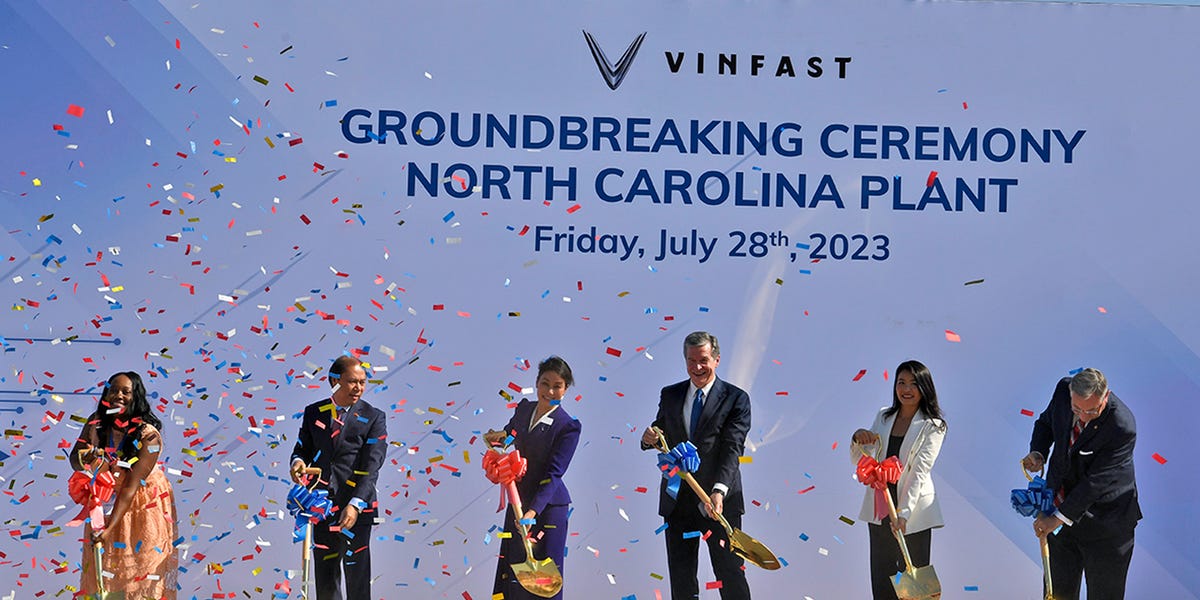
The “protection” language is key. North Carolina structured its incentive deal with clawback provisions, the kind of safeguard that not every state bothers to include when chasing headline-grabbing factory announcements. That foresight is now the state’s legal leverage.
VinFast’s American ambitions were always outsize relative to its actual market presence. The company’s first U.S. offering, the VF8, landed with reviews that were generous to call lukewarm. Sales have been negligible. Building a factory capable of employing thousands requires a demand signal that VinFast never produced.
The broader pattern is familiar. During 2021 and 2022, EV startups and foreign entrants announced factory after factory across the American South and Midwest, dangling job numbers and investment figures that made for great press conferences. Some of those projects materialized. Many did not. Foxconn’s stumble in Wisconsin became the cautionary template, and VinFast’s empty lot in Chatham County now joins the canon.
The irony isn’t lost on locals. Just down the road in Sanford, the Edelbrock carburetor factory — a relic of internal combustion — is still running and still employing people. Old-school parts manufacturing outlasting a would-be EV megafactory tells you something about the distance between announcements and reality.
North Carolina is now looking for a new tenant for the site. The land has been cleared and the infrastructure work has been started. Someone will eventually use it, but VinFast — a company that has struggled to sell cars in the U.S. and now faces a state lawsuit over broken promises — almost certainly will not.
The $450 million question is how much of that money actually went out the door before the state pulled the plug. Jackson’s office is pursuing recovery, but clawing back public funds from a foreign company with headquarters in Hanoi is a different proposition than suing a domestic manufacturer with American assets to seize.
VinFast wanted to be the Vietnamese Tesla. Right now it’s the Vietnamese cautionary tale — a reminder that clearing land is easy, but building a car company is something else entirely.


Share this Story