
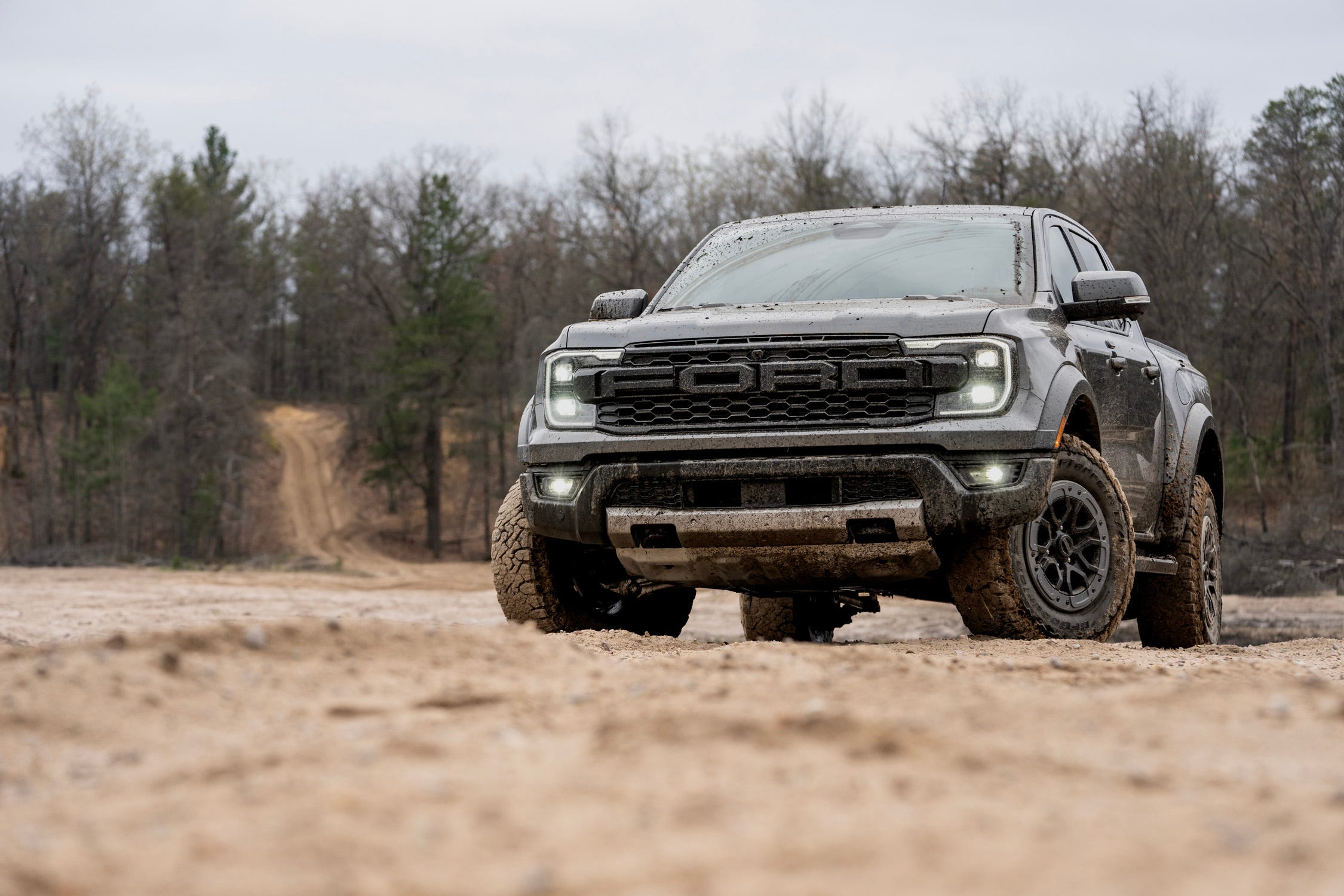


The Ranger Raptor already has too much power. That’s not a complaint from a customer. That’s Ford’s own chief engineer saying the quiet part out loud.
Carl Widmann, head of Ford Performance engineering, told Road & Track flatly that neither the Bronco Raptor nor the Ranger Raptor will receive the supercharged V-8 treatment that elevated the F-150 Raptor R into a different stratosphere. No Bronco Raptor R. No Ranger Raptor R. Not now, and from the sound of it, not anytime soon.
“I have not seen any plans for it,” Widmann said when asked about higher-performance variants. Then he twisted the knife a little deeper for the horsepower chasers: “The Ranger Raptor might even already have too much power.
That’s a remarkable statement from the guy whose job is literally to make Ford trucks faster and meaner.
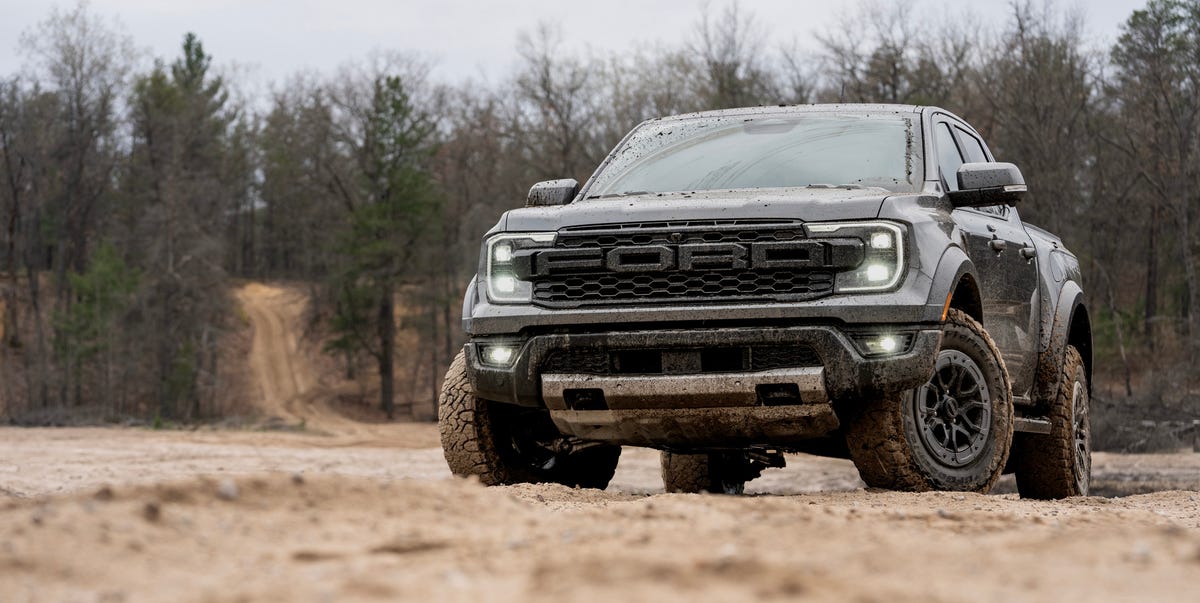
His argument isn’t without data. The Ranger Raptor’s twin-turbocharged 3.0-liter V-6 produces 405 horsepower, and Widmann points out nothing else in the midsize truck segment comes within 30 horsepower of it. The Ranger weighs 5372 pounds and hits 60 mph in 5.3 seconds.
The heavier Bronco Raptor, carrying the same engine tuned to 418 horsepower but saddled with 5764 pounds, needs 5.6 seconds to do the same job. Neither truck is in the same postal code as the F-150 Raptor R’s 3.6-second blast to 60, powered by that 5.2-liter supercharged V-8. And that’s precisely the hierarchy Ford wants to protect.
This is really a story about product discipline, something Detroit has historically struggled with. The temptation to cram a V-8 into every chassis that can physically accept one is practically encoded in Dearborn’s DNA. The fact that Ford is choosing restraint here suggests the Raptor R’s $109,000-plus price tag and its halo status are worth more to the company than the incremental sales a Bronco Raptor R might generate.
There’s also an engineering reality Widmann didn’t spell out but clearly understands. The Ranger’s T6 platform and the Bronco’s body-on-frame architecture were designed around the 3.0-liter EcoBoost. Shoehorning in the Predator V-8 would require extensive drivetrain, cooling, and structural modifications that would eat margins alive on lower-volume models.
The F-150 can absorb those costs because it sells in massive numbers. The Bronco Raptor and Ranger Raptor are niche products inside niche products.
Widmann did leave one sliver of daylight for the faithful. Ford Performance already offers a software calibration for both the Bronco and Ranger Raptors that bumps output to 455 horsepower and 536 pound-feet of torque. Whether that becomes a standard offering or remains an aftermarket add-on is an open question, but it’s clearly the ceiling Ford envisions for these trucks.
The broader message from Ford Performance is plain: the Raptor lineup has its lanes, and nobody’s switching. The F-150 Raptor R sits alone at the top with its V-8 brutality. The Bronco and Ranger Raptors compete with turbocharged six-cylinder fury against segments that can’t match them anyway.
Sometimes the smartest move in a horsepower war is knowing when you’ve already won your weight class. Ford, for once, seems to recognize that building the most powerful version of something isn’t always the same as building the right one. The Ranger Raptor dominates its segment by a 30-horsepower margin with no credible challenger in sight.
Spending millions to widen that gap would be engineering for ego, not for customers. The V-8 faithful will have to keep writing their letters. Ford isn’t reading them.
Share this Story