
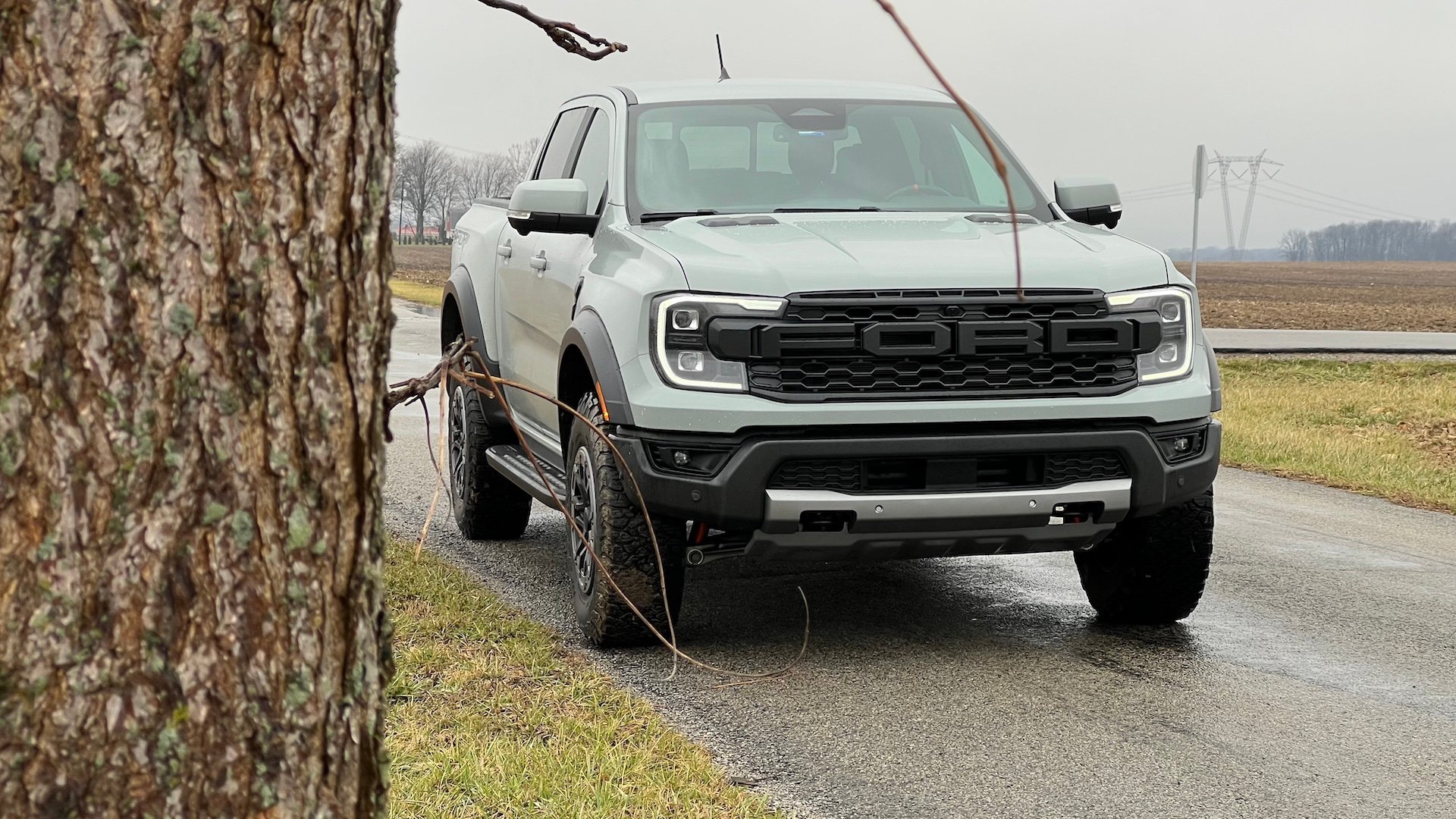


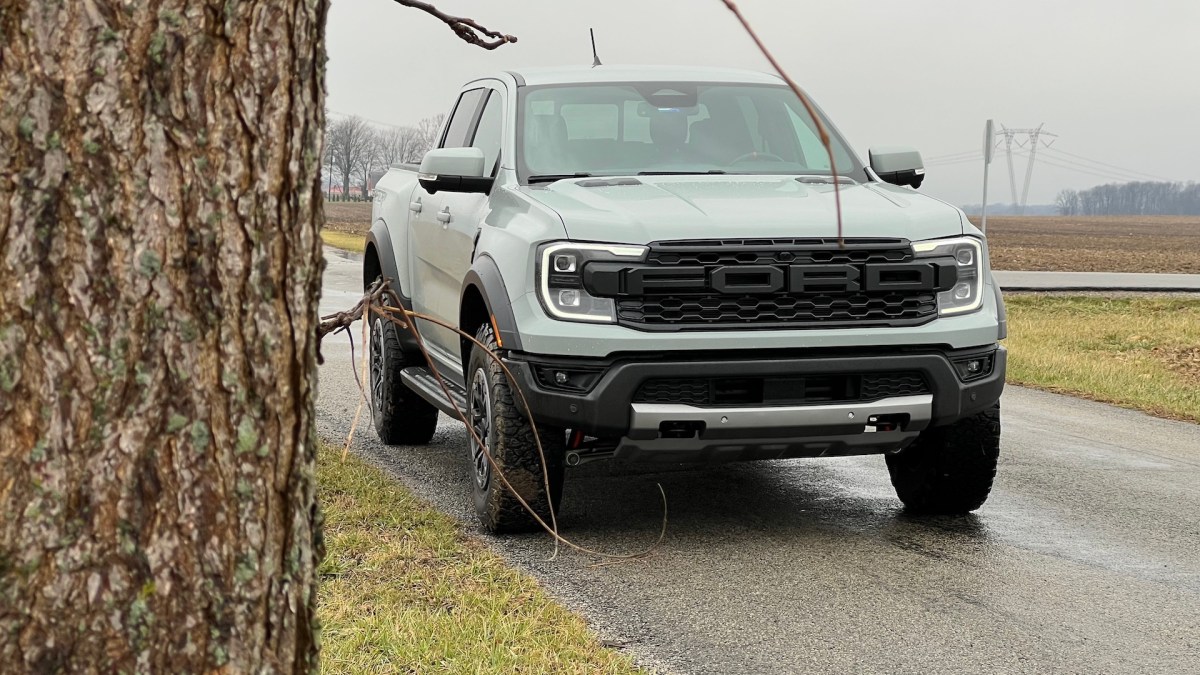
Ford has no intention of building a Ranger Raptor R or Bronco Raptor R, and the reasoning from the company’s own engineers is surprisingly blunt. Carl Widmann, Ford Racing’s production vehicle chief engineer, told Road & Track that the Ranger Raptor “might even already have too much power” with its 3.0-liter twin-turbo V6 producing 405 horsepower.
That’s a remarkable admission from the same company that shoved a supercharged 5.2-liter V8 into the F-150 Raptor R and charges north of $100,000 for it. The message is clear: the mid-size platform has a ceiling, and Ford believes it’s already pressing against it.
Widmann’s comment isn’t false modesty. The Ranger sits on a fundamentally smaller architecture than the F-150, with a shorter wheelbase, lighter frame, and suspension geometry that has to manage desert-speed impacts with less real estate. More power in that package doesn’t automatically mean more capability. It can mean more liability.
The timing is interesting. Toyota’s Tacoma TRD Pro makes 326 horsepower from its turbocharged four-cylinder. The Chevy Colorado ZR2 tops out at 310. Ford already holds a commanding lead in the mid-size off-road horsepower war, and rather than escalate further, it’s choosing to hold the line.
This is not what the aftermarket crowd wants to hear. Forums and social media have been clamoring for a V8-swapped Ranger or at minimum a significant power bump since the Raptor launched stateside. Ford is telling them, politely, to buy an F-150 Raptor R instead.
Meanwhile, Ford’s broader product strategy shows a company reshuffling its lineup with quiet efficiency. The discontinuation of the Edge and Escape hasn’t created the customer exodus some predicted. Instead, Ford has funneled those buyers into the Explorer, which has seen an 18 percent sales increase this year, making it the brand’s most improved nameplate.
That’s not accidental. It’s a deliberate consolidation play, pushing customers upstream into higher-margin vehicles.
Ford is also dealing with more mundane realities. A recall covering more than 500,000 Expeditions from model years 2018 through 2024 addresses chrome plating on center consoles that can bubble, peel, and create edges sharp enough to cut occupants. Half a million trucks, seven model years, over a cosmetic trim piece. That’s the kind of quality issue that quietly erodes brand trust even as the performance division makes headlines.
Honda has its own recall headache. More than a million tire repair kits shipped with hybrid Accord and CR-V models are being called back because a faulty sealant bottle can build enough internal pressure to turn its cap into a projectile. A tire repair kit that injures you before you even get to the tire — that’s a new one.
Volkswagen is reportedly preparing to cut 19,000 jobs in Germany by year’s end, part of a broader plan to eliminate 28,000 positions by decade’s end from a German workforce of nearly 300,000. The restructuring reflects a company still struggling to right-size itself against slowing EV demand in Europe and brutal Chinese competition.
Back in the performance world, Ford’s restraint on the Ranger Raptor stands out precisely because restraint is so rare in this segment. Every competitor is chasing bigger numbers, louder exhaust notes, more aggressive body cladding. Ford looked at 405 horsepower in a mid-size truck and decided that was the grown-up answer. Whether customers agree is another question entirely.
Share this Story