
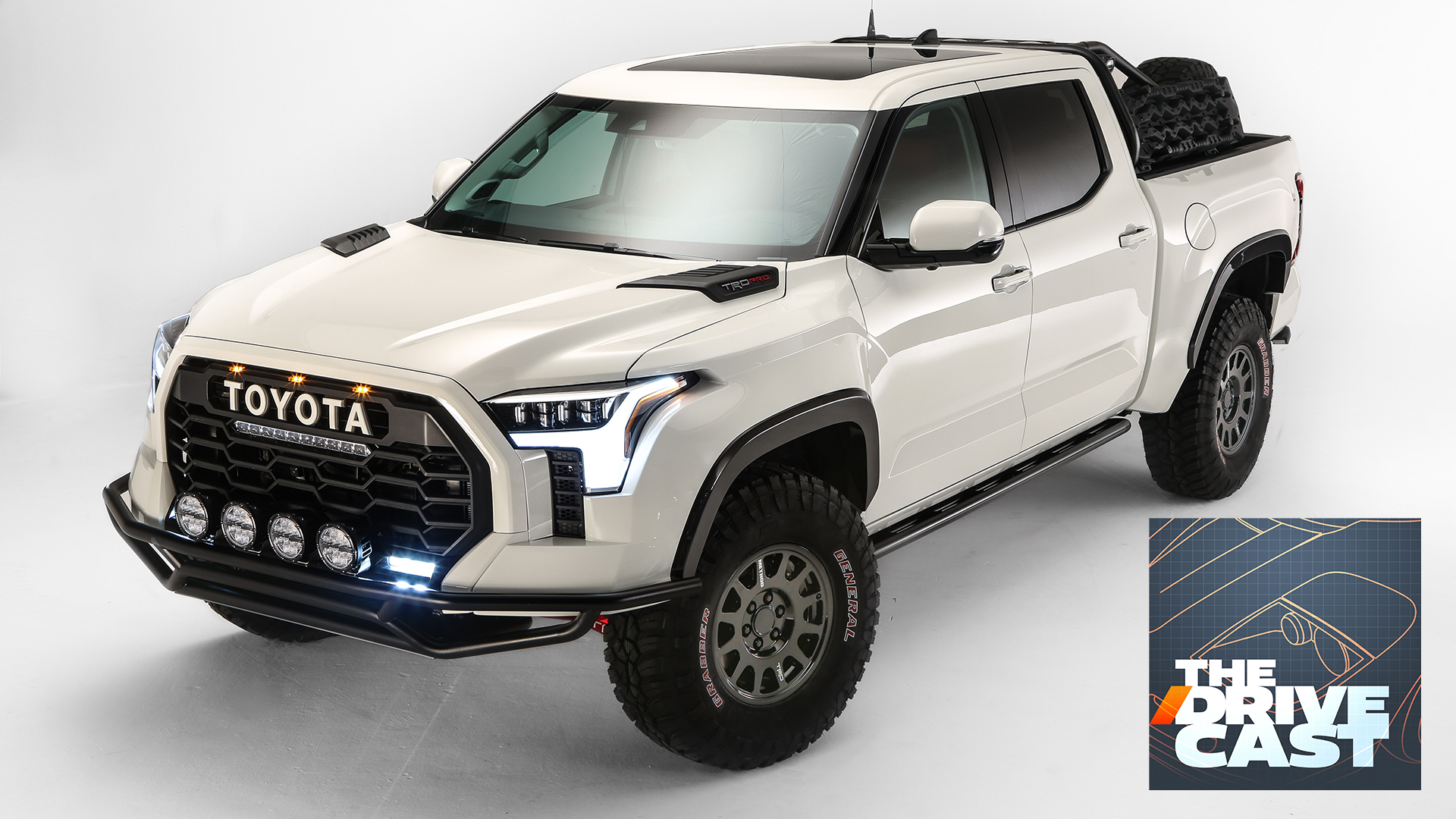


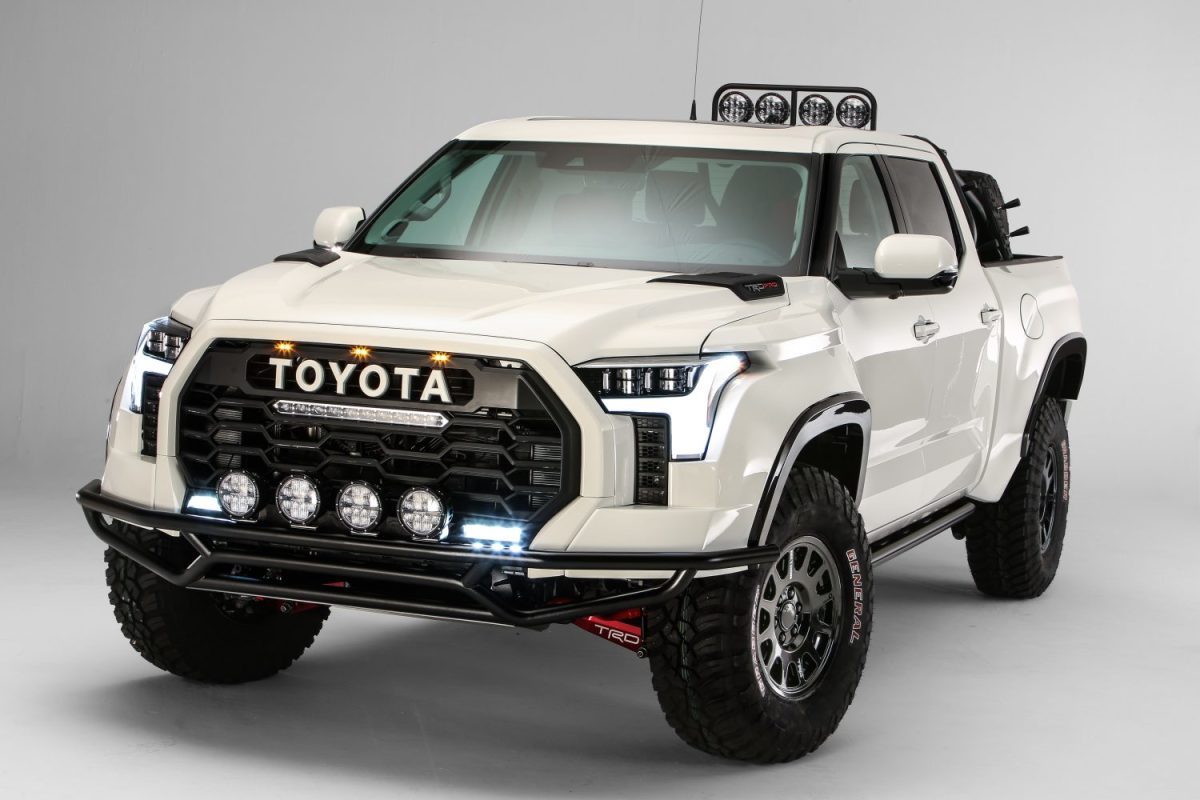
Toyota has filed a trademark for the TRD Hammer, a wide-body, long-travel Tundra designed to compete directly with the Ford F-150 Raptor and the Ram 1500 RHO. It’s the first time the Japanese automaker has tried to play in the full-size Baja-capable pickup space. The truck appears to be far more than a marketing exercise.
Details uncovered through trademark filings and a Toyota customer survey paint a picture of a serious machine: 37-inch BFGoodrich K03 tires, long-travel suspension, high-clearance bumpers, a wider stance with flared fenders, and the company’s hybrid powertrain. This isn’t a TRD Pro with a lift kit. This is Toyota building its own purpose-engineered desert runner from scratch.
The Raptor has owned this segment unchallenged since 2009, when Ford’s skunkworks team bolted wider suspension and off-road hardware onto an F-150 and accidentally created a cultural phenomenon. Ram eventually answered with the TRX and later the RHO. Toyota sat on the sidelines with TRD Pro models that, while capable, played in a different league — closer to a Ford Tremor or Ram Rebel than anything meant to absorb whoops at 70 miles per hour.
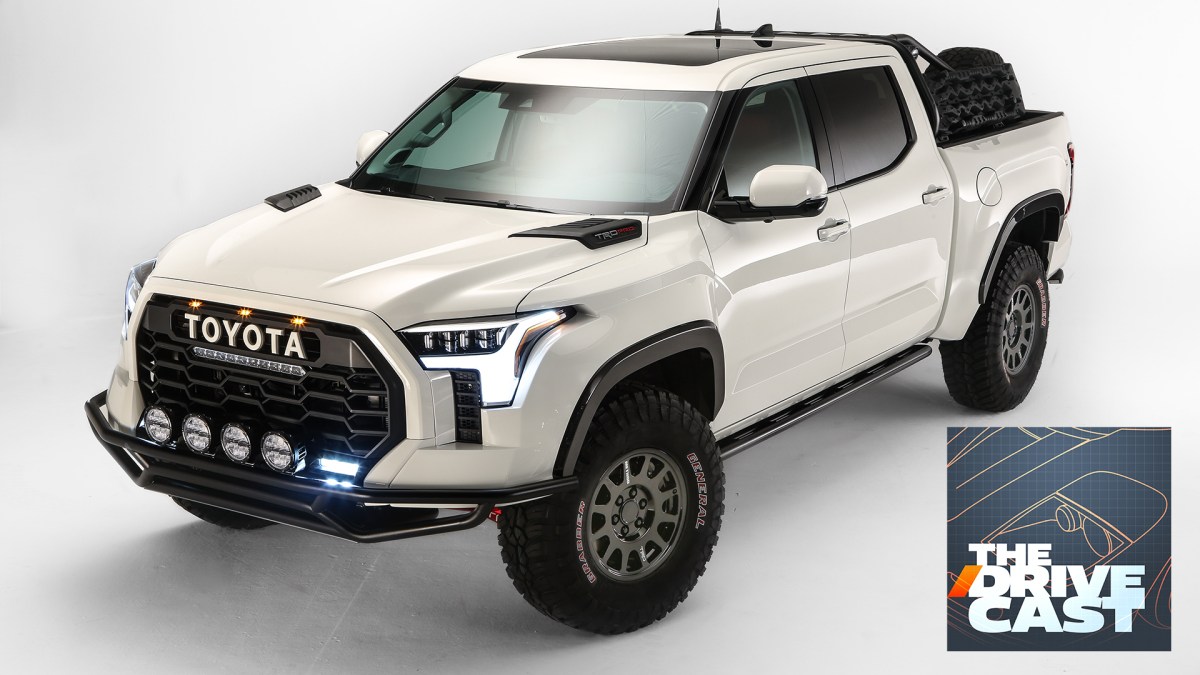
The naming saga alone tells you how seriously Toyota is taking this. A customer survey floated alternatives including TRD Baja, TRD Quake, TRD Iron, TRD Pro S, and — memorably — TRD Bizurk, spelled B-I-Z-U-R-K. That last one survived multiple rounds of internal approval before reaching actual customers, which says something about the creative process inside Toyota’s marketing department.
Hammer won out, likely a nod to the King of the Hammers off-road event, though the unfortunate proximity to “Turd Hammer” hasn’t gone unnoticed by the internet.
The timing matters. Ford has milked the Raptor’s margins for over a decade, building it on a standard F-150 frame and assembly line while commanding a significant premium. That business model — modest incremental cost, enormous price uplift — is exactly the kind of math that attracts competitors. Ram figured it out. Now Toyota has, too.
Toyota’s hybrid powertrain gives it a card neither Ford nor Ram currently plays in this segment. The i-Force Max twin-turbo V6 hybrid in the Tundra already makes 437 horsepower and 583 pound-feet of torque, and bolting that to a proper long-travel chassis could produce something genuinely distinctive. Whether Toyota tunes it further for the Hammer remains to be seen.
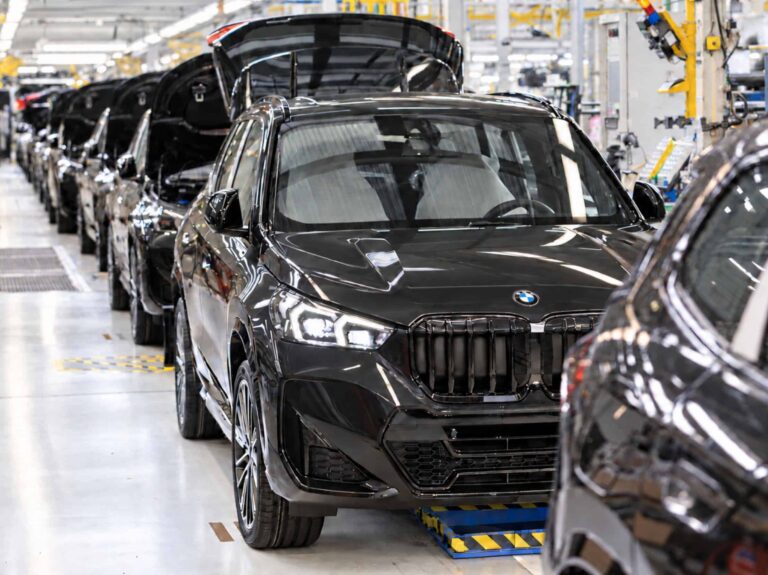
The broader context is an industry-wide land rush toward aggressively capable off-road trucks. Scout is building an entirely new brand around rugged EVs. BMW and Audi are developing off-road-oriented models, Nissan is circling, and everyone has noticed that Americans will pay handsomely for factory-built trucks that look like they belong in the desert, whether or not they ever leave pavement.
Ford created this market, profited enormously from it, and now faces a credentialed competitor from the world’s largest automaker. Toyota doesn’t dabble. When it commits to a segment — think Tacoma in midsize, Land Cruiser in overlanding — it tends to stay and fight for decades.
The TRD Hammer hasn’t been officially announced, priced, or given a production timeline. But the trademark is filed, the survey data aligns with the hardware specs, and Toyota clearly isn’t floating trial balloons for fun. Ford’s 16-year monopoly on the full-size Baja pickup is about to face its most dangerous challenger yet — and it’s wearing a Toyota badge.
Share this Story