
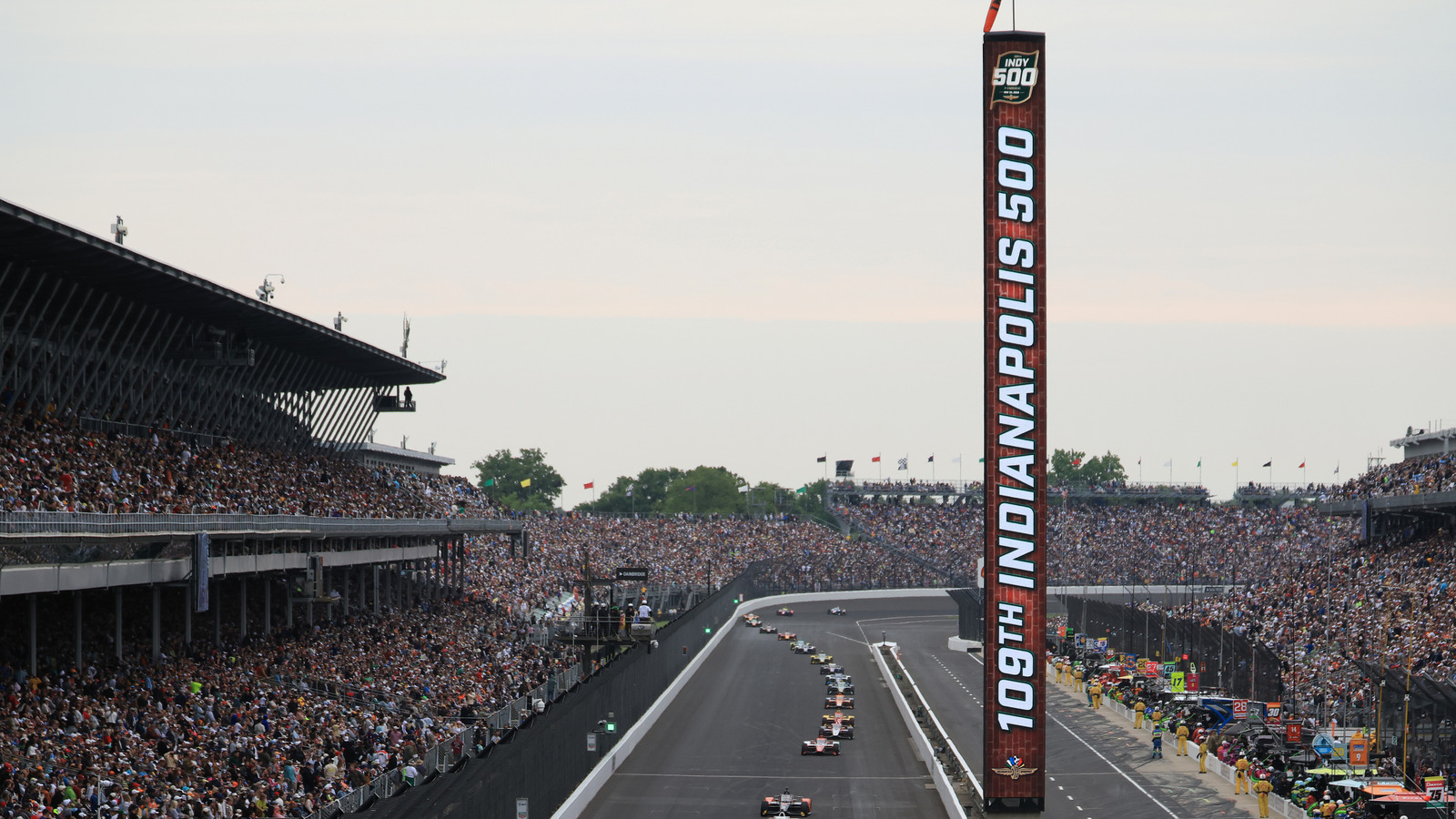


Three major races, three sold-out venues, 625,000 bodies in seats or on their feet across the eastern half of North America. That’s the Memorial Day weekend picture, and it tells a story the doomsayers who spent the last decade predicting motorsport’s demise would rather not hear.
The Indianapolis 500, NASCAR’s Coca-Cola 600 at Charlotte Motor Speedway, and the Canadian Grand Prix in Montreal are all running within a two-hour flight of each other this Sunday. Every grandstand seat at all three events has been claimed, most of them weeks in advance.
Indianapolis alone accounts for the lion’s share. The Speedway’s roughly 257,000 permanent seats are full again, marking the second consecutive sellout and the third in a decade. Total spectators at IMS are expected to hit 350,000, meaning roughly one in every 1,000 Americans will be standing when polesitter Álex Palou takes the green flag.
Charlotte’s Coca-Cola 600 is riding an even hotter streak — four straight years of sellout crowds pushing 95,000. NASCAR spent years fighting the narrative that its grandstands were emptying. That fight appears to be over, at least at its marquee events.
The Canadian Grand Prix is the wildcard. Formula 1 shuffled its calendar this year, pulling Montreal out of its traditional mid-June slot and dropping it into late May alongside the other two giants. Late May in Montreal means cooler weather, a different tourist rhythm, and direct competition for the motorsport dollar with two of the biggest races on Earth.
It worked anyway. General admission tickets remain available, but every assigned grandstand seat is gone. F1’s weekend attendance figures are expected to top 360,000 across three days, with roughly 180,000 showing up for Sunday’s race alone.
Add it up and you get approximately 625,000 people watching live professional racing on a single Sunday afternoon across just two countries. Against a combined U.S.-Canadian population of about 384 million, that’s one in every 615 North Americans physically present at a racetrack this weekend.
That density matters more than any TV rating or streaming number. These are people who bought tickets, booked hotels, drove or flew to a circuit, and committed an entire day to watching cars turn laps. In 2026, when every race is available on a screen in your pocket, more than half a million people chose to show up in person.
The convergence is historically unusual. Monaco has traditionally owned Memorial Day weekend on the F1 calendar, splitting the global audience’s attention between Europe and North America. With Montreal now occupying that slot, all three series are drawing from overlapping fan bases and overlapping geography simultaneously — and none of them are cannibalizing the others.
That’s the quiet revelation buried in the sellout numbers. The assumption was always that racing fans had a fixed budget of time and money, and stacking marquee events would force them to choose. Instead, all three venues filled up. The appetite isn’t being divided. It’s multiplying.
Ten years ago, the industry conversation was about shrinking crowds, aging demographics, and the existential threat of digital entertainment. Now Indianapolis is routinely selling out its 257,000 seats, NASCAR’s crown jewel is on a four-year run, and Formula 1 can move its Canadian race to an awkward date and still pack the house.
The sport isn’t just surviving the streaming age. It’s thriving in spite of it — or maybe because of it. Nothing on your phone replicates the sound of 33 cars hitting turn one at 230 miles per hour. Apparently, 625,000 people agree.


Share this Story