
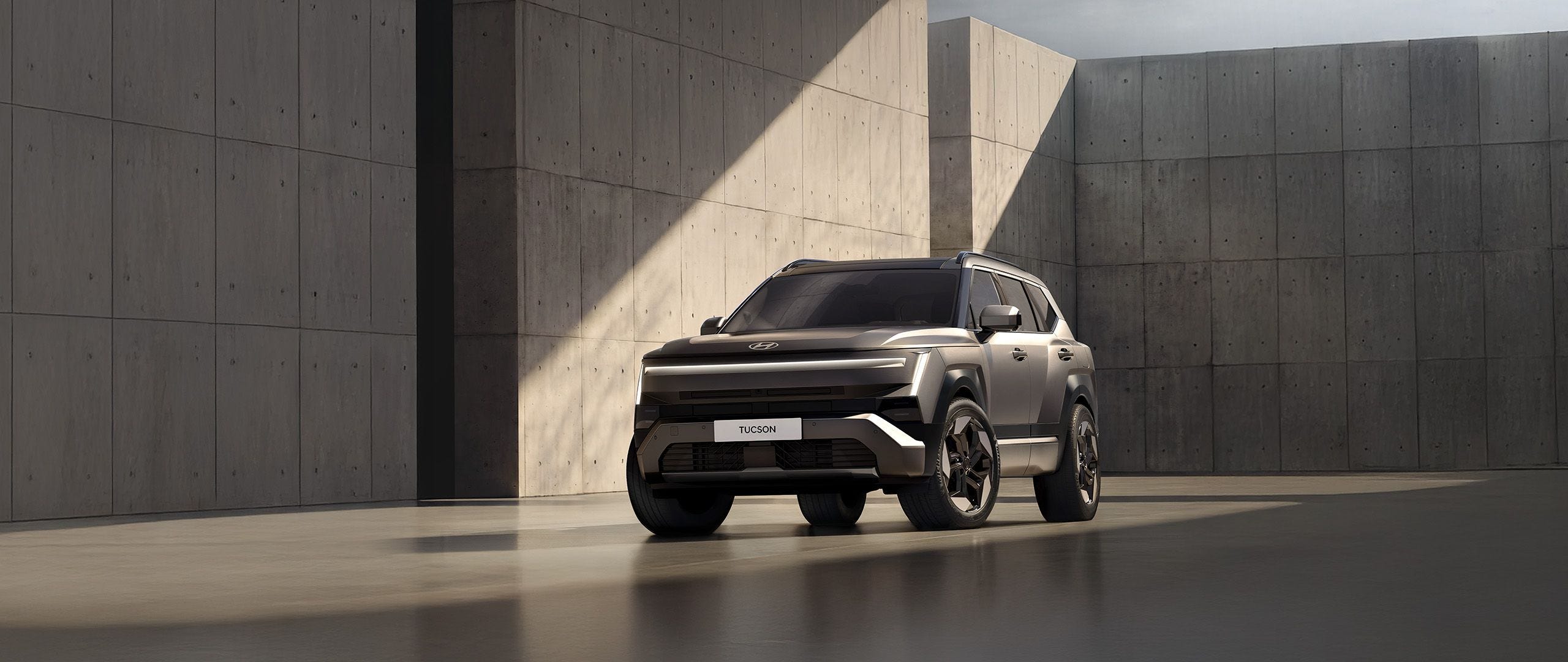


Hyundai has revealed the next-generation Tucson compact SUV, and it looks nothing like the one sitting in your driveway. The outgoing model’s flowing, creased bodywork has been replaced by a squared-off shape with prominent fender flares and full-width light bars front and rear. Angular headlights and taillights push the design into territory that feels more concept car than family hauler.
This is becoming a pattern for Hyundai. The brand has spent the last few years torching its own design language with every new model cycle, refusing to let any visual identity settle in long enough to become familiar. The Tucson was already one of the more polarizing designs in the segment when it launched for 2022 with its parametric hidden lighting and sharp origami creases. Now that look is gone, replaced by something completely different.
Inside, the story is just as dramatic. A massive central touchscreen dominates the dashboard, following the path blazed by competitors from Toyota to Ford. Hyundai has added its own flavor with a rounded center console, a two-spoke steering wheel, and orange accent trim that gives the cabin a less clinical feel than many of its screen-heavy rivals.
Powertrain details remain under wraps. Hyundai has said nothing about what will sit under the hood, though conventional and hybrid options seem like a safe bet given the current model’s lineup. The outgoing Tucson offers a 2.5-liter four-cylinder and a 1.6-liter turbo hybrid, both paired with front or all-wheel drive. Whether a plug-in hybrid returns or a new electrified option appears is anyone’s guess at this stage.
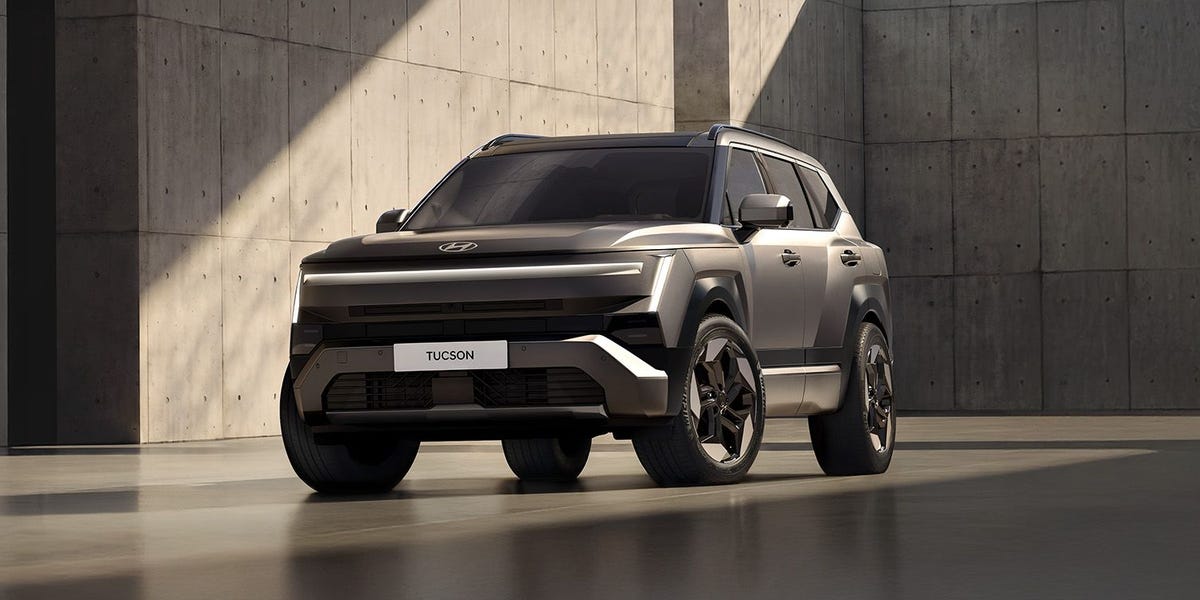
The timing of this reveal is telling. Compact SUVs remain the bloodiest battlefield in the industry, with the Toyota RAV4, Honda CR-V, Ford Escape, and Chevrolet Equinox all fighting for the same driveways. The RAV4 is due for its own redesign soon, and the CR-V was refreshed not long ago. Hyundai clearly wants to land first with something visually aggressive enough to stop shoppers mid-scroll.
There is risk in this approach. The current Tucson sold well but never quite matched the RAV4 or CR-V in volume. Going this far with the styling could attract buyers looking for something that stands out in a sea of soft curves, or it could alienate the conservative mainstream shoppers who keep this segment’s sales numbers enormous.
Hyundai has shown a willingness to bet on bold design across its lineup, from the Ioniq 5 to the Santa Fe, and the results have been mixed depending on the model. Pricing, final specs, and an on-sale date have not been announced. Expect Hyundai to trickle out details over the coming months, because this company is clearly not interested in playing it safe.
Share this Story