
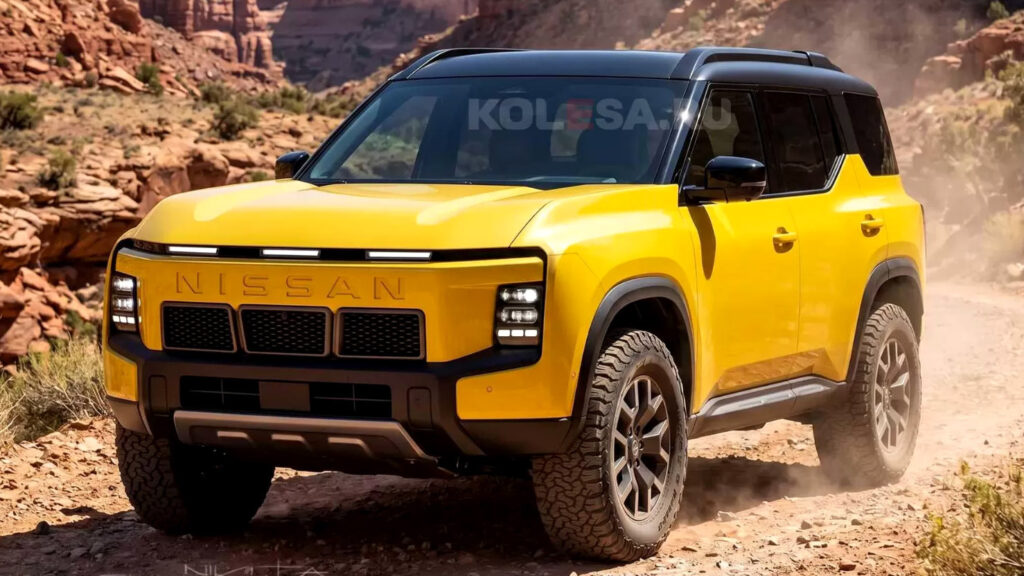


Nissan just scrapped a $500 million EV investment at its Mississippi plant. In its place, the company is pivoting hard back to gas-powered trucks and SUVs — and the clearest signal of that U-turn is a name nobody expected to see again: Xterra.
The revived off-roader is targeting a sub-$40,000 starting price, a naturally aspirated V6 under the hood, and a direct shot at two of the most dominant nameplates in the mid-size off-road segment: the Toyota 4Runner and the Ford Bronco. Nissan isn’t tiptoeing back into this fight. It’s kicking the door open.
The original Xterra ran from 1999 to 2015, and its death left a gap Nissan never adequately filled. The Pathfinder went soft. The Armada stayed niche.
Meanwhile, Toyota redesigned the 4Runner into a smash hit, and Ford resurrected the Bronco to massive demand. Nissan watched from the sidelines as its competitors carved up a segment it once helped define.
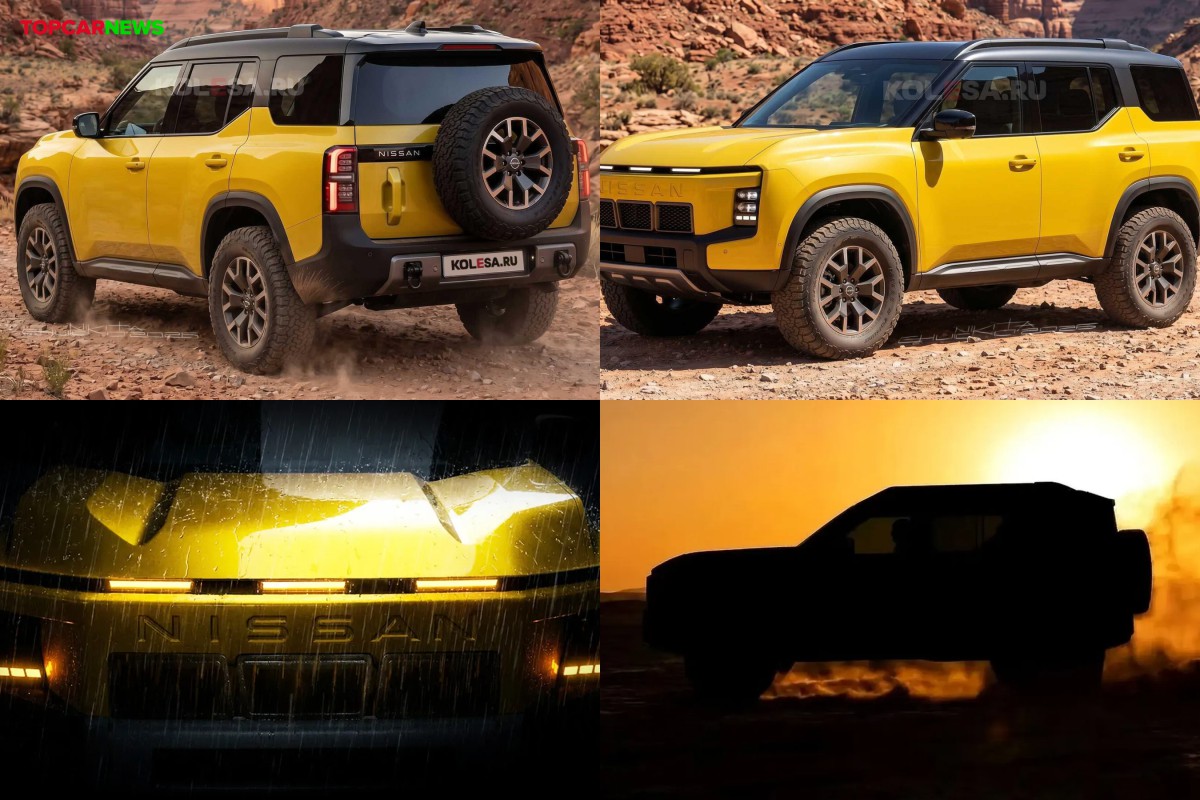
Now the company is banking on nostalgia, value, and a powertrain choice that runs against the grain. While Toyota moved the new 4Runner to a turbocharged four-cylinder hybrid, Nissan is reportedly sticking with a V6 — likely a variant of the venerable VQ-series engine that recently hit a major production milestone that could also be its last. That’s a deliberate play for the buyer who wants displacement and simplicity over forced induction and electrification.
The sub-$40,000 price target is the real grenade in this equation. A base 4Runner TRD Sport starts around $42,000. A Bronco Big Bend with the Sasquatch package climbs past $45,000 easily.
If Nissan can deliver legitimate off-road hardware — body-on-frame construction, a proper four-wheel-drive system, real ground clearance — for thousands less, it changes the math for a lot of buyers who’ve been priced out of the segment’s recent inflation.
Concept SUVs shown recently by Nissan, including the Urban and Terrano studies, hint at the design language headed for production. The Terrano PHEV concept is reportedly a year away from spawning a production model, but the Xterra appears aimed squarely at the combustion-only crowd. Nissan’s leadership has signaled that ICE trucks and SUVs are the priority for U.S. manufacturing, not battery-electrics.
That pivot carries risk. Nissan is a company clawing its way toward profitability after years of strategic drift and leadership turmoil. Killing a half-billion-dollar EV commitment to build gas trucks is a bet that today’s buyer still wants a tailpipe — and that tariff-era economics favor domestic combustion production over imported electrification.
The Frontier pickup already gave Nissan a credible foundation to build from, and sharing architecture between the truck and the Xterra would keep costs manageable. Nissan’s track record with body-on-frame SUVs is deeper than most people remember. The first two generations of Xterra earned a cult following precisely because they were cheap, tough, and unapologetic about it.
Whether the new one can recapture that spirit while meeting modern safety, emissions, and connectivity standards is the open question. So is whether Nissan can execute on time. The company has promised big before and delivered late, or not at all.
But if the Xterra lands close to that $40,000 mark with a V6 and genuine trail capability, Nissan won’t just be back in the conversation. It’ll be the one setting the price everyone else has to answer.
Share this Story