
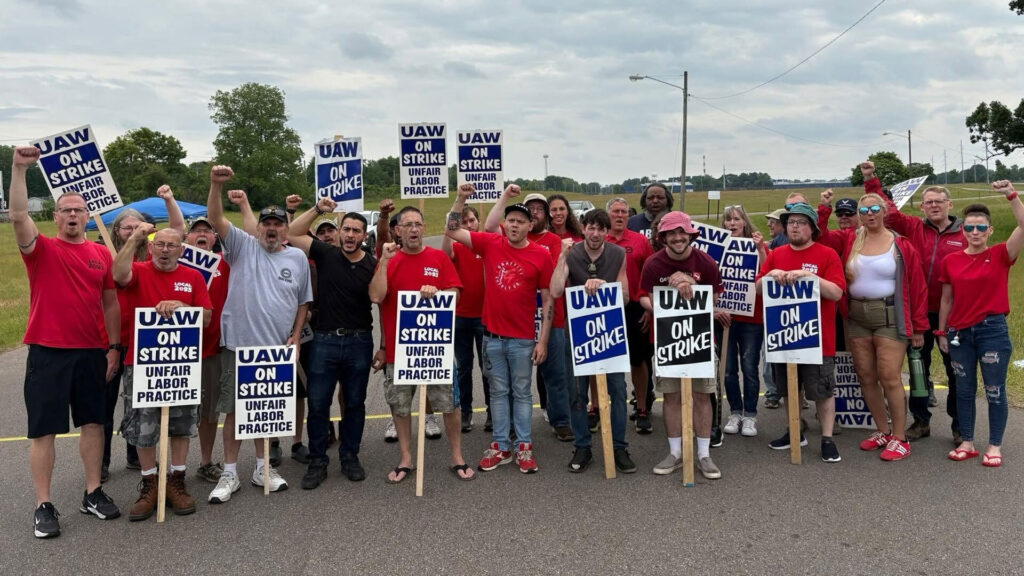


Nearly 1,000 UAW members walked off the job at the Dauch Corporation’s Three Rivers plant ten days ago. Now they have a tentative deal that, if ratified, will finally undo a pay cut most of them took almost two decades ago just to keep the doors open.
The backstory is brutal. In 2008, as the auto industry cratered, workers at the facility — then owned by American Axle — agreed to slash their wages from $29 an hour to $14.50. They did it to save their plant.
By 2025, top pay had crawled back to just $22 an hour after a five-year progression. Adjusted for inflation, those workers were making less in real terms than they did before the Great Recession even hit.
The tentative agreement changes that trajectory sharply. Top earners will reach $30 per hour by 2030 — a 36 percent increase over four years. Legacy members hired before May 31, 2012, the ones who bore the deepest scars of the original concessions, get an immediate $8 per hour bump the moment the contract is ratified.
That $8 jump is the headline number, and it should be. These are the same workers who sacrificed half their income to preserve jobs in rural southwest Michigan. It took a strike to get them back to roughly where they started, and it will take until the end of the decade to get there.
Beyond wages, the deal includes additional paid time off — Veterans Day and Martin Luther King Jr. Day — plus nine extra vacation days annually for workers with at least a year of seniority. Health care costs remain untouched, meaning management didn’t extract concessions on benefits in exchange for the pay increases. Workers also get a $2,000 ratification bonus and another $1,000 a year later.
The strike mattered because Dauch supplies critical drivetrain components to General Motors. A prolonged walkout threatened production of GM’s full-size pickups, the profit engines that fund everything else the automaker does. That leverage gave Local 2093 real muscle at the bargaining table, and the speed of this resolution — ten days from picket line to tentative deal — suggests GM was making phone calls behind the scenes.
Local 2093 Bargaining Chair Josh Jager didn’t mince words. “This contract will change lives in Three Rivers and across southwest Michigan,” he said. “I am damn proud of this agreement and I am damn proud to be a member of UAW Local 2093.”
UAW Region 1D Director Steve Dawes backed those sentiments, saying the deal protects current members, legacy workers, and future hires. The membership still has to vote. But the tone from union leadership signals confidence this gets ratified without drama.
There is a larger pattern here. Since its successful 2023 stand-up strikes against the Detroit Three, the UAW has been emboldened at supplier plants, where wages have historically lagged far behind assembly operations. Dauch, with its direct pipeline into GM’s truck line, was a strategically chosen fight — one where the supply chain’s fragility became the union’s strongest card.
Workers who cut their pay in half during the worst economic crisis in a generation are finally clawing back to parity. It only took 18 years, a recession, a rebrand, and a strike to get there.



Share this Story