
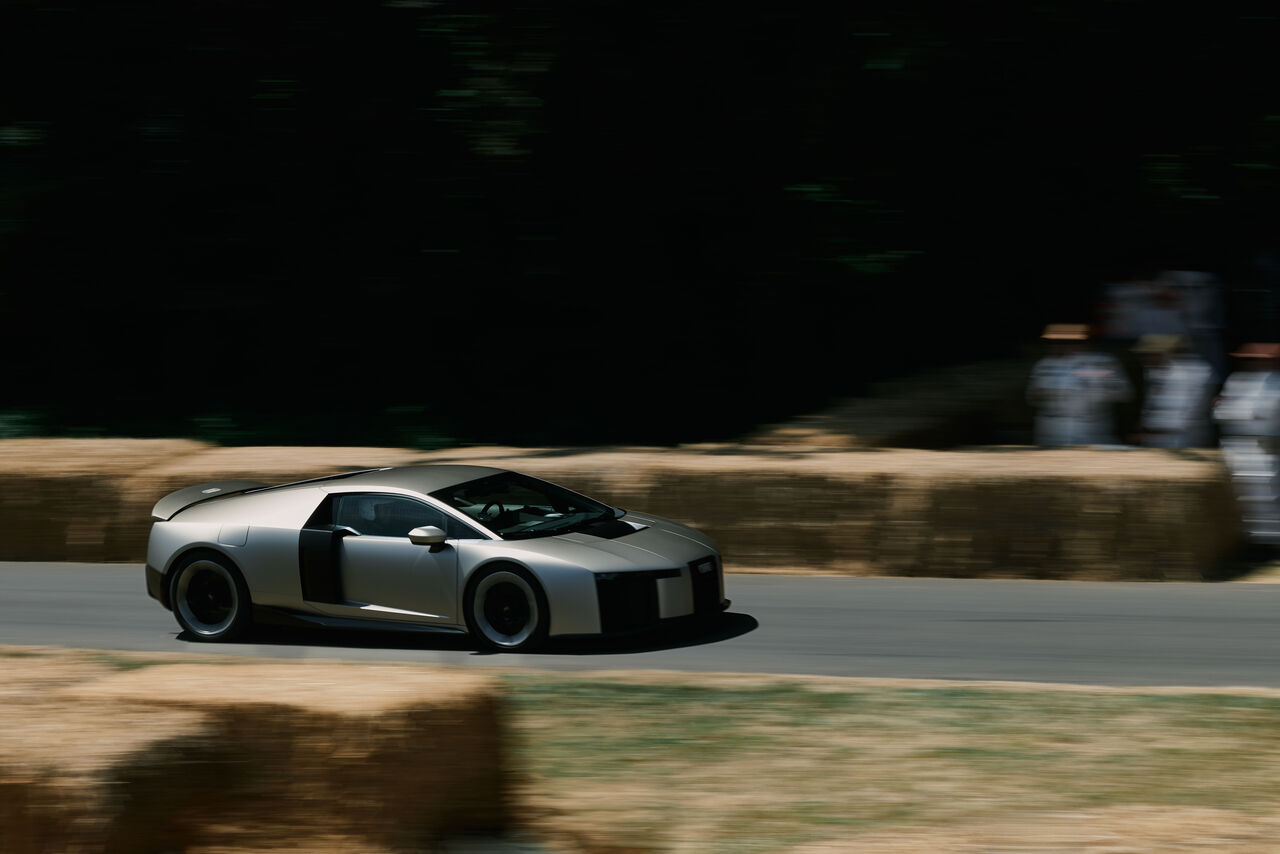


Tom Kristensen has driven just about everything worth driving. Nine Le Mans wins will do that. So when Audi hands him the keys to a near-production prototype of the Nuvolari 1 and points him up the 1.86-kilometer Goodwood Hillclimb, the gesture carries weight beyond marketing theater.
The Nuvolari 1 hits the famous hill at the Festival of Speed this week, running July 9 through 12. It is the fastest and most powerful production vehicle Audi has ever built, a high-performance hybrid supercar limited to 499 units, with deliveries slated for the first half of 2027. Preliminary fuel consumption figures peg it at 11.3 liters per 100 km combined and 14.7 liters with a dead battery.
Its CO2 rating lands squarely in class G — the worst category on the European scale. That last detail tells you something Audi would rather you not dwell on. The Nuvolari is a hybrid, yes, but it is not here to save the planet. It is here to save the brand’s soul.
Audi has spent the better part of a decade pushing electric vehicles — the e-tron SUV, the Q6 e-tron, the A6 e-tron — with mixed commercial results and increasingly skeptical customers. The Nuvolari represents a hard pivot back toward the visceral, the loud, the unapologetically combustion-powered. Wrapping it in hybrid technology is the minimum regulatory concession, not the point.
What impresses in the Nuvolari 1 is the way all the systems work together — from the new quattro drivetrain and vehicle dynamics to aerodynamics and the braking system,” Kristensen said. “Technologies such as the high-performance hybrid powertrain, active aerodynamics, and energy management are inspired by motorsports and have been consistently refined for road use.”
Kristensen is diplomatic. The car apparently is not.
Audi is also using Goodwood to debut the Auto Union Lucca in motion for the first time. The Lucca is a painstaking recreation of a 1930s racing sedan that set a flying-start mile record in 1935 at a calculated average of 320.267 km/h. The original car is part of the Silver Arrows lineage, and Audi rebuilt it from historical photos and technical documents, unveiling the result in Lucca, Italy, in early May.
Parking a 90-year-old speed record car next to a brand-new supercar is a deliberate act of narrative construction. Audi wants you to draw a straight line from the Auto Union racers to the Nuvolari, from prewar audacity to whatever this current era of performance is supposed to be.
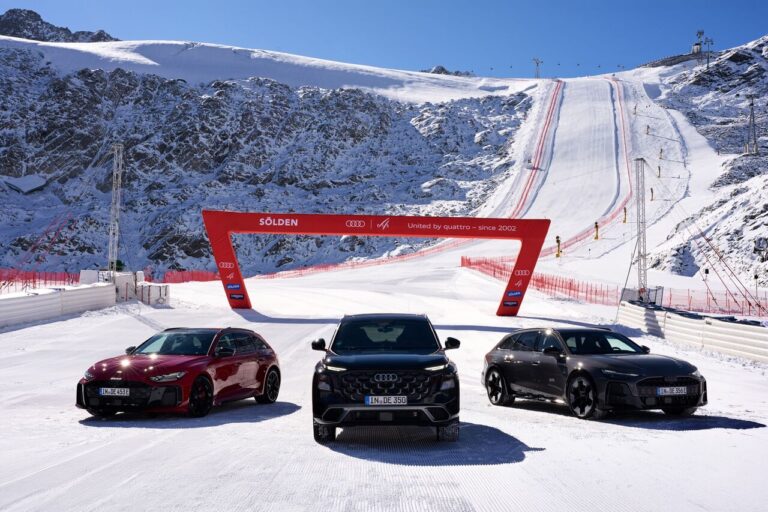
The RS 5 rounds out Audi’s Goodwood presence with test drives on the circuit itself. That car, another plug-in hybrid from Audi Sport, sits alongside its ancestors — the legendary Avant RS2 and the RS 4 Avant. Three generations of fast Audis, all in one paddock.
Audi has been a Goodwood partner since 2025, and this year’s showing is its most aggressive yet. The festival has always functioned as a pressure valve for manufacturers who need to remind people they still build cars worth wanting. For Audi, that need is acute.
Sales in key markets have softened. The design language is being overhauled. CEO Gernot Döllner has called the Nuvolari “a physical manifestation of Audi’s technological renewal.
That is corporate speak for a company that knows it has to fight its way back into the conversation. Sending Kristensen up the hill in a 499-unit supercar with a Class G emissions rating is one way to start that fight. Whether 499 wealthy buyers can redeem an entire brand strategy is another question entirely.
The hill at Goodwood is 1.86 kilometers long. The road back for Audi is considerably longer.

Share this Story