
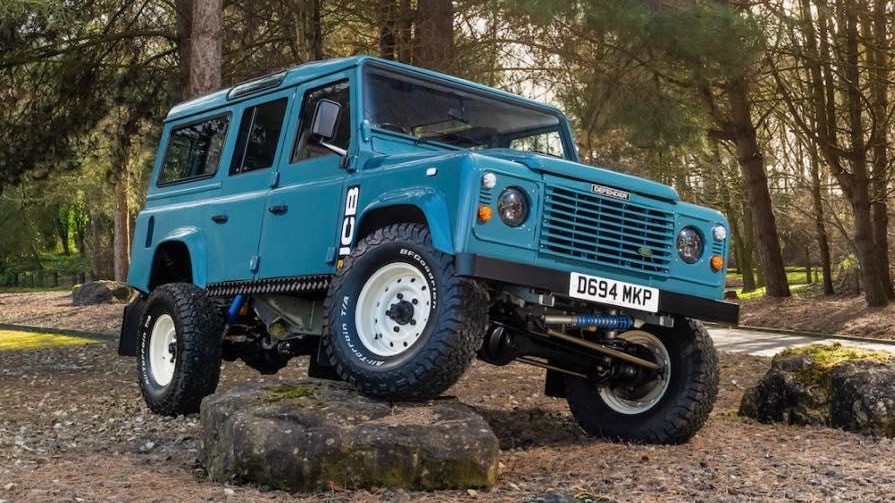


A British shop spent five years stuffing a JCB backhoe engine into a 1988 Land Rover Defender 110, and now the thing is for sale with international shipping available.
Diesel Pump UK, a small outfit that normally trades in Mercedes-Benz OM606 diesel swaps, went fully off-script for this one. Instead of the German inline-six often called the 2JZ of diesels, owner Luke Dale chose a new old stock JCB TCAE-108 — a 4.4-liter industrial inline-four designed to run for 10,000 hours in construction equipment. The kind of engine that doesn’t know what “weekend warrior” means.
The numbers tell the story. The stock 2.5-liter turbodiesel four made 108 horsepower and 188 pound-feet of torque. The JCB unit produces 145 horsepower at just 2,200 rpm and a stump-pulling 413 pound-feet at 1,500 rpm.
That’s more than double the torque, delivered at construction-site engine speeds where this motor is barely clearing its throat.
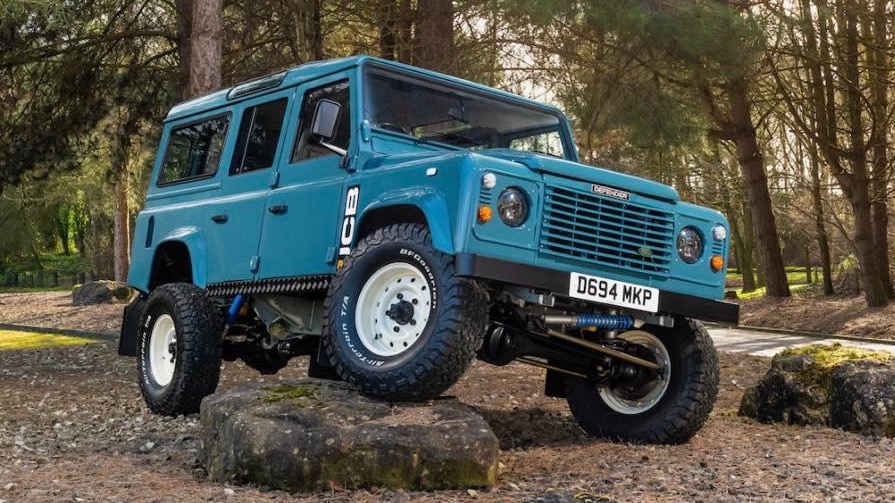
Dale’s stated priorities were refreshingly honest: reliability first, horsepower second, and keeping the whole thing British. JCB, founded in Staffordshire in 1945, is as deeply English as Land Rover itself. There’s a philosophical purity to this build that you won’t find in the usual LS-swap-everything crowd.
Two iconic British brands, one from the farm field and one from the construction site, merged into a single vehicle that exists to actually work.
Getting it to fit was the hard part. The JCB engine is wider and taller than what the Defender was designed to accept. Dale’s team trimmed inner fender sheetmetal for width, then fabricated a custom billet oil sump to drop the engine low enough to clear the hood, which itself is a custom piece with additional clearance built in.
The drivetrain behind the industrial four is beefed up to match. A strengthened R380 five-speed manual handles the torque through a heavy-duty clutch. The axles were rebuilt, a custom charge-air cooler and stainless steel exhaust round out the mechanical upgrades, and a two-inch suspension lift plus fresh sheetmetal where the original had rusted through complete the package.
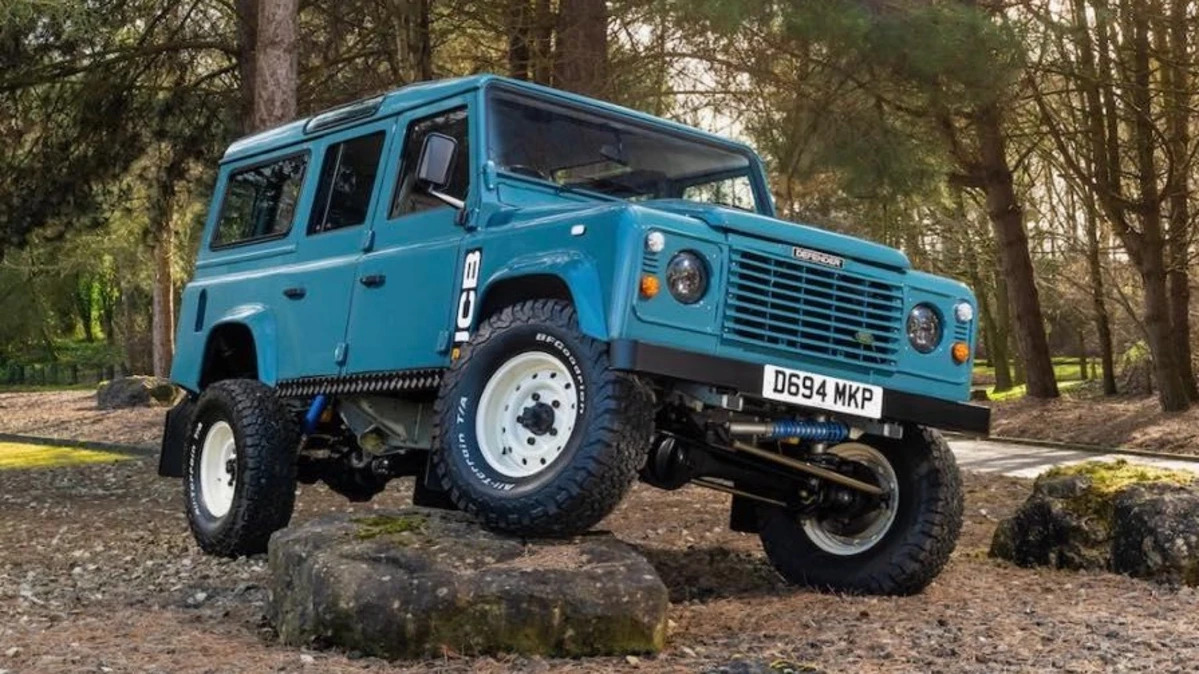
Five years is a long time to spend on a single build, especially for a small diesel specialist. That timeline tells you this wasn’t a bolt-in job with a kit and some YouTube tutorials. Every clearance issue, every mounting point, every cooling and exhaust routing decision had to be solved from scratch.
The result is a Defender that keeps its original character — slow-revving, torque-heavy, mechanically simple — while erasing the reliability anxieties that haunt every 200 TDi owner who’s ever been stranded on a muddy track.
The sale listing hasn’t disclosed a price, but this is a one-of-one build with custom fabrication throughout and an engine rated for the kind of service life that makes passenger car powertrains look disposable. It won’t be cheap. It also won’t break down digging you out of a ditch at hour 6,000.
The engine swap world has become dominated by predictable choices — LS V8s, 2JZ inline-sixes, Cummins turbodiesels. They’re proven, they’re supported, and they’re boring. Ripping the heart out of a backhoe and transplanting it into a Defender is none of those things. It is, however, the most logical illogical thing a diesel-obsessed Brit has done in years.



Share this Story