
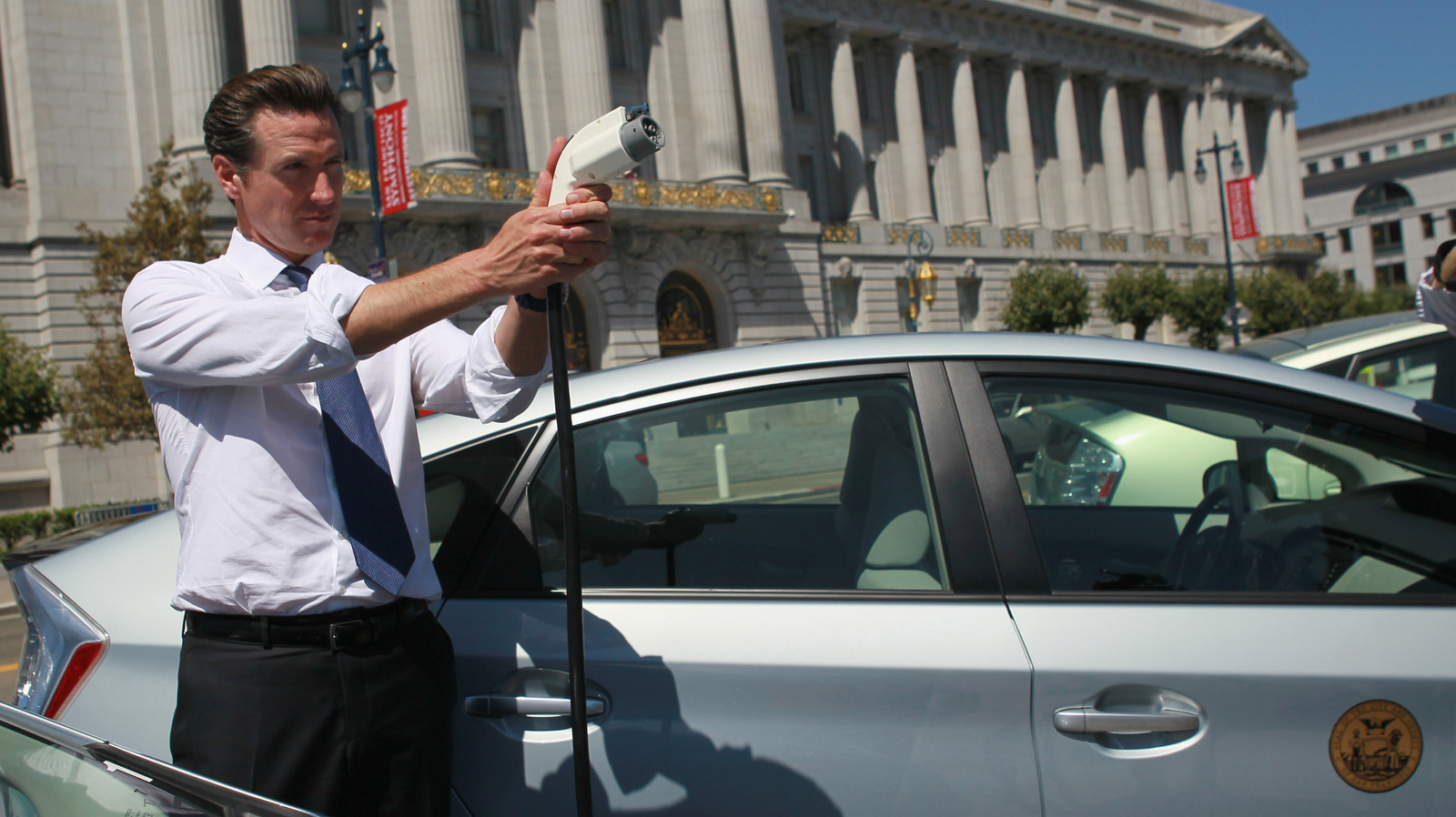


Eight months. That’s how long American car buyers have gone without the $7,500 federal EV tax credit that President Trump killed late last year. California Governor Gavin Newsom promised his state would fill the gap. A new budget deal now makes good on that promise — sort of.
The state is putting up $135.5 million to fund a $3,500 instant rebate for first-time EV buyers. Automakers must match the state’s contribution dollar for dollar. The money hits at the point of sale, not months later through a tax filing — a real improvement over the old federal credit’s structure, which left plenty of buyers confused or short-changed.
New EVs get the full $3,500. Used EVs get half. But the fine print matters.
Qualifying new vehicles cannot exceed $50,000 MSRP. Used EVs are capped at $25,000. The vehicle must weigh under 8,500 pounds and be registered to a California resident.
This is exclusively for first-time EV buyers. If you already own or have owned an electric vehicle, you’re out.
There is one notable exception to the price cap. If the EV is built by a zero-emission vehicle company headquartered in California, the $50,000 ceiling disappears entirely. That’s a carve-out with one obvious beneficiary stitched right into the budget language.
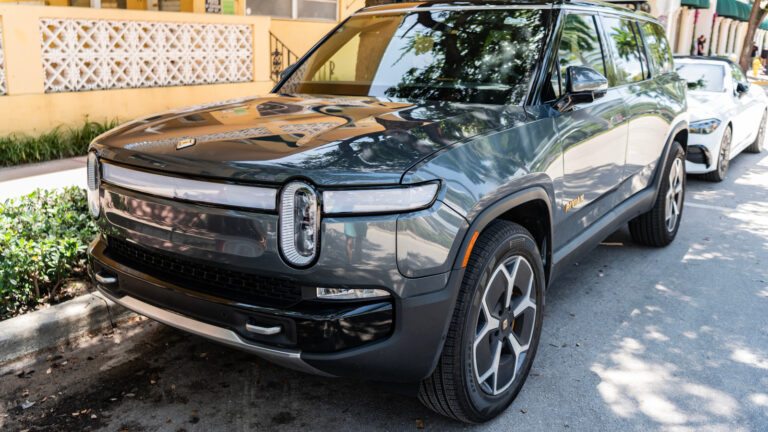
Tesla, Rivian, Lucid, Fisker’s remnants — any California-based ZEV maker gets preferential treatment. A non-California manufacturer could challenge the provision in court, but for now, it’s the law.
Used EV rebates are also part of the program, though specific dollar amounts beyond the half-rate figure haven’t been publicly nailed down yet.
The math tells you why California is doing this. It’s the only state in the country where EVs and hybrids accounted for more than 20 percent of new vehicle registrations in 2025. Los Angeles County alone has over 6.5 million registered vehicles pumping emissions into a basin notorious for trapping smog against the mountains.
The air quality problem there isn’t theoretical — it’s visible, measurable, and chronic.
Still, $3,500 is not $7,500. Newsom’s promise to backstop the federal credit lands at less than half the value of what was lost. The automaker match requirement means the program’s reach depends entirely on which manufacturers decide to participate.
If a brand doesn’t pony up its share, its customers don’t get the rebate. That creates a two-tier market where participation becomes a competitive weapon — or a burden smaller players can’t afford.
The instant point-of-sale structure is the program’s strongest feature. The old federal credit was a tax liability offset, meaning buyers needed sufficient tax burden to claim the full amount. Lower-income buyers frequently couldn’t. California’s approach puts the discount on the hood, visible and immediate, which is how incentives actually move metal.
Whether $135.5 million is enough to speed up adoption is another question. California sold roughly 400,000 EVs last year. At $3,500 per vehicle, the state’s allocation covers about 38,700 buyers before the fund runs dry — assuming full automaker participation. That’s less than 10 percent of last year’s volume.
It’s a gesture with real money behind it, but it’s not a replacement for what Washington took away. California is betting that momentum, manufacturer matching, and cultural gravity can carry electrification forward even at half the incentive. The smog over the San Gabriel Valley doesn’t care about budget math. It just keeps settling in.
Share this Story