
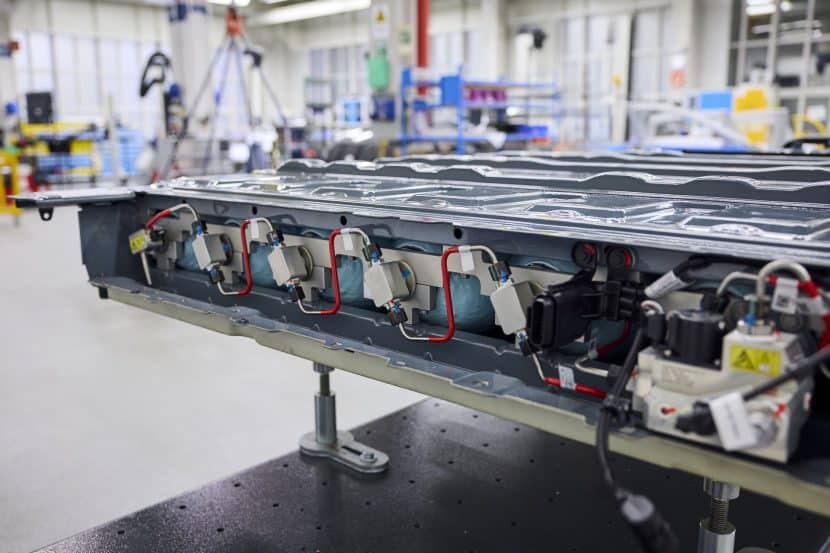


Plant Landshut in Bavaria has begun pre-series production of the Energy Master — the central high-voltage control unit for the BMW iX5 Hydrogen — marking the first time BMW has built this critical component entirely in-house for a hydrogen vehicle. The 2028 launch date is now backed by actual hardware rolling off a line, not just a slide in a strategy deck.
The Energy Master is the nervous system of the iX5 Hydrogen’s drivetrain. It arbitrates power flow between the fuel cell, the high-voltage battery, and the electric motors, managing competing energy demands in real time. In a battery-electric vehicle, the job is relatively straightforward.
In a hydrogen fuel cell vehicle with three distinct power sources operating under variable loads, the complexity multiplies fast.
Landshut already produces the BEV version of this unit for the Neue Klasse iX3 and i3, with a second production line now coming online to nearly double capacity. The hydrogen variant sits on a fundamentally different platform — the BMW Hydrogen Flat Storage system — which replaces the conventional battery pack with a flat-mounted hydrogen tank architecture designed to share dimensions with BMW’s Gen6 high-voltage battery.
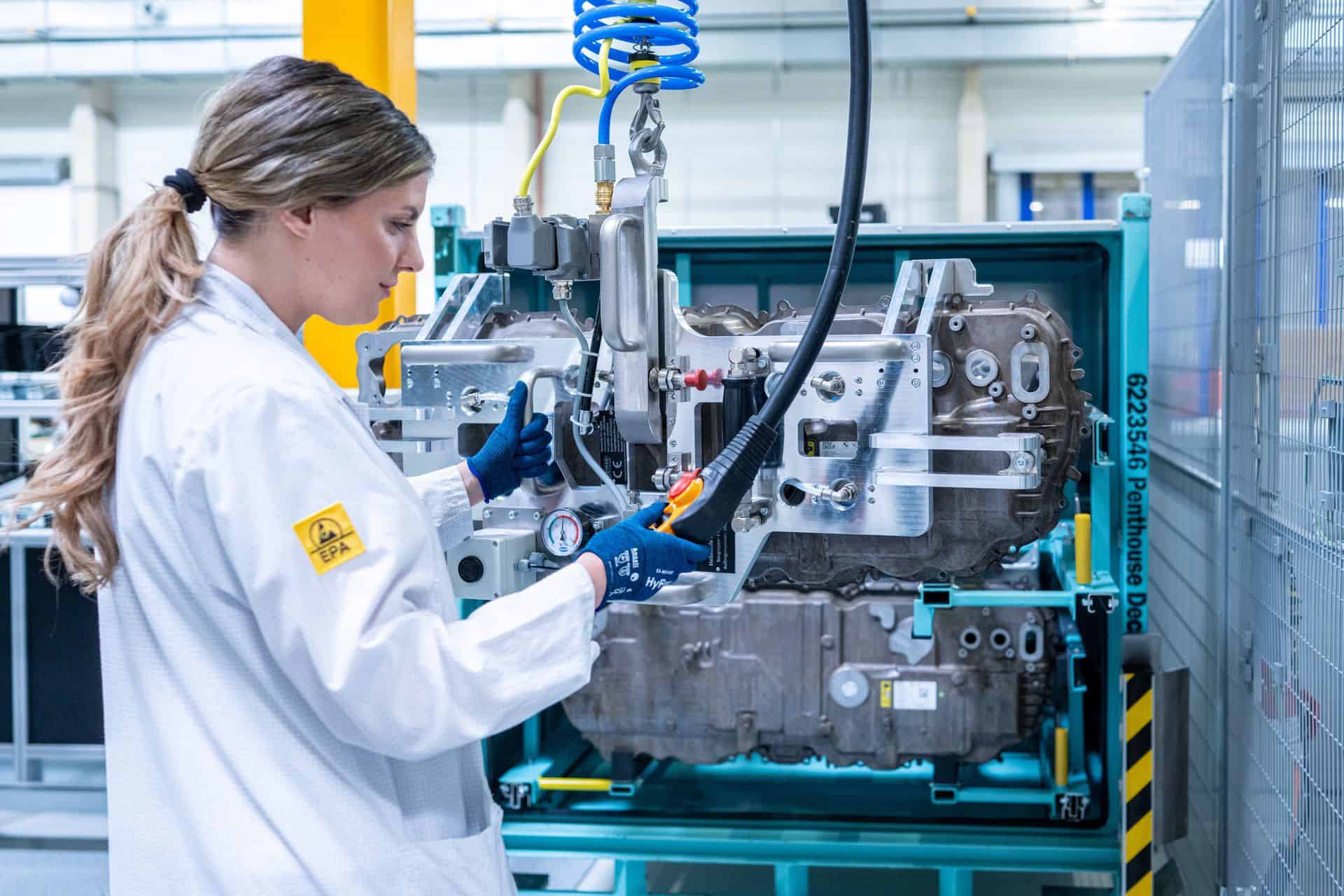
That last detail is the quiet bombshell. By engineering the hydrogen storage to mirror the battery pack’s footprint, BMW can run hydrogen, electric, and combustion models down the same production line. The industry has talked about manufacturing flexibility for a decade. BMW appears to be engineering it into the floor structure of the car.
Range is claimed at up to 750 kilometers, a 50 percent improvement over the roughly 500 kilometers the current pilot iX5 Hydrogen manages. The jump comes from a third-generation fuel cell co-developed with Toyota — more compact, more powerful, and the first BMW fuel cell destined for full series production. Fuel cell assembly will happen at BMW Group Plant Steyr starting in 2028, while Landshut handles the Energy Master, the media distribution plate, and the fuel cell stack housing.
BMW has been running a small pilot fleet of iX5 Hydrogen SUVs since 2023, handing them to select customers and racking up real-world data. That program was never about volume. It was about proving the drivetrain architecture could survive outside a lab.
The components now entering pre-series production at Landshut were refined through that process — tested, broken, redesigned, and tested again.
Three years is still a long runway. Pre-series production means validation is underway, not complete. Crash testing, durability cycling, supplier qualification, and cold-weather calibration all lie ahead.
BMW expects to show performance data from the updated powertrain sometime in 2027.
The hydrogen bet remains a minority play in an industry pouring hundreds of billions into batteries. Toyota has kept the faith. Hyundai has kept the faith. Most of Europe’s volume manufacturers have quietly walked away.
BMW is doing something different — not choosing sides, but engineering a platform architecture that lets it play both hands simultaneously without doubling its factory footprint.
Whether hydrogen refueling infrastructure materializes fast enough to justify a 750-kilometer range claim is a question BMW cannot answer alone. But the manufacturing strategy — one line, multiple powertrains, shared architecture — hedges the bet in a way that pure-play hydrogen programs never could. If hydrogen wins, the car exists. If it doesn’t, the factory still runs.
That’s not optimism. That’s engineering pragmatism from a company that has watched too many competitors bet everything on a single technology and lose.
Share this Story