
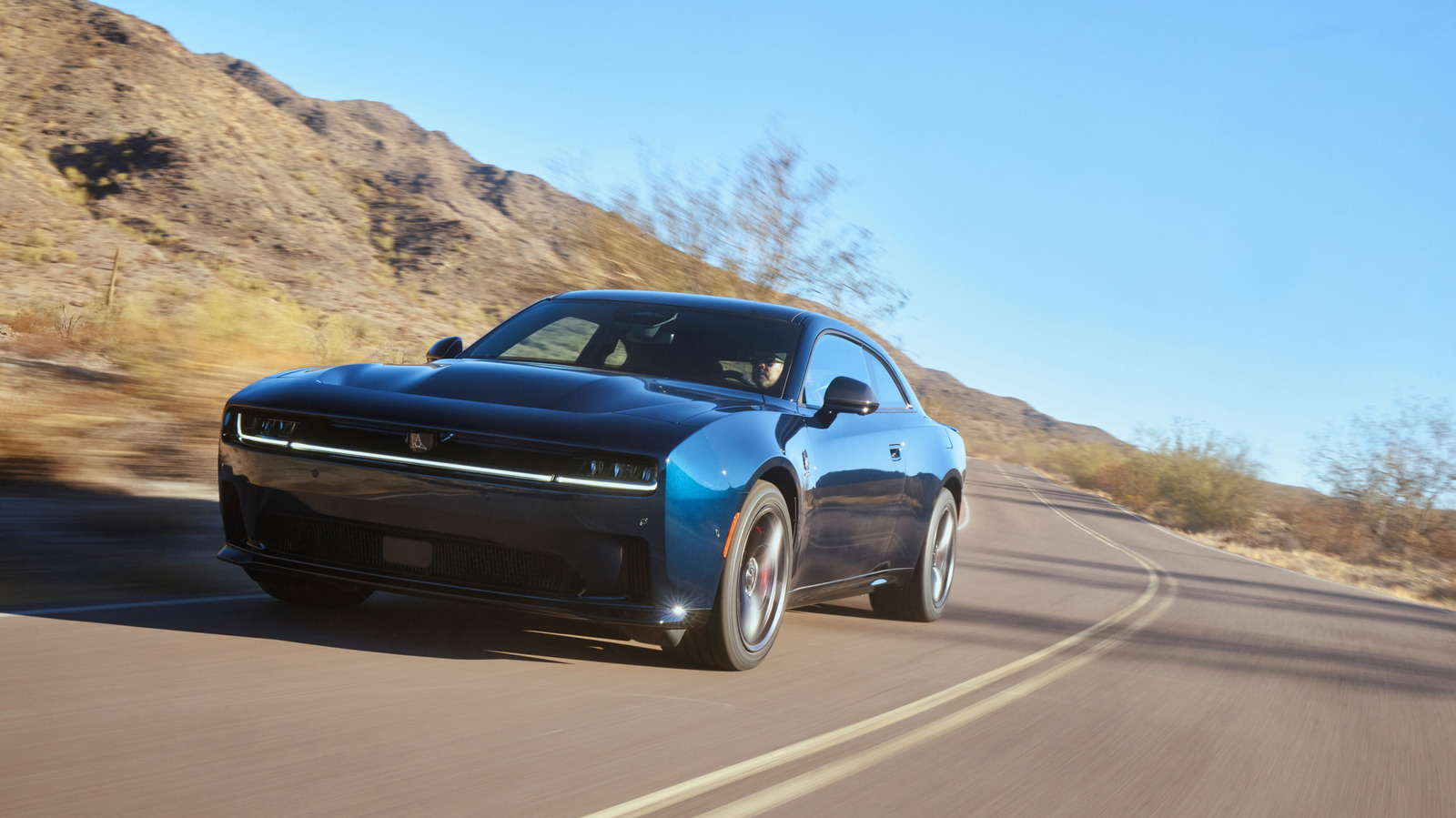


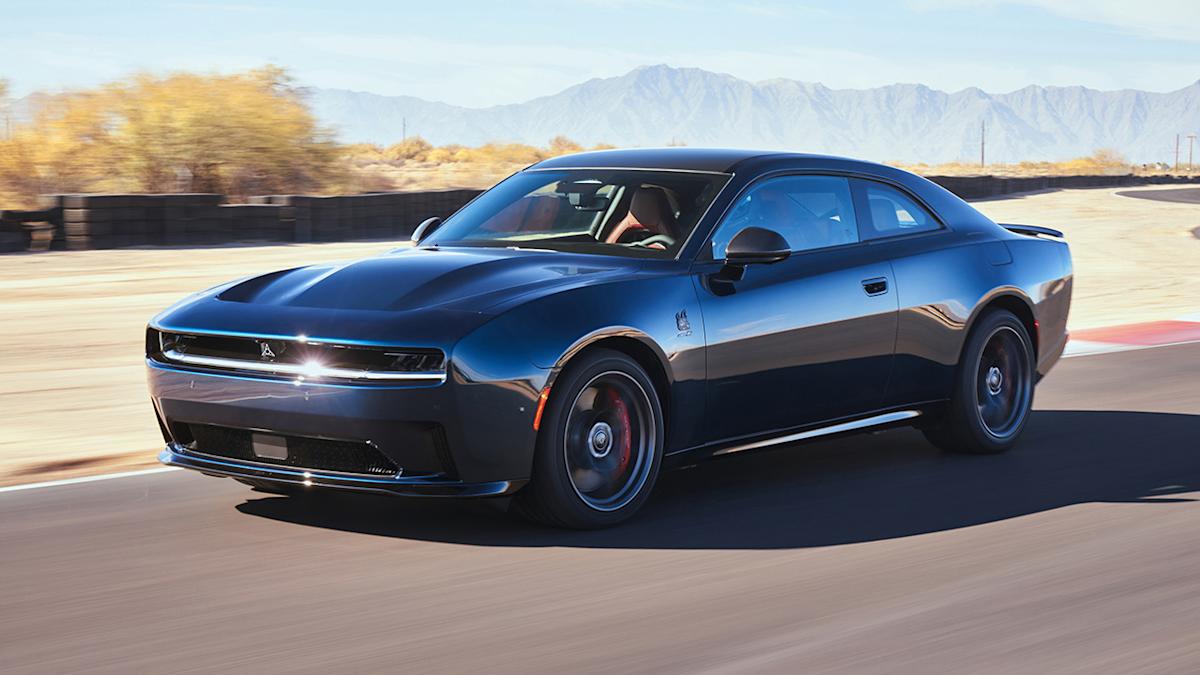
Edmunds just sold its 2024 Dodge Charger Daytona Scat Pack Stage 2 coupe for $35,000. The car cost roughly $82,000 before taxes and fees barely twelve months ago. It had fewer than 7,000 miles on the odometer.
That is not depreciation. That is a financial cliff.
The loss, nearly $50,000, is staggering even by EV standards, where depreciation already runs steeper than the internal combustion world. But this isn’t a story about EVs in general. This is a story about what happens when a product lands in a no-man’s-land between two audiences who don’t want it.
Dodge built the first true electrified muscle car. The problem is brutally simple: muscle car buyers don’t want an EV, and EV buyers don’t want a Dodge. The Charger Daytona fell into a gap the market didn’t ask to be bridged.
Kelly Blue Book data backs up the carnage. A 2024 Charger Daytona R/T coupe that stickered at $61,590 had a fair market value around $30,000 a year later. The Scat Pack coupe, originally $70,190, dropped to $36,700. Fifty percent depreciation in under twelve months, across the board.
Edmunds’ editorial staff did not sugarcoat their year with the car. Ninety percent of them were happy to see it go. The logbook reads like a support group transcript.
The fake Fratzonic exhaust noise was called “an insult to V8s everywhere.” The turning radius was compared unfavorably to a Ford F-150. The infotainment screen froze, the backup camera stuttered, regenerative braking quit mid-trip, and the creep function engaged randomly while stopped, nudging the car toward walls and other vehicles without driver input.
Then the truly strange stuff happened. The high-voltage battery got stuck in accessory mode after a phone call with the AC running. It wouldn’t turn on, and it wouldn’t turn off.
A tow truck arrived hours later, and a jump to the 12-volt battery brought it back to life as if nothing happened. The dealership couldn’t replicate the issue.
There was also an unintended acceleration incident that turned out to be a Dodge “feature” called Drive by Brake. The system applies constant low-level acceleration up to 50 mph if it detects a pedal malfunction, expecting the driver to control speed with the brake. Dodge designed it as a safety measure, but in practice, it scared the hell out of the person behind the wheel.
It wasn’t all misery. The Charger Daytona beat its EPA-estimated range of 216 miles by 18 percent, hitting 255 miles on Edmunds’ test. The styling drew thumbs-up from strangers.
The hatchback swallowed a bass guitar and a pedalboard. The cabin was reasonably quiet at highway speeds. But cool looks and decent range don’t paper over a car that can’t consistently do its job day to day.
This isn’t the first time Edmunds has eaten a massive loss on a long-term EV. Last summer, the outlet sold its Fisker Ocean after two years for roughly $60,000 less than purchase price, with similar mileage. But Fisker had gone bankrupt, which explains its cratered resale.
Dodge is still in business. Stellantis is still making these cars. And the Charger Daytona is hemorrhaging value at a rate that would make a luxury sedan blush.
Six months after launch, Dodge was already dangling lease deals under $300 a month with the federal tax credit applied. Five months after that, new 2025 models were listed at $41,987 against a $62,385 sticker. The market spoke early and kept speaking.
Dodge got the swagger right. It got almost everything else wrong. And $35,000 for an 82-grand car with 7,000 miles is the market’s final word on the matter.
Share this Story