
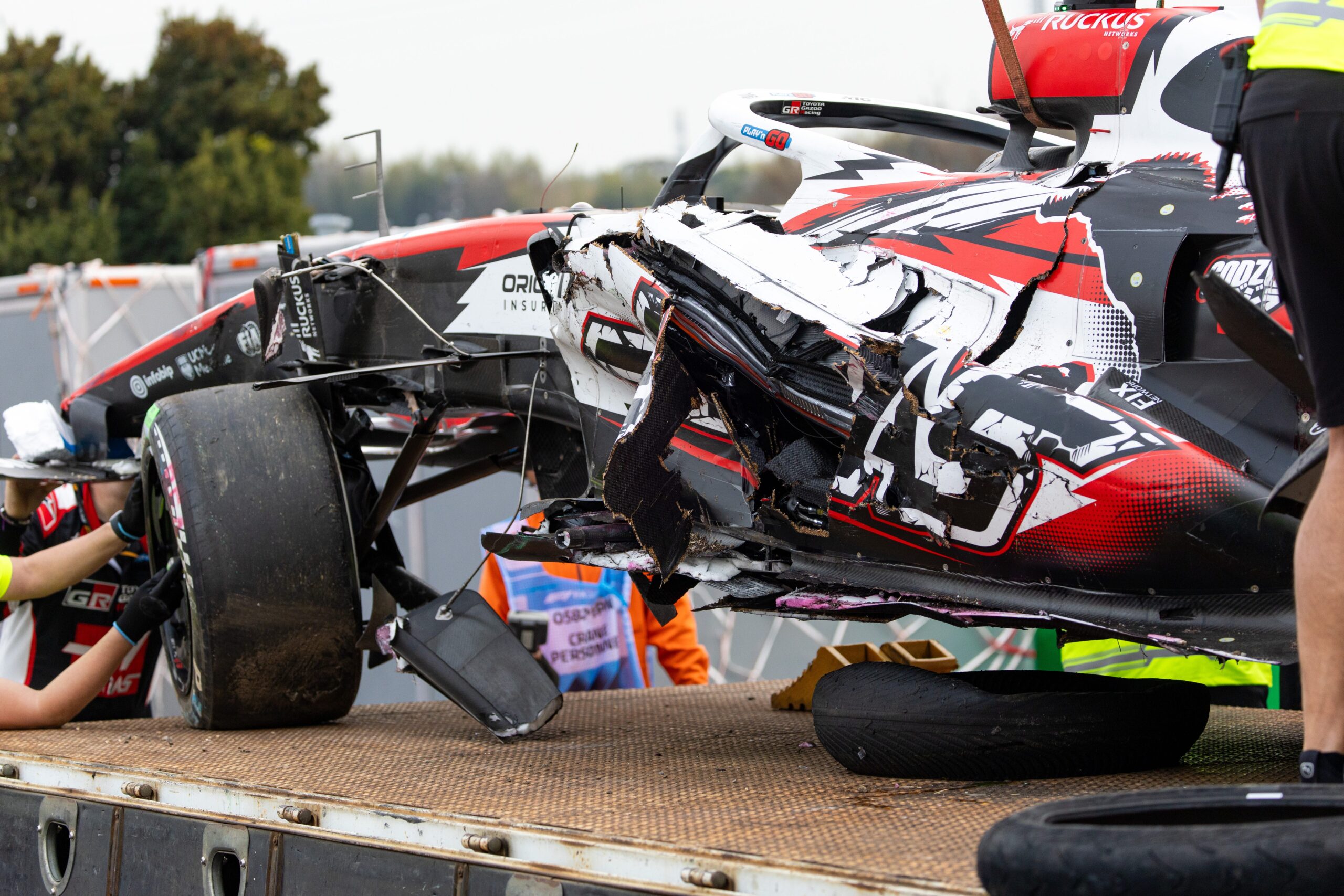


Oliver Bearman was doing 191 mph when his Haas left the track at Suzuka on Sunday. He hit the barrier at 50G. He walked away with a bruised knee and the knowledge that the very regulations governing Formula 1’s new era nearly killed him.
The crash happened on lap 22 of the Japanese Grand Prix, a mundane battle for 17th place between Bearman and Alpine’s Franco Colapinto. Bearman was on his energy boost. Colapinto was depleted, slowing to harvest energy on the flat-out run toward Spoon Curve.
The speed delta between the two cars was 50 kph — roughly 31 mph — a gap that simply did not exist under previous regulations. Bearman took to the grass trying to avoid the slower car, spun across the circuit, and slammed into the left-side barrier. He climbed out gingerly. He was lucky.
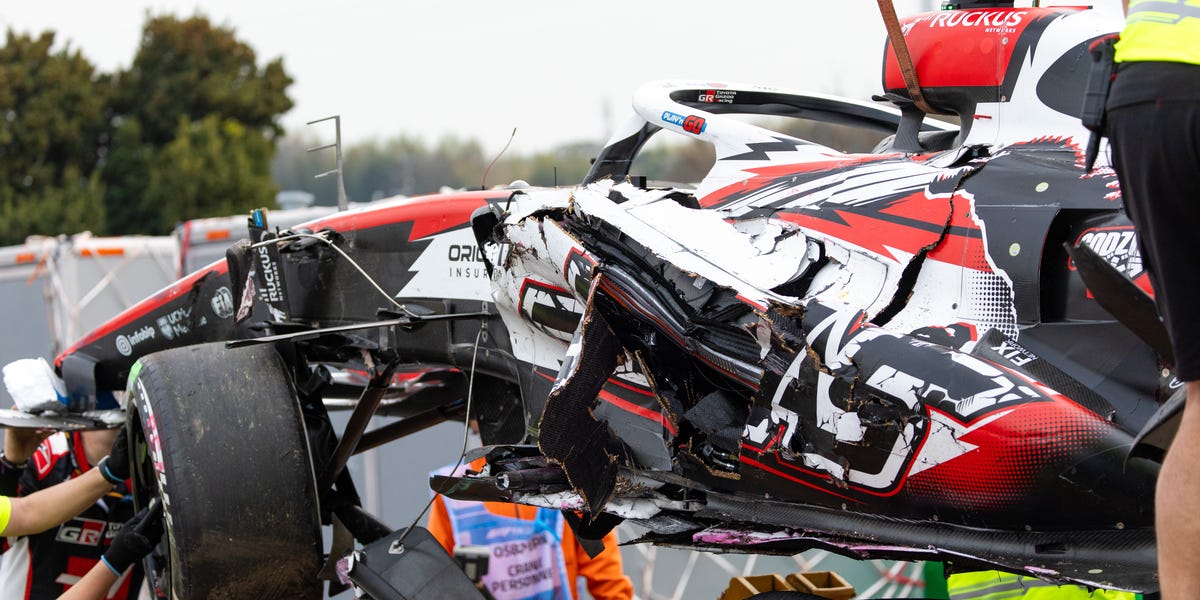
The 2026 regulations, built around a radically new energy management system, are the culprit everyone is pointing at but nobody in charge wants to formally blame. The rules require cars to harvest and deploy electrical energy in ways that create wild speed differentials on straights. One car boosting, another car harvesting — the closing speeds are unlike anything F1 has seen.
Bearman didn’t mince words. “It’s a part of these new regulations that I guess we have to get used to,” he said. “I think we’ve, as a group, warned the FIA what can happen, and this has been a really unfortunate result of a massive delta speed that we’ve never seen before in F1 until these new regulations.”
The drivers had raised this exact concern in a Friday meeting with FIA officials at Suzuka. They were told, essentially, to be patient. Three races into the new formula, patience ran out against a concrete wall.
The FIA released a statement Sunday dripping with institutional caution. It acknowledged “ongoing discussions” and confirmed that April meetings are scheduled to review the regulations. It stressed that “any speculation regarding the nature of potential changes would be premature.”
The governing body built adjustable parameters into the 2026 rules precisely for moments like this — a quiet admission that they knew the formula might need fixing on the fly.
Carlos Sainz, now at Williams and a director of the Grand Prix Drivers’ Association, revealed that FIA single-seater director Nicolas Tombazis indicated changes would come before the Miami Grand Prix in early May. Sainz pushed harder. “Imagine Bearman’s accident happened on a street circuit,” he said, leaving the implication hanging.
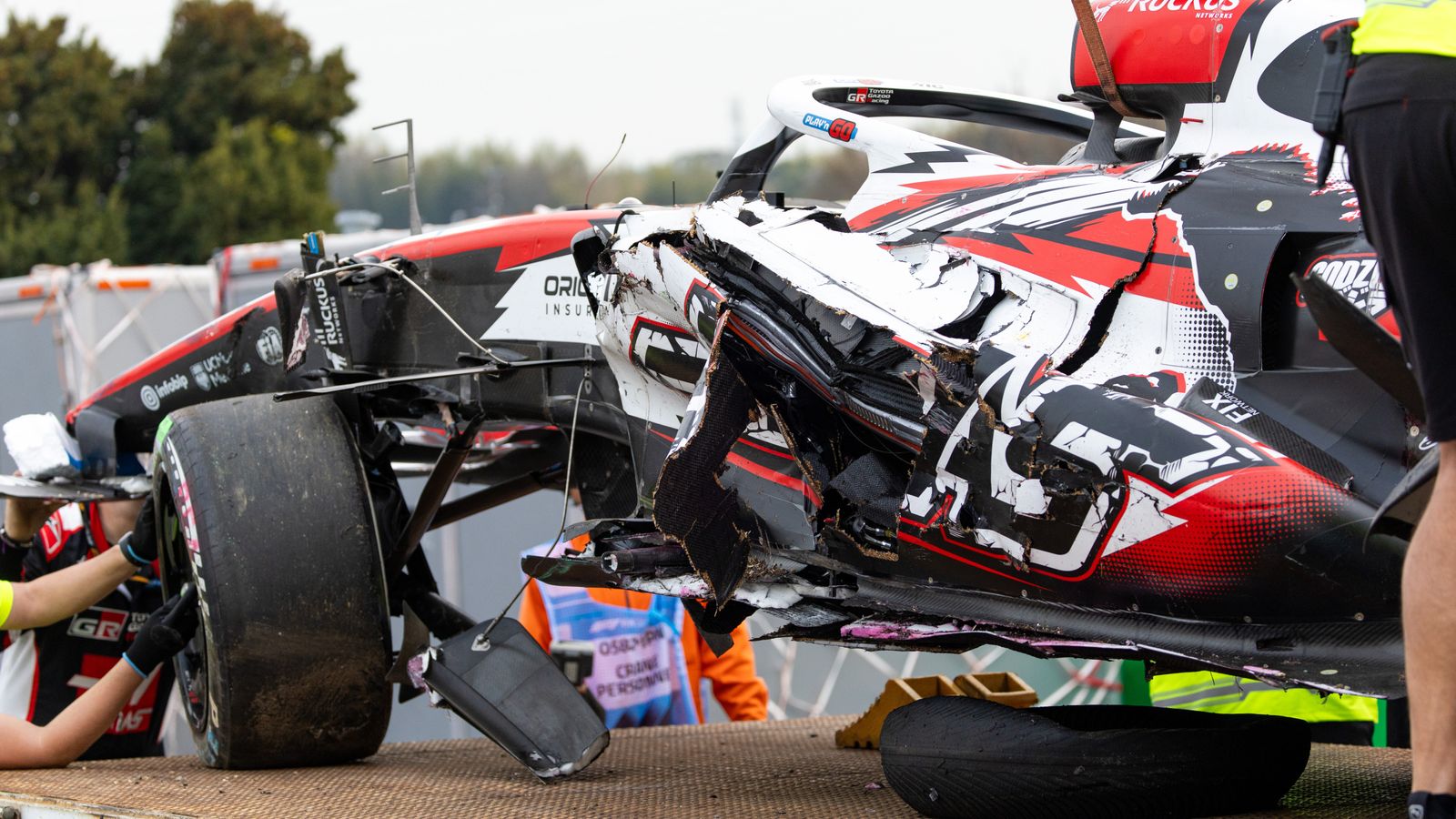
Haas team principal Ayao Komatsu was direct. “We have been talking about closing speeds, and this accident has now happened, so we cannot ignore it. Safety should always be top of the list.”
The crash cast a shadow over what was otherwise a dominant Mercedes weekend. Kimi Antonelli took his second consecutive victory from pole, extending his championship lead over teammate George Russell. Mercedes has locked out the front row at all three races this season, but the headlines from Suzuka belong to a 50G impact and the regulatory framework that created it.
F1 now enters its April break with a month to argue about energy deployment curves, harvesting windows, and speed deltas. The sport has always been a laboratory. The 2026 rules were designed to be tweaked.
But the tweaking was supposed to happen through simulation data and engineering meetings, not because a 20-year-old got flung into a barrier while fighting for 17th. Bearman has until Miami to let his knee heal. The FIA has the same window to prove it can move faster than its own bureaucracy.

Share this Story