
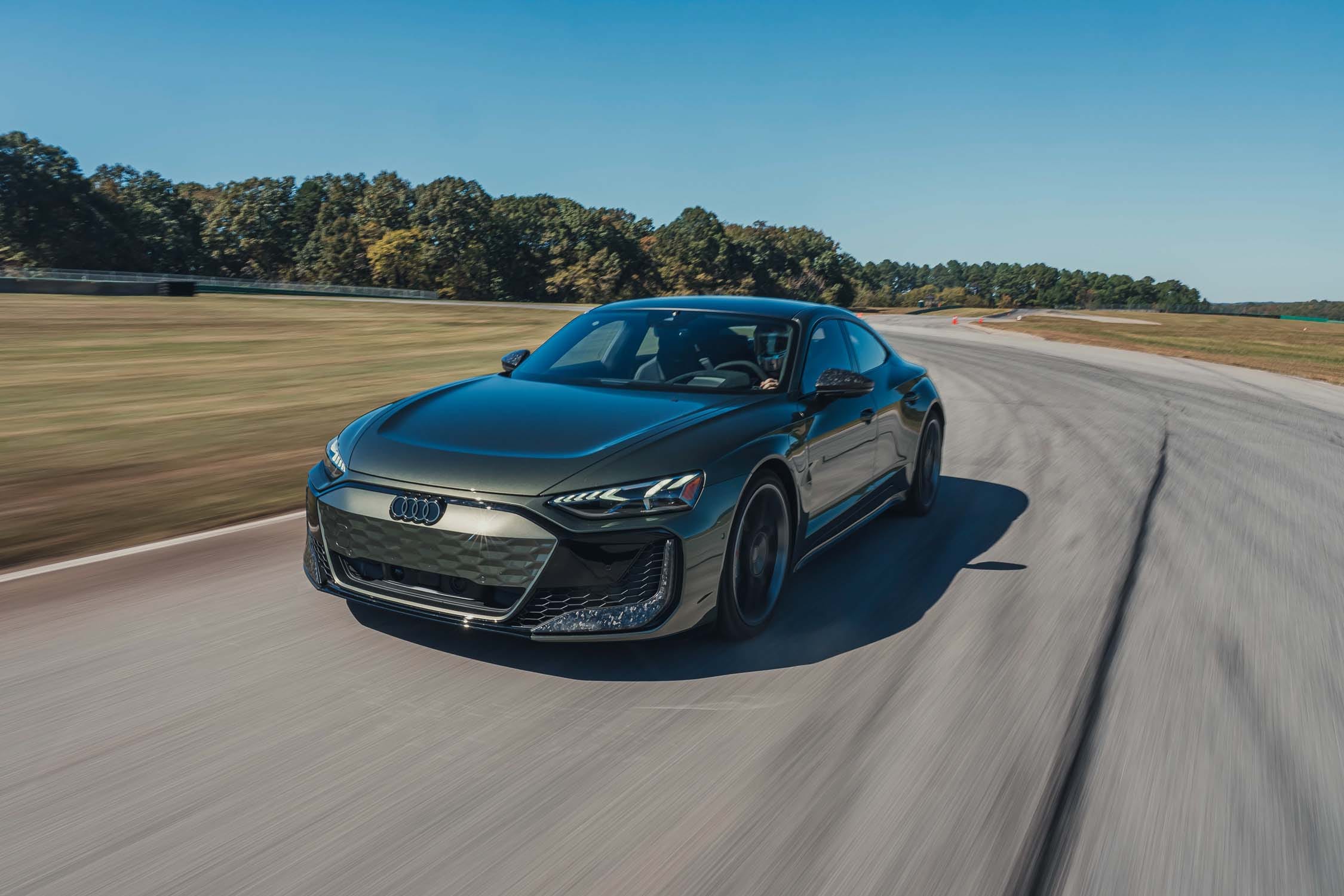


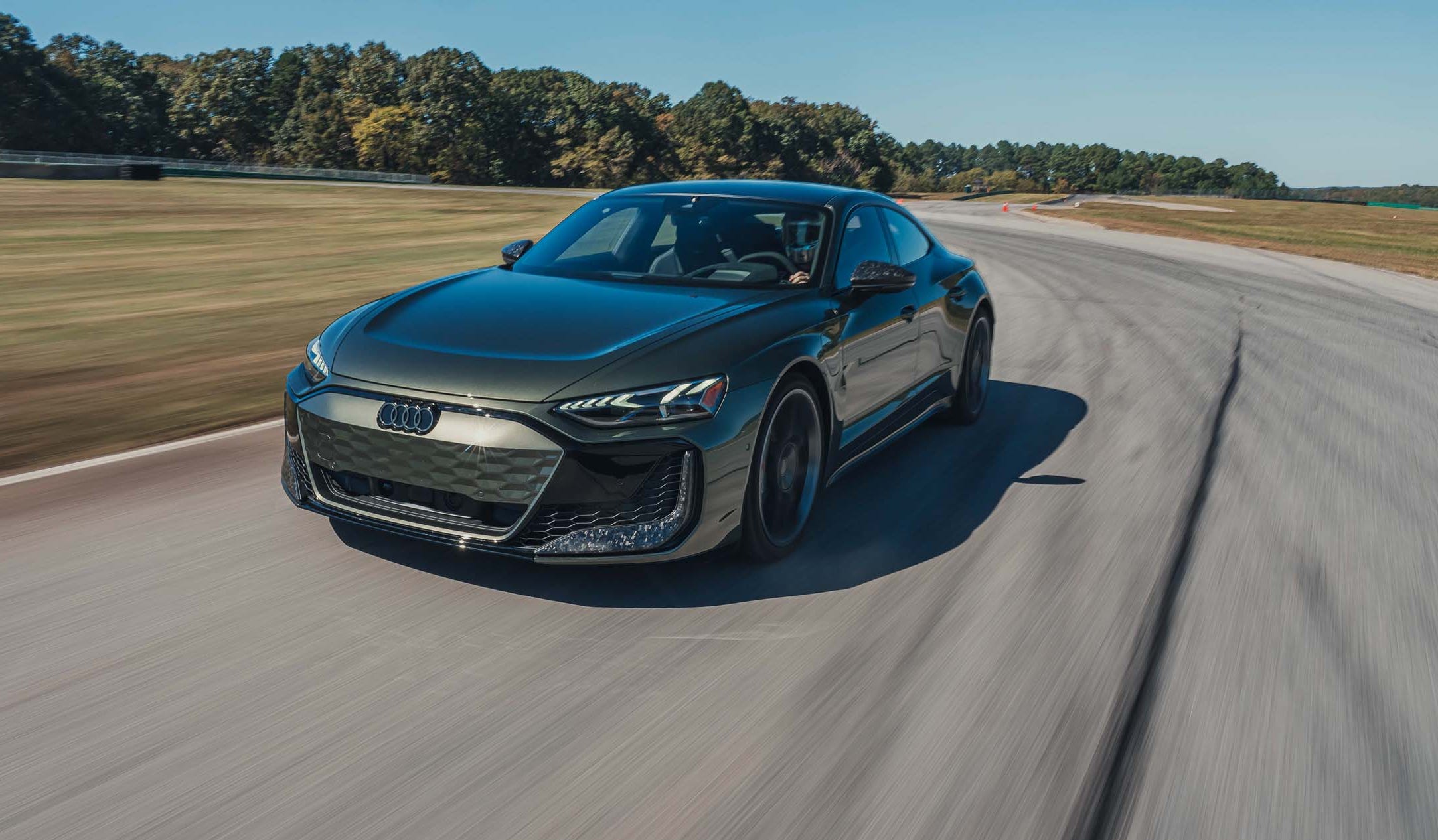
The Audi RS e-tron GT just laid down a 2:50.6 lap at Virginia International Raceway during Car and Driver’s annual Lightning Lap test, and the number tells a story bigger than one car. That time slots the 5,170-pound electric sedan right next to a 2012 Corvette ZR1 and a 2014 Ferrari F12 on the all-time leaderboard. A four-door, battery-powered Audi is matching the track pace of some of the most celebrated supercars from a decade ago.
The RS e-tron GT showed up packing 912 horsepower from its dual electric motors, a 105-kWh battery, and a price tag of $189,595 as tested. It wore Pirelli P Zero PZ4 tires on 21-inch wheels, the same rubber fitted to the first-generation Porsche Taycan Turbo S that Car and Driver lapped back in 2020. Compared to that closely related Porsche, the Audi was 4.6 seconds quicker, improving in every single sector of the track.
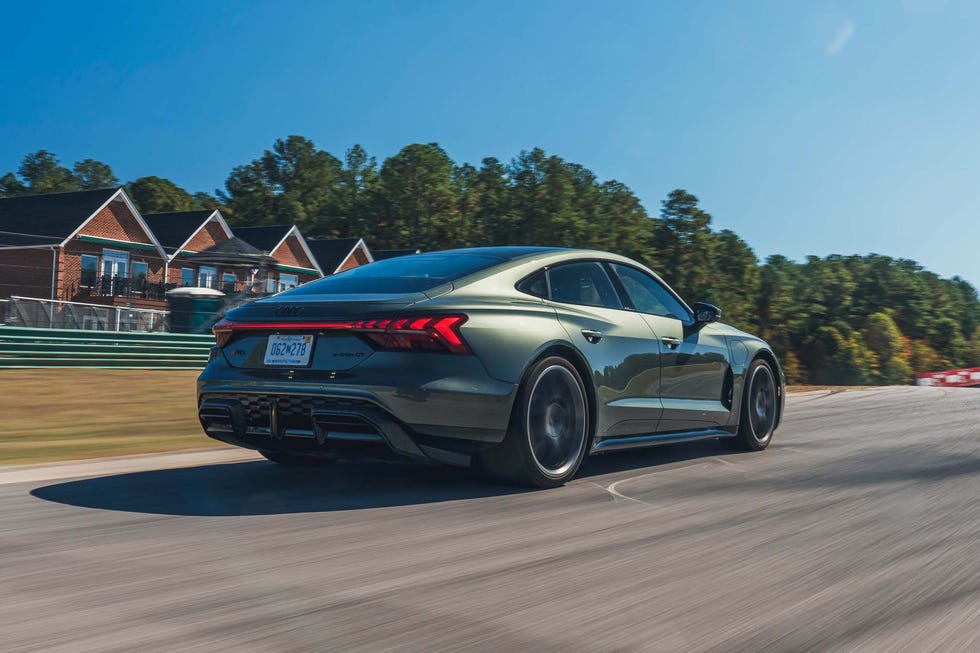
There is, however, one embarrassing catch. The RS e-tron GT has a top speed limiter set at 153.8 mph, and it hit that wall twice during the lap — once past the start/finish line for two and a half seconds and again briefly on the Back Straight. Free speed, left on the table by an electronic leash.
It wasn’t a disaster, but it was a reminder that even the most powerful EVs still play by different rules than their combustion counterparts.
What made the bigger impression on the Car and Driver team was the active suspension. The RS e-tron GT shares its dampers with the Porsche Taycan Turbo GT, but Audi tuned them differently. Where the Taycan felt twitchy and nervous over the violent curbing in VIR’s Climbing Esses, the Audi simply swallowed the bumps whole.
The testers called it the best bump absorption they’d experienced from any car at Lightning Lap, a claim that carries serious weight given the decades of testing behind it.
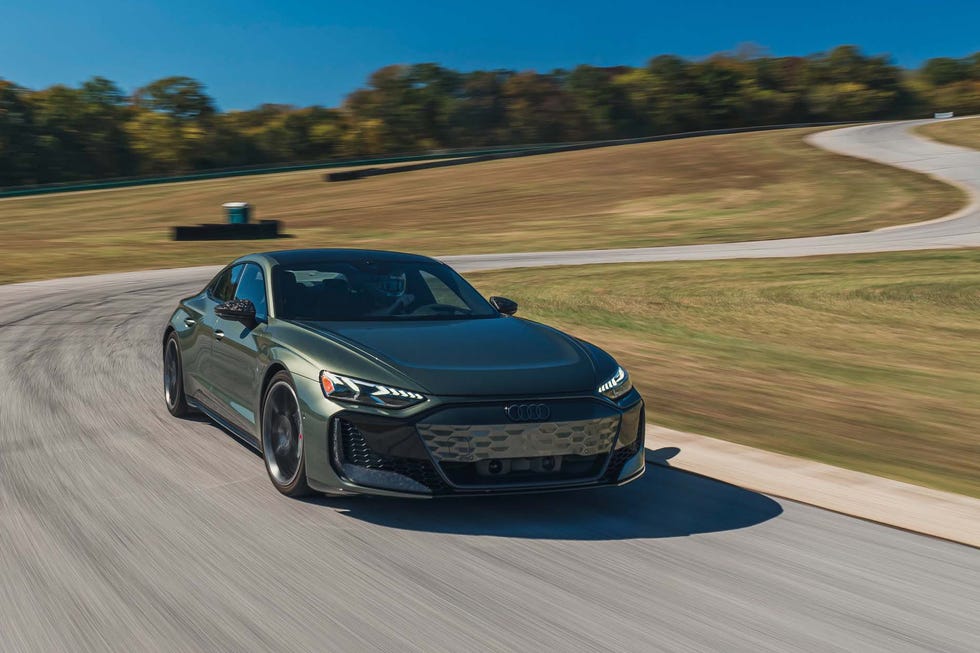
That composure translated directly into driver confidence. The team noted they didn’t need many laps to find the car’s limit — it was immediately approachable and easy to push hard. Tire supply was limited, so they only had a handful of attempts, but it didn’t matter. The RS e-tron GT delivered on its first real push.
The 2:50.6 time ranks 69th overall in Lightning Lap history and fifth among the 11 EVs that have been lapped over the years. It trails the fastest electric four-doors, which bring more power and significantly more tire to the fight. But its placement among legendary combustion machines says plenty about how far EV track performance has come.
Beyond the racetrack, the RS e-tron GT remains Audi’s flagship performance machine. It rockets to 60 mph in 2.4 seconds with launch control engaged, charges from 10 to 80 percent in roughly 18 minutes on a 320-kW DC fast charger, and wraps it all in a cabin lined with Nappa leather, Alcantara, and forged carbon. The flat-bottom, flat-top steering wheel with its red Boost and RS buttons feels lifted from a proper race car.
The RS e-tron GT starts at $170,500, which puts it squarely in supercar territory. Whether that price holds up over time is another question entirely — these electric flagships have historically depreciated fast and hard. Someone shopping in 2029 might find a stunning deal on a lightly used example.
But right now, the numbers from VIR are the headline. A 5,170-pound electric sedan running with Corvette ZR1s and Ferrari F12s isn’t a novelty anymore. It is the new reality. And that 153.8-mph speed limiter? Remove it, and the gap closes even further. The electric performance era isn’t coming. It is already here, getting faster every year.


Share this Story