
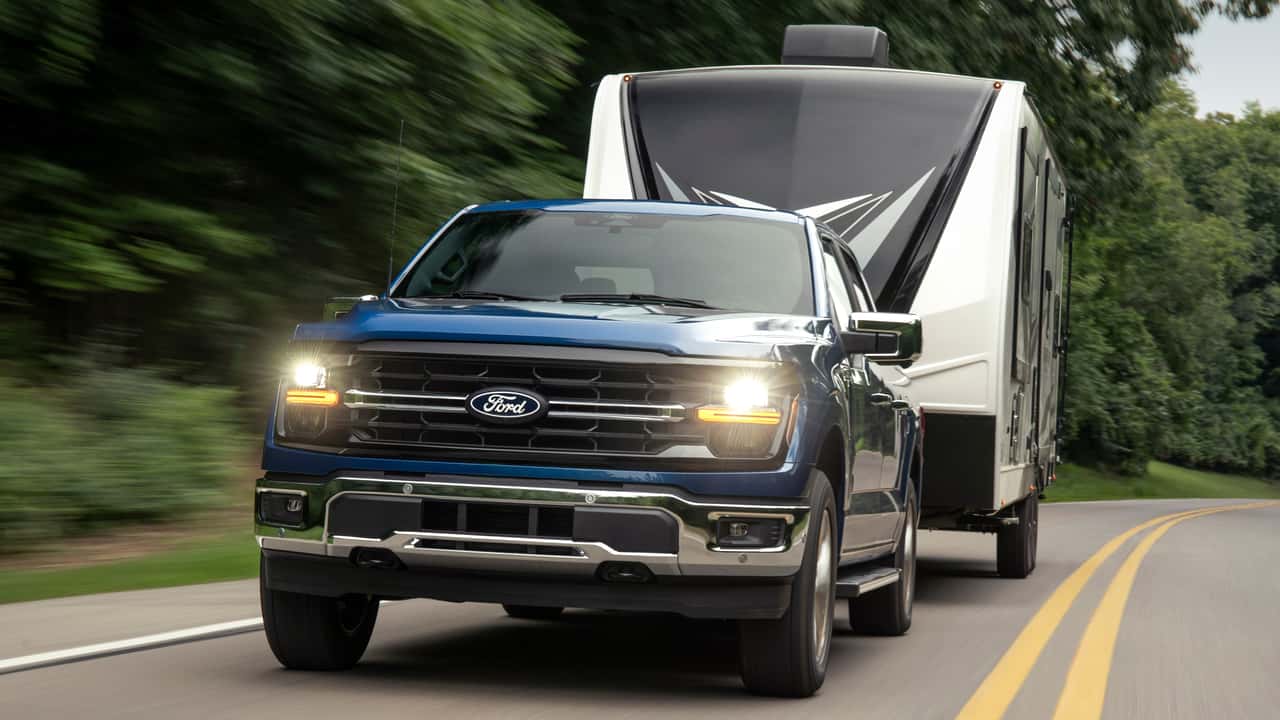


Ford just issued a recall covering 4,380,609 trucks, SUVs, and vans — and if you own an F-150, Maverick, Expedition, Ranger, or even a Lincoln Navigator built in the last few years, yours is probably on the list. The culprit is a software bug in the Integrated Trailer Module that can silently kill your trailer’s brake lights, turn signals, and in some cases, the trailer brakes themselves.
The scope here is staggering. The F-Series alone accounts for roughly 3.4 million of those vehicles, with the F-150 making up 2,297,857 units spanning model years 2021 through 2026 and the F-250 Super Duty adding another 1,135,063. Toss in 412,105 Mavericks, 317,604 Expeditions, 129,836 Rangers, 75,029 Navigators, and 13,115 of the new E-Transit vans, and you’ve got one of Ford’s largest recalls in recent memory.
The technical explanation involves what engineers call a “race condition.” During initial power-up, the trailer module and the CAN Standby Control bit trip over each other trying to access shared data at the same time. When the timing goes wrong, the module powers on but can’t talk to the vehicle. Your trailer lights go dark, your turn signals stop reaching the trailer, and if you have a high-series trailer brake controller, you could lose trailer braking entirely.

Ford says drivers will see warning messages — either “Trailer Brake Module Fault” or “Blind Spot Assist System Fault” — pop up on the instrument cluster, and the turn signals will flash rapidly to indicate something’s off. That’s your cue to pull over and sort things out. The company estimates only about one percent of the recalled population will actually experience the defect, but with 4.4 million vehicles involved, that’s still potentially tens of thousands of trucks towing blind.
The timeline of how this recall came together raises some eyebrows. Ford first caught wind of the issue back in October 2025 but closed its investigation weeks later. Then in December, during a routine monthly meeting with the National Highway Traffic Safety Administration, the agency pointed out that the problem could violate Federal Motor Vehicle Safety Standards.
Ford reopened the investigation in January, found 405 warranty claims potentially tied to the glitch, and pulled the trigger on the recall. The company says it knows of no crashes, injuries, or deaths connected to the defect. The better news is that the fix doesn’t require a trip to the dealer — unless you want it to.
Over-the-air software updates will begin rolling out on March 17, with Ford expecting full deployment across all affected vehicles by May. Owners can also bring their truck or SUV to any Ford or Lincoln dealership to have the update installed. Official owner notifications will start going out in late March.

This marks Ford’s tenth recall of 2026, and the year isn’t even three months old. The Blue Oval had a rough 2025 on the recall front too, and this latest action — while easy to fix — shows just how deeply software now runs through every function of modern vehicles. A coding flaw that would have been irrelevant twenty years ago now triggers a recall larger than the population of Los Angeles.
For owners, the takeaway is simple: keep your truck’s connectivity active, accept the update when it arrives, and if you’re towing before March 17, pay close attention to those warning messages. A trailer rolling down the highway without working brake lights is nobody’s idea of a good time.





Share this Story