
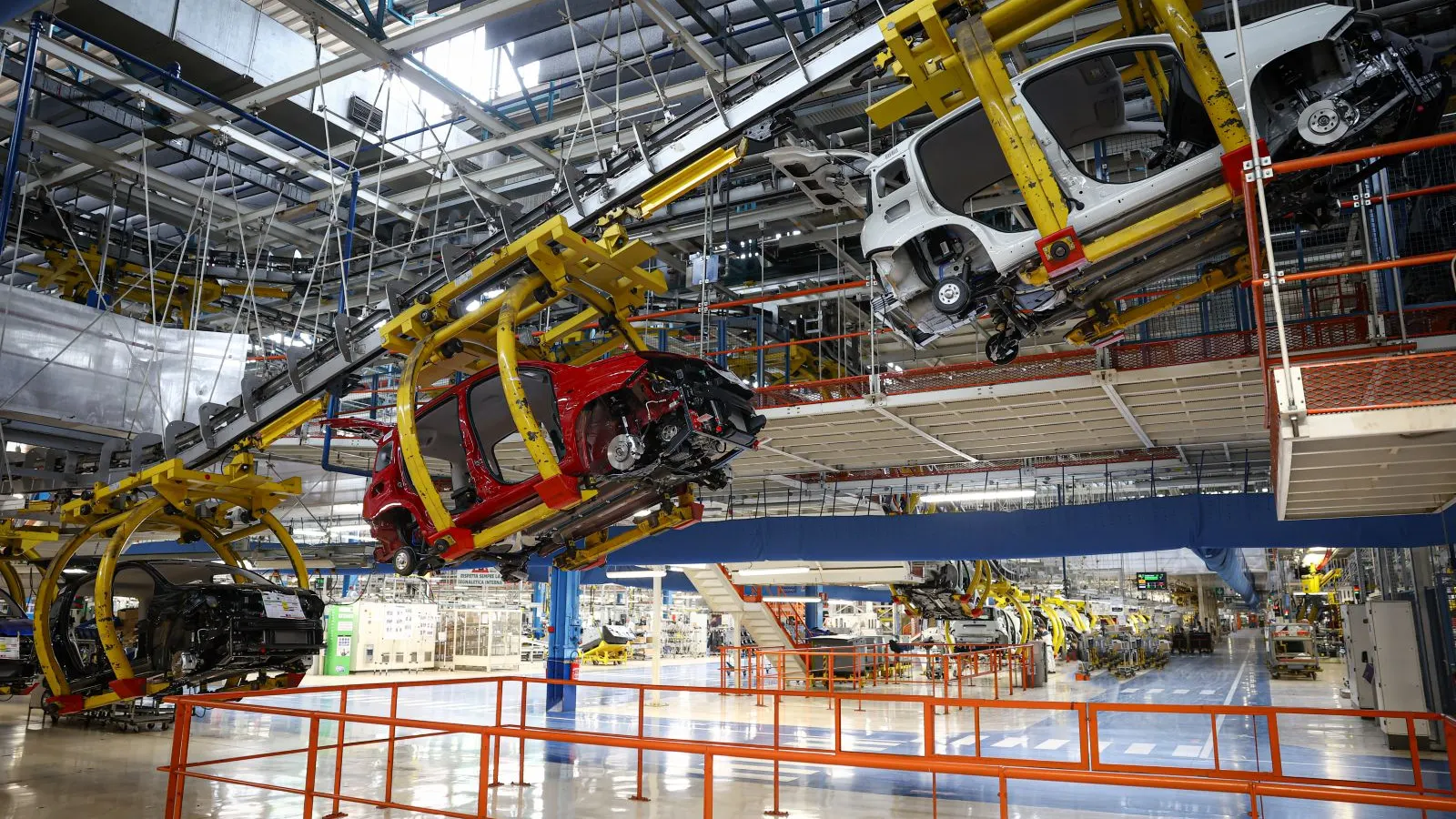


Stellantis says it will put a small electric city car on European roads by 2028, priced under 15,000 British pounds. Production will roll out of Fiat’s storied Pomigliano d’Arco plant in Italy, the same factory that gave the world the Fiat Panda. CEO Antonio Filosa calls it the E-Car initiative, and the European Commission has already blessed it for its potential to create domestic manufacturing jobs and push EV adoption.
That all sounds tidy until you look at who Stellantis will be fighting for those same customers.
Its own joint venture partner, Leapmotor, already sells the T03 in the U.K. for 14,495 pounds. That’s a car available now, not in 2028. Renault’s budget arm Dacia has its Spring Electric 70 listed at 15,990 pounds. Both are already in showrooms chasing the exact urban buyers Stellantis says it wants to reach two years from now.
So the E-Car arrives late to a party its own house helped throw. Stellantis invested heavily in Leapmotor specifically to crack Europe’s affordable EV segment with Chinese-engineered vehicles. Now it’s announcing a separate, internally developed competitor built in Italy, pitched at the same demographic, at roughly the same price point.
Filosa framed it as heritage, citing “small car success that runs deep in our European Stellantis DNA,” but the strategic logic is harder to parse. The timing traces back to Stellantis’ FaSTLAne2030 plan, unveiled at its May 21 Investor Day, where the company committed $70 billion to its five-year road map. The E-Car is one piece of a sprawling portfolio bet that also includes a second joint venture with Dongfeng and expanded Leapmotor collaboration.
Stellantis is running multiple plays at every price tier in every major market, hedging against the possibility that any single partner or platform stumbles. There’s industrial policy at work here too. Building in Pomigliano d’Arco is a deliberate nod to Italian and EU politicians who have grown uneasy watching European automakers hollow out their domestic manufacturing base while importing Chinese-built EVs.
The European Commission’s endorsement was no accident. Stellantis needs political goodwill in Brussels and Rome, and a factory churning out affordable European-made EVs buys plenty of it.
But political goodwill doesn’t guarantee commercial success. The small urban EV segment in Europe is brutal, with razor-thin margins and ruthlessly price-sensitive buyers. Two years is an eternity in a market where Chinese competitors keep sharpening their offers.
By 2028, the Leapmotor T03 or its successor could be even cheaper. Dacia will have iterated. BYD’s Seagull looms.
Stellantis has a habit of announcing grand plans. Under former CEO Carlos Tavares, the company laid out equally ambitious electrification roadmaps that were later revised, delayed, or quietly shelved. Filosa, who took the top job after Tavares’ abrupt departure, is trying to project stability and ambition at the same time.
Whether Fiat’s old Panda factory can birth a genuine competitor in a crowded, cost-crushed segment while Stellantis simultaneously imports and sells a rival from its own Chinese partner is a question no investor day slide deck can answer. The market will.

Share this Story