
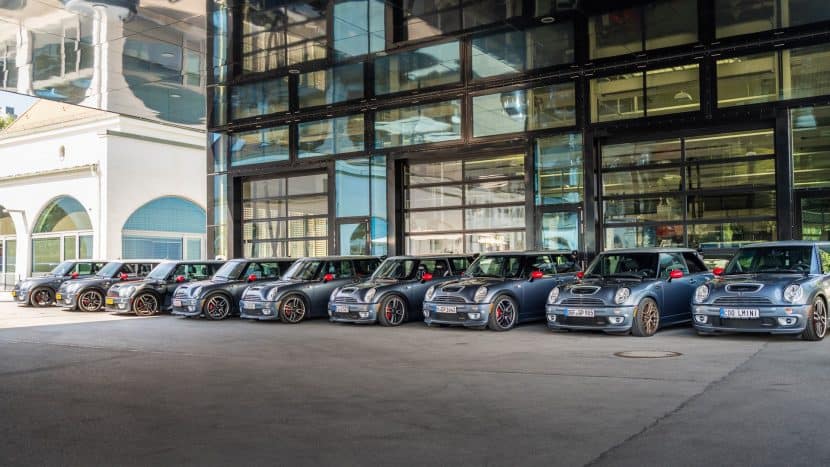


Twenty-one MINI GPs rolled into BMW Group Classic’s headquarters in Munich on July 25, representing every generation of the hottest car MINI has ever built. Owners came from Germany, the Netherlands, Belgium and the Czech Republic, filling the courtyard with a timeline of escalating absurdity that started two decades ago in Misano, Italy.
The first MINI Cooper S with John Cooper Works GP Kit, the car fans call the GP1, debuted publicly at MINI United in late October 2005. Deliveries of the R53-based pocket rocket began in the summer of 2006. Just 2,000 were built, each one raw, naturally aspirated, stripped to two seats, and fitted with a rear wing that looked like it belonged on a car twice its size.
The GP2 followed in 2012 and reached owners in 2013, adding a turbocharged engine, coilover suspension and an active rear diffuser straight from the factory. Production stayed at 2,000 units. The recipe was the same: two seats, aggressive aero and the understanding that practicality was someone else’s problem.
Seven years later, the GP3 arrived bigger in every dimension. It packed 306 horsepower from a four-cylinder turbo and finally broke the production cap, with 3,000 units rolling off the line. The massive rear spoiler and widened arches made it look like a MINI that had been lifting weights.
Whether the added size diluted the original GP ethos is a debate that probably fueled a few arguments at the Munich beer garden where the owners gathered for lunch afterward.
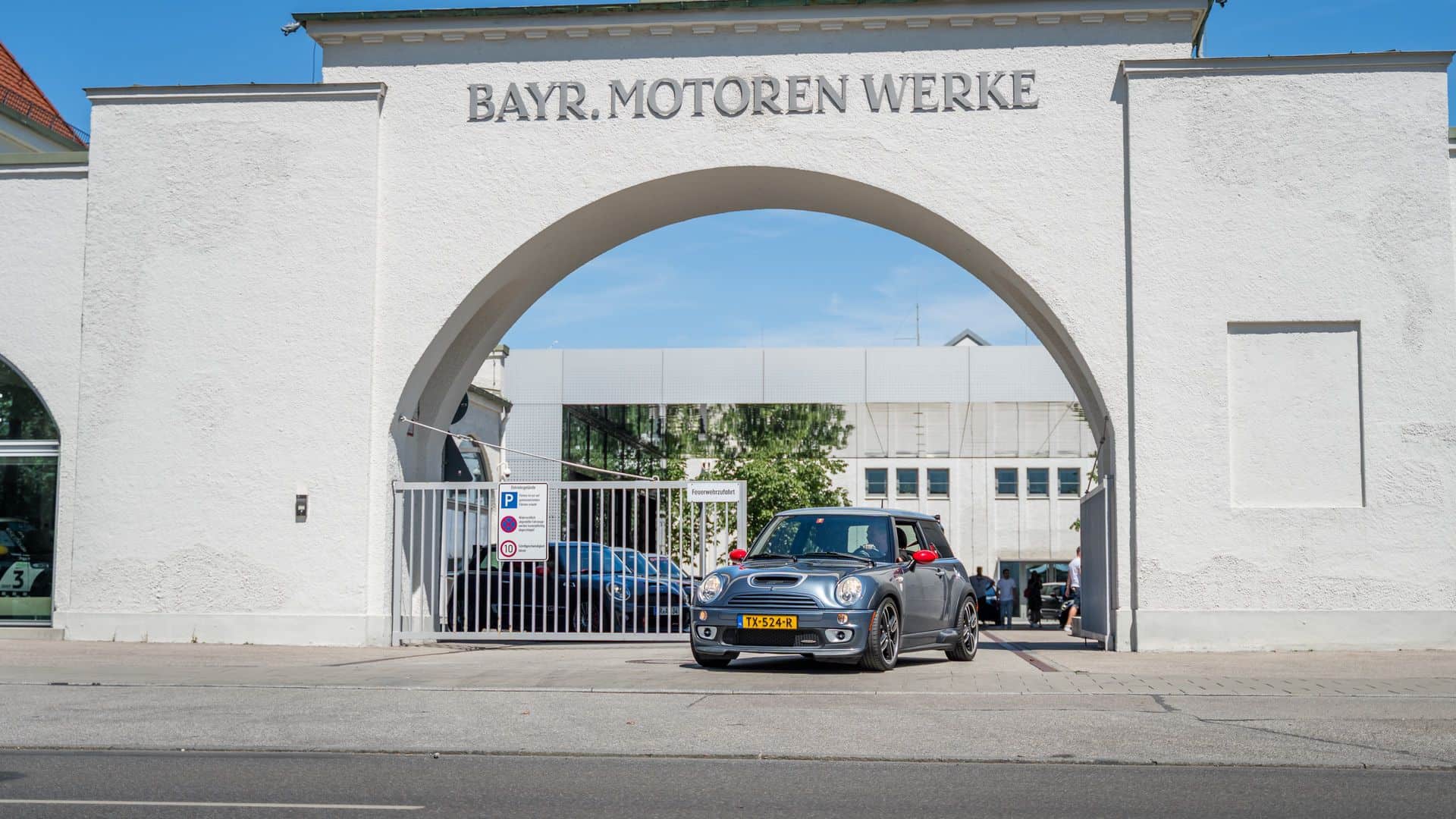
The real showstopper parked outside BMW Group Classic’s workshops was not a production car at all. The one-of-one MINI John Cooper Works GP Concept sat between GP1 chassis number 0000, the very first built, and the GP2 owned by BMW Classic. The Concept takes the GP philosophy past any regulatory finish line, with aerodynamics, materials and a JCW powertrain representing what MINI’s engineers would build if homologation did not exist.
It will never see a public road, which is precisely what makes it magnetic.
BMW Group Classic opened its so-called “holy halls” to the group, a space normally closed to the public. Inside sat a curated display of MINI history: the Superleggera by Touring, the Countryman WRC rally car, the Cooper S JCW Challenge, the Inspired by Goodwood edition, and the original classic Mini made famous by Rowan Atkinson’s Mr. Bean. It was a generous gesture from a company that guards these collections carefully.
The gathering carried an unmistakable undertone. With no fourth-generation GP confirmed or even hinted at, these owners know they may be holding the last of a breed. MINI’s future is electric, and the Cooper and Aceman lineups are pivoting hard toward batteries and motors.
A hot John Cooper Works electric variant is possible, but a stripped-out, limited-run, combustion-powered lunatic of a car wearing the GP badge feels like it belongs to a closed chapter.
Participants had registered months in advance, and organizers say this will not be the last reunion. Plans for future meets were already circulating over lunch. The GP community is small enough to fit in a beer garden and loud enough to echo through Munich’s streets on a group drive through the city center.
For a car that was always built in tiny numbers and sold on the promise of being the most extreme MINI money could buy, 21 examples in one place is about as close to a mass gathering as the GP world gets. The owners are already counting heads for next time.
Share this Story