
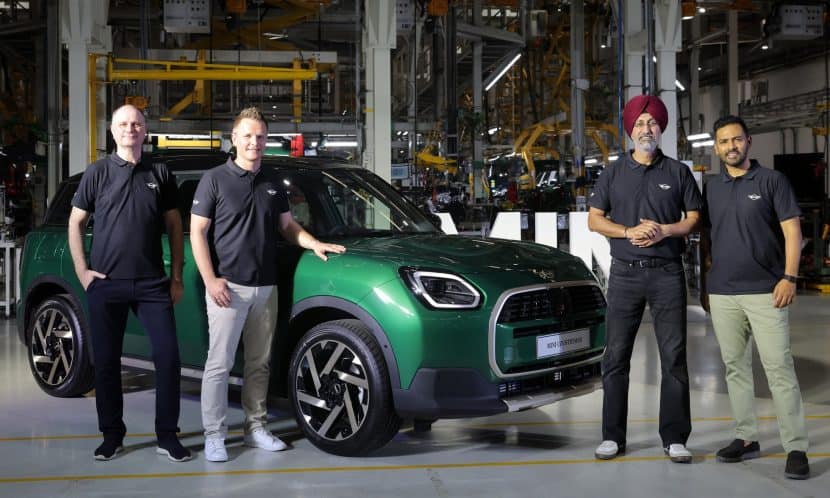


The MINI Countryman now rolls off a third assembly line. BMW Group’s Chennai plant in India has begun building the compact crossover, joining factories in Leipzig, Germany, and Rayong, Thailand, in a production expansion driven by one unavoidable reality: the Countryman is carrying the entire brand on its roof rails.
Nearly one in three MINIs sold last year was a Countryman. The model accounted for 32.4% of total volume in 2025, a year when MINI shipments climbed 17.7% to 288,290 units. When a single nameplate owns a third of your sales mix, you don’t leave capacity on the table.
Chennai isn’t new territory for the Countryman. Both previous generations were assembled there. But the third-generation model, internally coded U25, had until now been a two-factory affair. Adding a third plant signals BMW Group is chasing volume it couldn’t previously reach, particularly in a market where locally assembled vehicles dodge the punishing import duties that make fully built-up cars a tough sell.
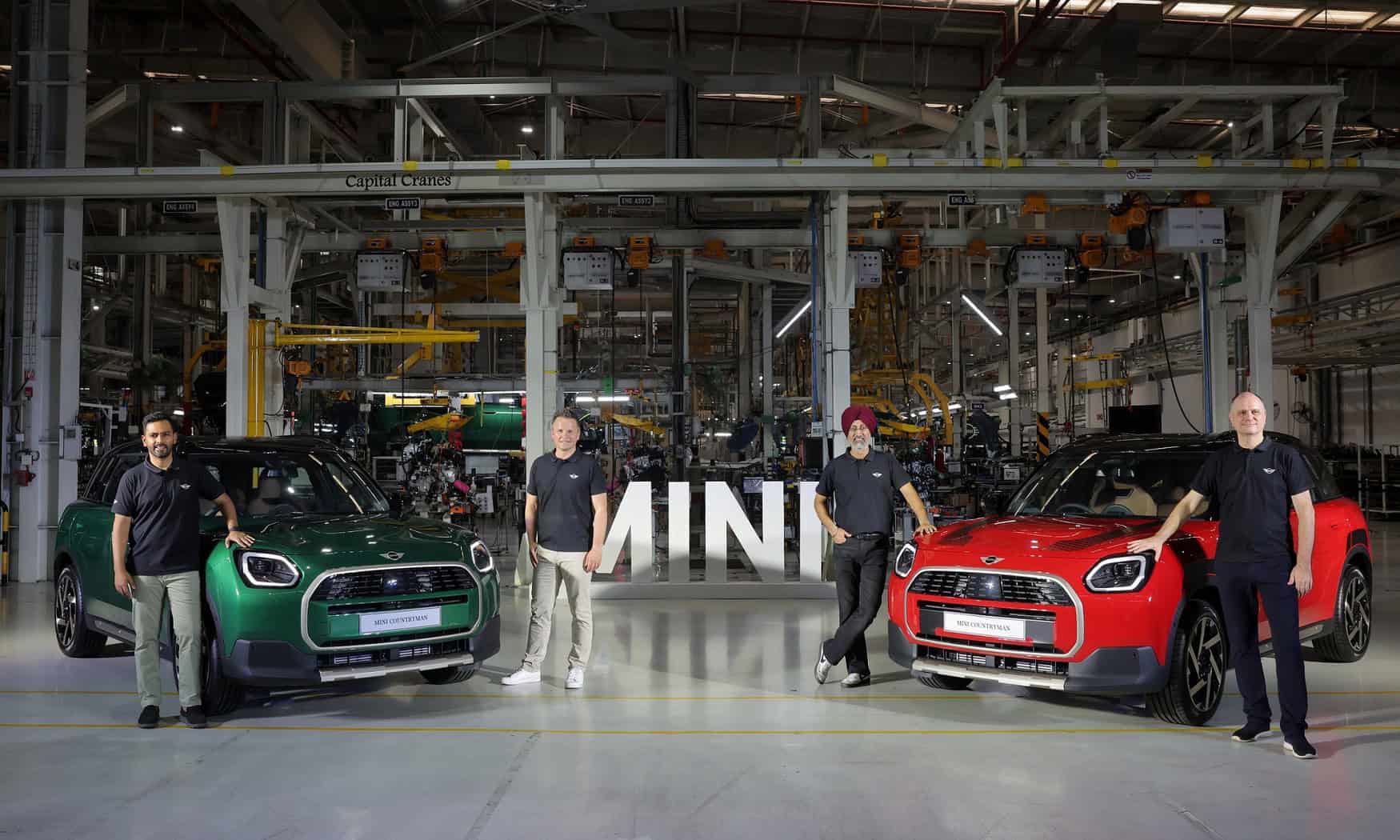
The Indian-spec Countryman C is the entry point of the lineup, fitted with BMW’s familiar B38 turbocharged 1.5-liter three-cylinder making 154 horsepower and 177 pound-feet of torque. Front-wheel drive only, seven-speed dual-clutch gearbox, zero to 62 mph in nine seconds flat. It’s not the hot rod of the range. It’s the one designed to move metal.
MINI India is offering the locally built car exclusively in Favoured trim, which sounds generous on paper: panoramic glass roof, head-up display, 360-degree camera, Harman Kardon audio, massaging driver’s seat. At roughly $50,000 equivalent, it needs to be.
That price buys a lot of car in most global markets, but India’s tax structure makes context critical. The imported electric Countryman starts at about $59,000, and the range-topping JCW ALL4 hits nearly $70,000. Local assembly shaves enough off the Countryman C to make it the volume play, which is the whole point of building it in Chennai in the first place.
The Chennai plant itself is a workhorse. It assembled 16,380 vehicles in 2025, a 12.4% jump from the prior year, spanning a roster that includes the BMW 2 Series, 3 Series, 5 Series, 7 Series, X1, iX1, X3, X5, and X7. Slotting the Countryman into that mix adds breadth to what is already one of BMW Group’s most versatile satellite operations.
MINI was once a one-car brand defined by the Cooper’s cheeky urbanism. That identity hasn’t disappeared, but it’s been eclipsed by the reality that crossovers pay the bills. The Countryman is the largest MINI ever built, a vehicle that would have been philosophically unthinkable two decades ago. Now it’s the franchise cornerstone, important enough to justify three production sites across three continents.
India’s passenger vehicle market continues to expand, and premium segments are growing faster than the mainstream. Local production is the price of admission for any serious competitor. Chennai gives MINI a foothold it can scale.
The Countryman didn’t just become MINI’s best seller by accident. It became the model the brand can’t afford to understock. Three factories say that louder than any sales chart.
Share this Story