
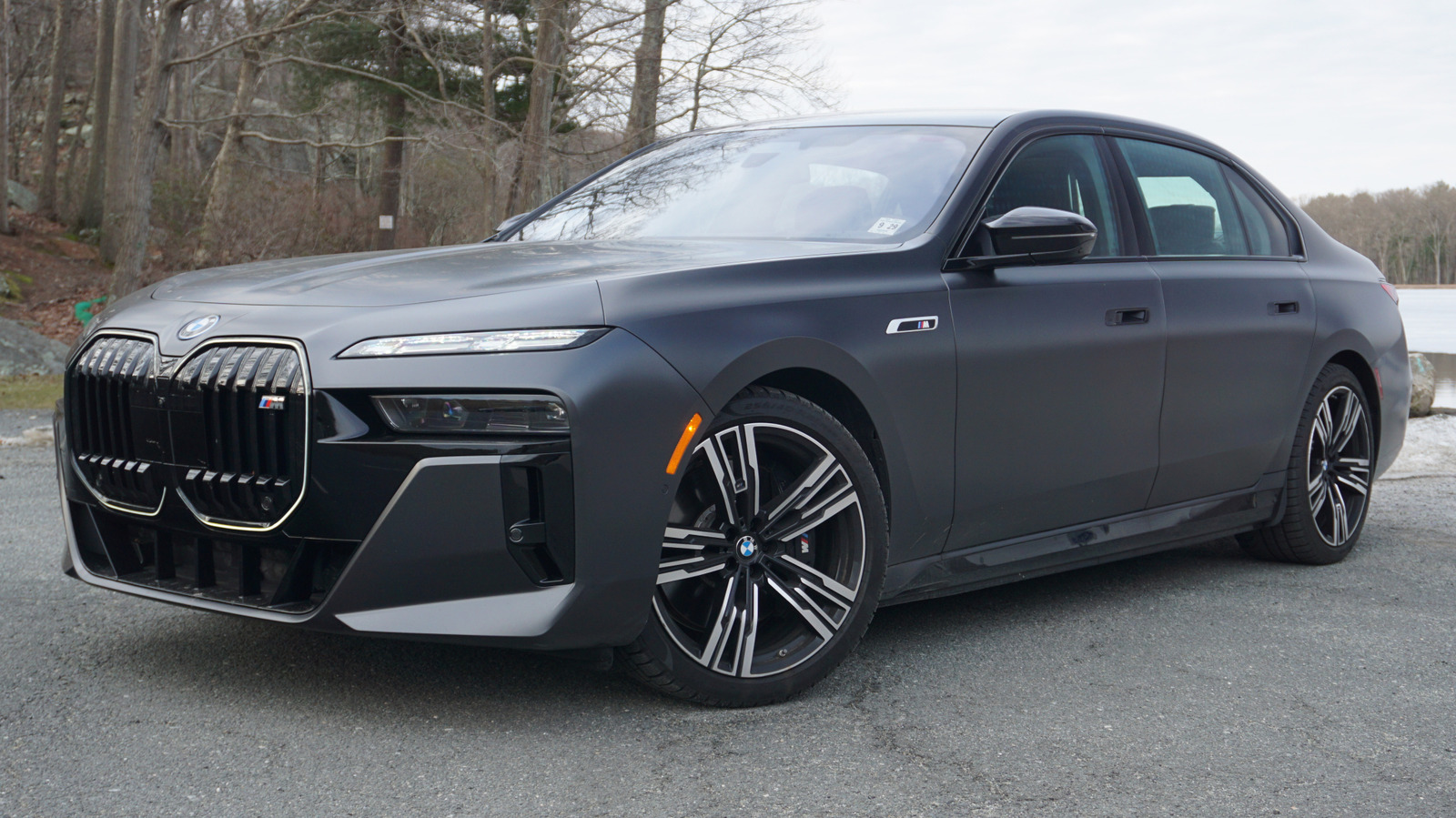


The 2026 BMW i7 M70 costs $192,075. For that money, you get 650 horsepower, 811 pound-feet of torque, a 39-speaker Bowers & Wilkins audio system, and five distinct ways to open the doors from inside the cabin. Not two. Not three. Five.
That’s four levels of redundancy for an action humans have managed with a single lever since the automobile was invented.
Start with the basics. There’s a trapezoidal electric popper button on the door card armrest. Press it, the latch releases, and you push the door open yourself like some kind of commoner.
You’ll feel resistance from an electric motor as you do, because even the simple act of shoving a door requires electronic mediation in a modern BMW.
Then there’s the fully automatic electronic opener, a tiny touch-sensitive panel mounted on the dashboard near the leftmost air vent. Tap it and the door swings wide open with zero physical effort from the occupant. The front passenger gets one too.
Rear passengers get a dedicated physical button on their door card, separate from the popper. BMW apparently decided that back-seat riders deserve their own bespoke exit choreography.
Method three involves the central infotainment screen. An arrow icon next to a rendering of the car lets you open any of the four doors individually, or all of them at once. Radar sensors monitor the surroundings and will halt the door short of a curb, pillar, or parked car.
Whether you can override that safety net remains untested. Nobody with a loaner this expensive is going to find out.
Fourth is the My BMW smartphone app. Open the app, select a door, and it swings open remotely. This is primarily designed for exterior use, but technically it works from inside the cabin too. If you’re the type of person who would pull out your phone to open the door you’re sitting next to, BMW isn’t here to judge you.
The fifth method is the one that matters most, and it’s hidden. Directly below the electric popper button sits a small plastic latch. Pull it, and the door opens mechanically, no electricity required.
It exists because BMW’s engineers understand that complex electronic systems can and do fail, and trapping a human being inside a six-figure sedan is a lawsuit waiting to happen. The plastic feels cheap. It should never need to be touched. But its presence is an honest admission about the fragility of everything above it.
This is the state of German luxury engineering in 2026. A single mechanical function — unlatching a door — has been fractured into a portfolio of electronic experiences, each more elaborate than the last. The infotainment screen option alone requires a touchscreen, software interface, radar array, and electric door actuators to accomplish what a chrome handle did in 1955.
BMW isn’t alone in this arms race. The industry has spent the last decade replacing physical controls with screens, haptic pads, and app integrations, often at the expense of intuitive operation. But the i7 pushes the philosophy to its logical extreme.
Every door opening becomes a choice, a performance, a tiny declaration of technological superiority over the vehicle you parked next to.
And yet that hidden plastic latch tells the real story. Beneath the radar sensors, the touchscreens, the smartphone connectivity, and the motorized hinges, BMW bolted in a dumb mechanical backup because it knows none of the rest of it is guaranteed to work when you need it to.
At $192,075, that works out to roughly $38,415 per door-opening method. The latch probably costs about forty cents. It might be the best-value component on the entire car.


Share this Story