
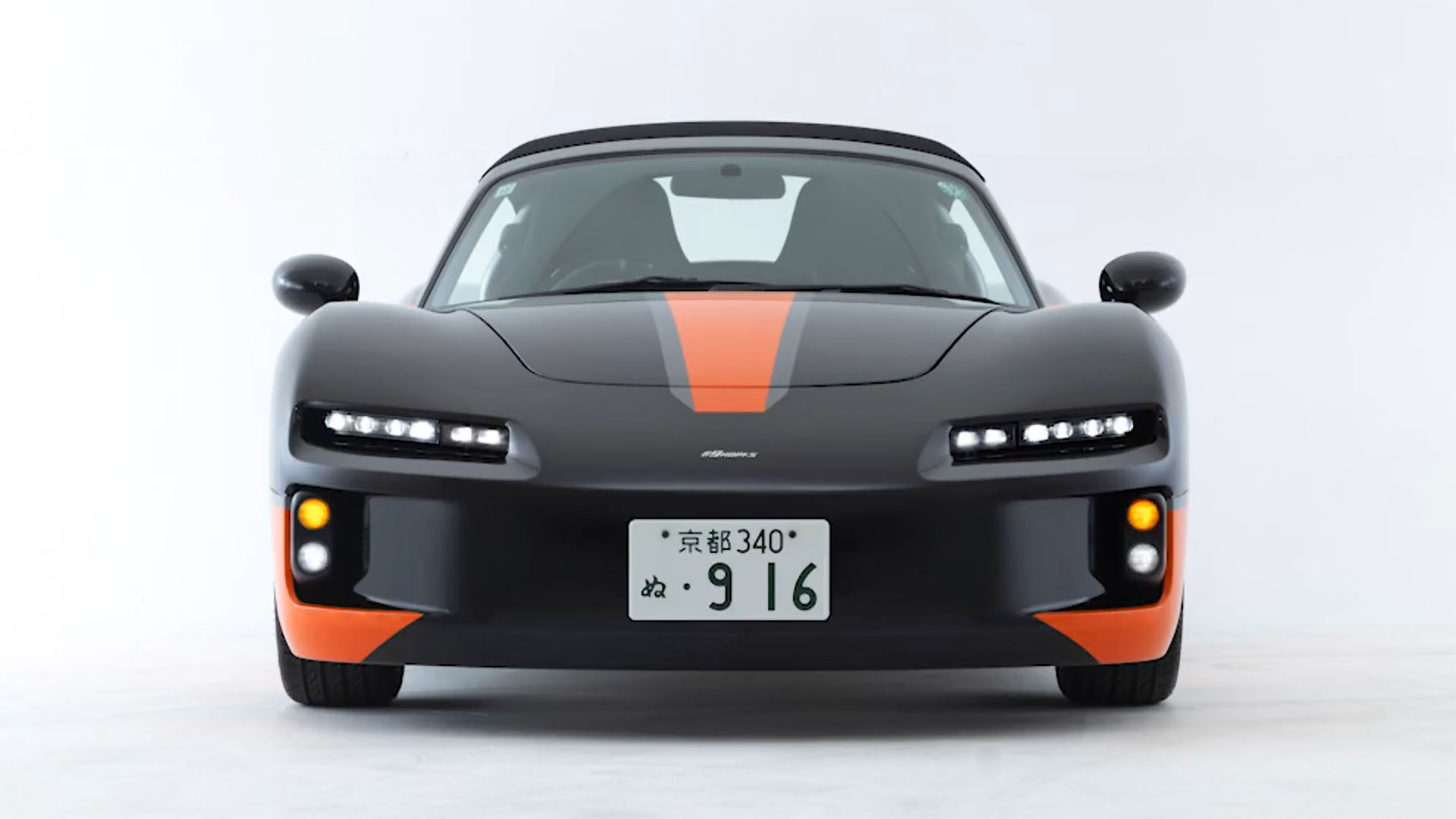


A tiny Japanese electric roadster that weighs less than a ton and makes 305 horsepower just got a facelift it probably doesn’t need and almost certainly won’t lead anywhere. That’s the strange charm of the Number Nine Works Sweep 9, a one-off redesign of the second-generation Tommykaira ZZ that exists solely to prove what a future version could look like, even though no one is building one.
The ZZ has always occupied a peculiar niche. Born in the 1990s as Japan’s answer to the Lotus Elise, the original was a stripped-out, featherweight sports car that prioritized feel over flash. When the second generation arrived with an electric powertrain, it kept the ethos but ditched the combustion engine, trading exhaust note for instant torque. Production reportedly ended in 2021.
Now two men with deep ties to the car have reunited to reimagine its face. Yuji Fujitsuka, who designed the second-gen ZZ and now runs Number Nine Works, teamed up with Ryuhei Ishimaru of the design firm Fortmarei. Their mission was narrow: modernize the front end while keeping the car compliant with Japan’s passenger vehicle safety regulations.
The old triangular-pod headlights with their big round lamps, borrowed from the visual language of 1990s race cars, are gone. In their place sit slimline LED units flanked by lower clusters containing two small lamps per side, turn signals included. The result is clean, contemporary, and just a little anonymous.
If Porsche suddenly decided to revive the 914 with modern design language, this is roughly what the front would look like. There’s a whiff of the Cayenne EV in the upper lighting signature and a hint of the Mission R concept in the lower intake treatment, all grafted onto the proportions of a sub-2,200-pound mid-engine roadster that happens to run on electrons.
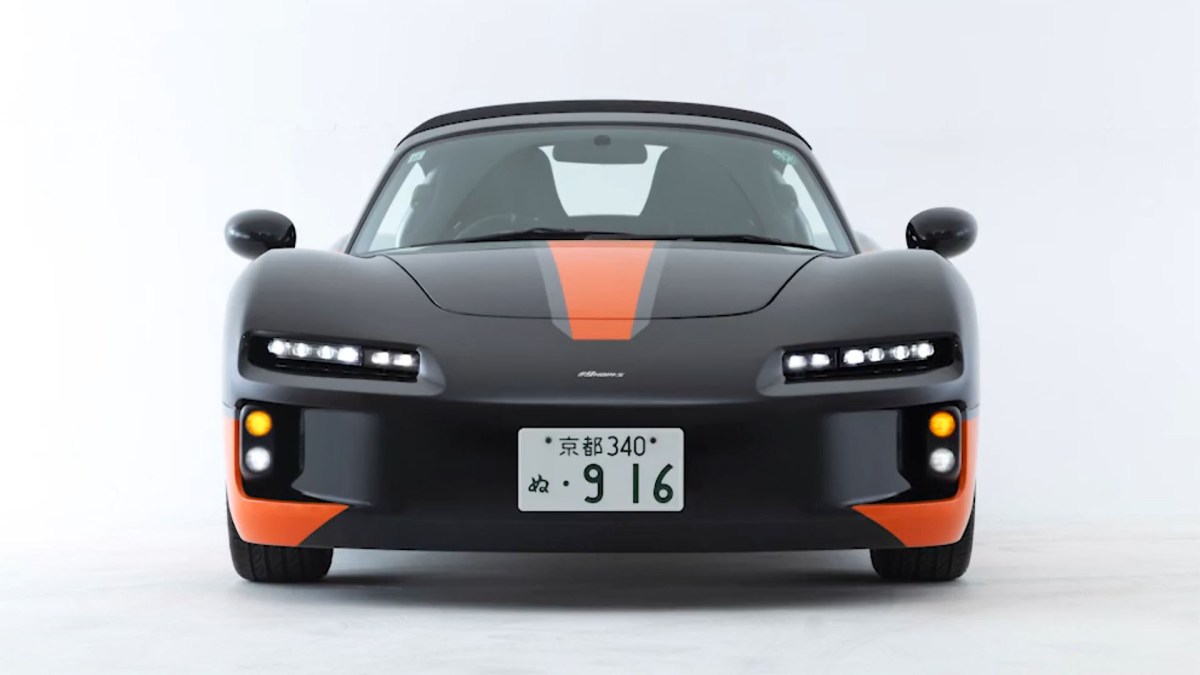
The rest of the car wasn’t touched. The electric motor still sends 305 horsepower to the rear wheels, and the curb weight still sneaks under 1,000 kilograms. That last number is the real headline. In a market drowning in 5,000-pound electric SUVs, a rear-drive EV that weighs less than a first-generation Miata with a passenger in it remains a radical proposition.
The companies involved insist the exercise was fully homologation-compliant, built using 3D data and what they call “meticulous legal simulations.” That’s a lot of engineering rigor for a car nobody plans to sell. No pictures of the rear have surfaced, which suggests the scope of the project was exactly as limited as it sounds: a nose job, nothing more.
And yet there’s something quietly defiant about the whole thing. The Tommykaira ZZ never achieved volume production. It never cracked international markets. It barely registers in enthusiast conversations outside Japan. But the people who built it keep coming back to it, keep refining it, keep insisting it has a future.
Whether that future ever materializes is another question entirely. The lightweight EV sports car segment remains almost nonexistent. Lotus is chasing luxury. Alpine is scaling up. Nobody with real capital is chasing the ultra-light, ultra-simple formula that made the original ZZ compelling.
The Sweep 9 is a love letter written in LED strips and 3D data. It proves the ZZ could be updated. It doesn’t prove anyone will pay for it. But in a world where every new EV seems to gain 500 pounds and a subscription service between generations, the stubborn existence of a sub-ton electric roadster, even as a design exercise, feels like a small act of resistance.
Share this Story