
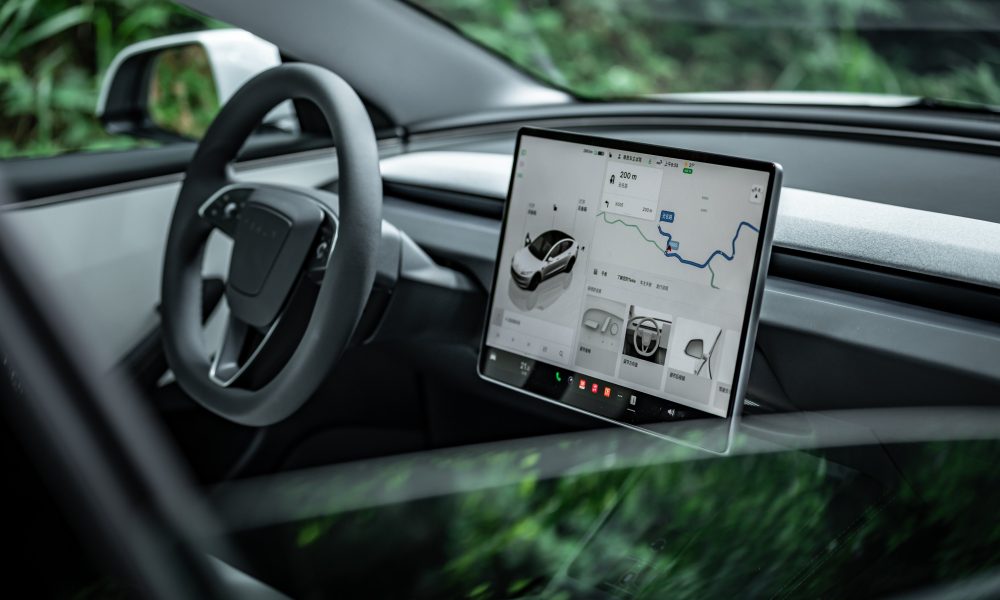


Five months after killing the $8,000 buy-it-outright option for Full Self-Driving, Tesla is sitting on 1.48 million active FSD subscriptions and roughly $1.76 billion in annualized recurring revenue. The Q2 2026 numbers landed during an earnings call where the company missed on EPS, beat on revenue, and spent considerable time explaining why its robotaxi fleet is still tiny.
The tension is hard to miss. Tesla has cracked the code on selling supervised autonomy at $99 a month but still can’t let go of the steering wheel.
FSD subscriptions jumped 56 percent year-over-year and 15.6 percent quarter-over-quarter, with 200,000 new subscribers added in Q2 alone. That’s the largest single-quarter gain in company history. More than 55 percent of new North American deliveries now include an FSD subscription at purchase, a record attach rate Tesla credits to prominent placement in its online ordering flow. That’s not organic enthusiasm. That’s merchandising.
The financial logic is brutal in its simplicity. Each subscriber generates nearly $1,200 a year in high-margin software revenue with no production cost, no warranty exposure, no supply-chain drama. The “Services and Other” revenue line, where subscriptions live, grew 50 percent year-over-year.
For a company that just posted negative free cash flow of $1.09 billion and missed EPS estimates by nearly 40 percent, that subscription stream is becoming load-bearing.
Yet the product those 1.48 million people are paying for still requires a human behind the wheel. On the earnings call, Elon Musk framed Tesla’s cautious robotaxi expansion as a safety imperative, noting that even one injury would generate worldwide headlines and trigger regulatory crackdowns. The fleet has logged 380,000 unsupervised miles without incident, according to VP of AI Ashok Elluswamy, but it remains scattered across a handful of cities with only dozens of vehicles.
Elluswamy offered a technical justification: spreading thin across multiple cities proves the software stack is general-purpose, not overfitted to one geography. That’s a defensible engineering argument. It’s also an admission that Tesla’s unsupervised autonomy isn’t ready for density.
The Semi adds another layer. Musk told investors that FSD for the truck should start working “around the end of this year or early next year,” but acknowledged it’s taking a backseat to the cars and Cybercab. Spotted Semis wearing full sensor validation rigs suggest internal testing is underway. But “working” in Musk’s vocabulary has historically meant something quite different from “shipping.”
Meanwhile, regulatory doors are cracking open in Europe. Tesla has begun activating FSD in newly approved markets, feeding international subscription growth that barely existed a year ago. The February decision to kill the one-time purchase forced every new customer worldwide into the recurring revenue funnel, and the funnel is filling fast.
The skeptics who questioned the subscription pivot in February were wrong on adoption. Tesla removed an $8,000 psychological barrier and replaced it with a $99 impulse decision bundled into the car-buying moment. That’s classic SaaS playbook execution applied to a two-ton vehicle.
But the bigger question hasn’t been answered. Tesla is collecting nearly $150 million a month from people supervising software that the company says will eventually not need supervision. The subscription model works brilliantly as long as customers believe the next update might be the one that changes everything.
Retention data, which Tesla has not disclosed in detail, will tell the real story.
For now, 1.48 million people are paying monthly rent on a promise. Tesla is banking the cash. And the robotaxi fleet that would validate the entire thesis is rolling out city by city, dozens of cars at a time, carefully enough to avoid hitting even a pet.
That’s the paradox of Tesla’s autonomy business in mid-2026: the revenue model is sprinting while the technology walks.

Share this Story