
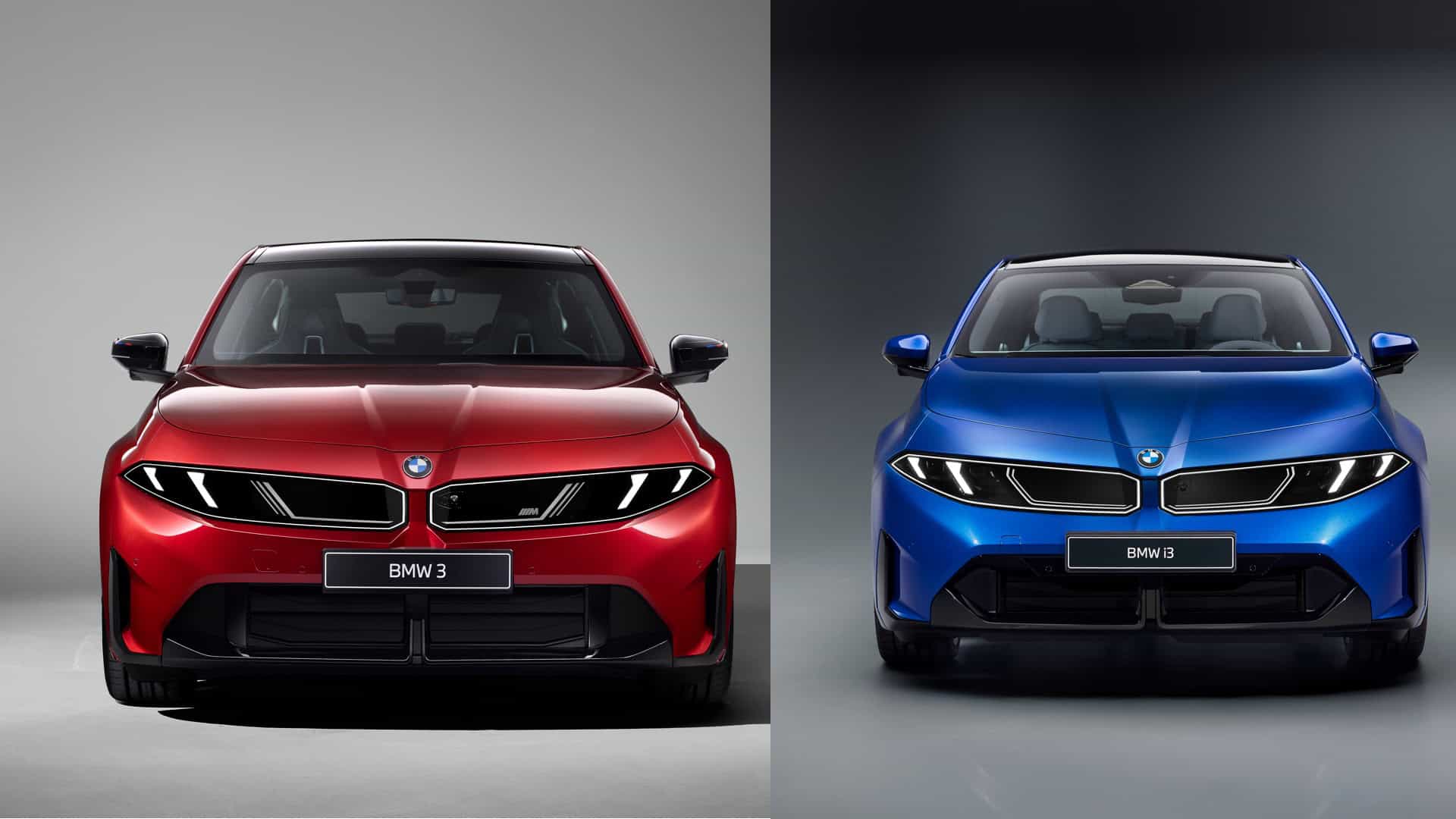


From the front, the new BMW i3 50 xDrive and the new M350 xDrive are nearly impossible to tell apart. Same slim kidney grille. Same horizontal headlights, same Neue Klasse face. It takes walking around both cars, opening the doors, and sitting inside to understand that these two sedans share almost nothing below the skin.
The i3 rides on BMW’s dedicated EV architecture. The M350 sits on an evolved version of the CLAR platform that underpinned the outgoing 3 Series. That single engineering decision cascades into every difference between the two cars.
Stand at the side and the split becomes obvious. The i3 sits taller and wider, its wheelbase stretched 17 mm longer. With no inline-six to package, it doesn’t need the long hood, so the front overhang is shorter and the proportions are stubbier.
The M350, by contrast, has the classic sedan silhouette dictated by a 3.0-liter B58 engine that demands real estate under the hood. Despite looking more compact, the i3 is only 6 mm shorter overall, at 4,759 mm versus 4,765 mm for the gas car. But proportions lie.
The shorter overhangs cost the electric car trunk space: 420 liters versus 450 in the M350. A 31-liter frunk partially compensates, though anyone who has tried to fit luggage into a space that small knows “partially” is doing heavy lifting in that sentence.
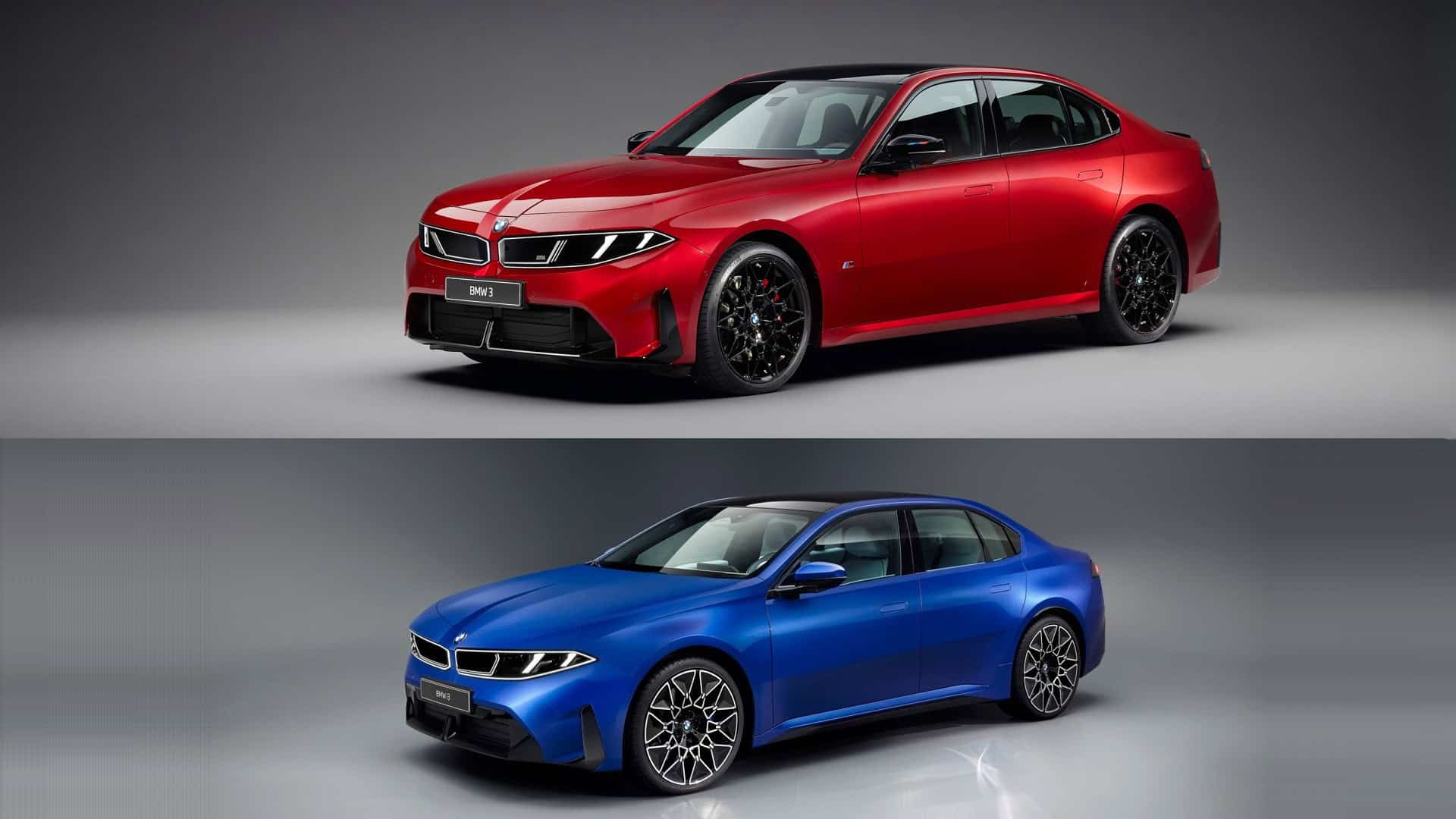
At the rear, the M350 gets quad exhaust tips for the first time on any 3 Series, a trunk spoiler, smoked Shadowline taillights, and a more aggressive diffuser. The i3’s tail is cleaner, less adorned. On the road, the quickest tell will be a charging flap on one side and a fuel door on the other.
Inside, the cabins converge more closely than the exteriors. Both get BMW’s driver-oriented center screen and the Panoramic Vision display stretched across the windshield base. The M350 adds M Sport seats with illuminated backrests, crystal glass controls, and a red 12 o’clock marker on the steering wheel.
The i3’s center console gains extra storage where a transmission tunnel would normally live. The rear seat tells two different stories. The i3’s flat floor and bench cutout make it the clear winner for carrying three passengers.
But the battery pack raises the floor, pushing knees higher and creating a less natural angle for the two outboard passengers over long distances. The M350’s lower floor gives a better seating position for two, though its transmission tunnel still punishes whoever draws the middle seat.
On paper, the power figures are close but inverted. The M350 xDrive makes 437 hp and hits 100 km/h in 4.1 seconds. The i3 50 xDrive produces 463 hp but takes 4.7 seconds to reach the same mark, with extra battery weight explaining the gap.
The M350 also gets BMW’s new rear-drive Drift Moment feature, a detail that signals where BMW thinks the enthusiast audience still leans. Pricing barely separates them. The i3 50 xDrive starts at $62,850 while the M350 xDrive asks $65,900.
Pre-orders for the i3 opened at the end of September 2026, while U.S. sales of the gas 3 Series begin in the first quarter of 2027. BMW engineered this convergence deliberately. The company wants buyers choosing by powertrain, not by styling.
It is a bet that brand loyalty to the 3 Series nameplate runs deeper than any preference for electric or combustion. Whether that bet pays off depends on something BMW cannot design: which version people actually walk into dealerships asking for.


Share this Story