
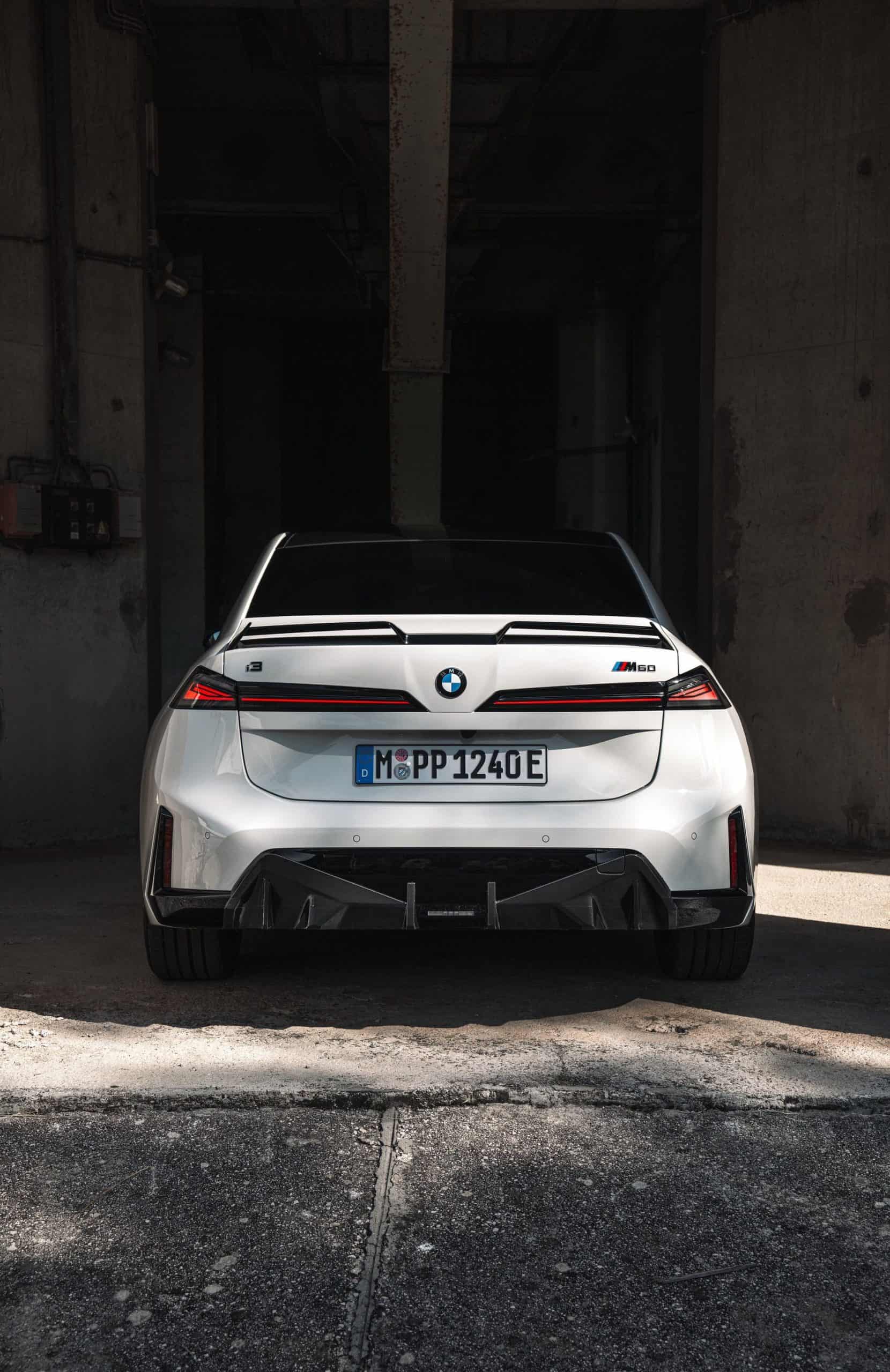


The new BMW 3 Series M Performance Parts catalog does something unusual. Instead of slapping the same carbon fiber kit on both the electric i3 M60 and the gasoline M350, BMW designed two distinct packages that lean into what each powertrain actually is.
The i3 M60’s centerpiece is a trunk spoiler that doesn’t sit flush against the decklid. It floats above it, with two large cutouts punched through the wing. It’s a motorsport-flavored piece that looks nothing like the typical stick-on lip spoiler BMW has been selling for years.
The front lip echoes those cutouts, giving the nose and tail a visual connection that most accessory kits never bother with. Carbon fiber winglets flank the front bumper corners, rocker panels run along the sides, and a rear diffuser fills out the lower bumper. That last part is a curious choice for an EV with no exhaust pipes to frame, but BMW clearly decided the i3 M60 should look aggressive rather than slippery.
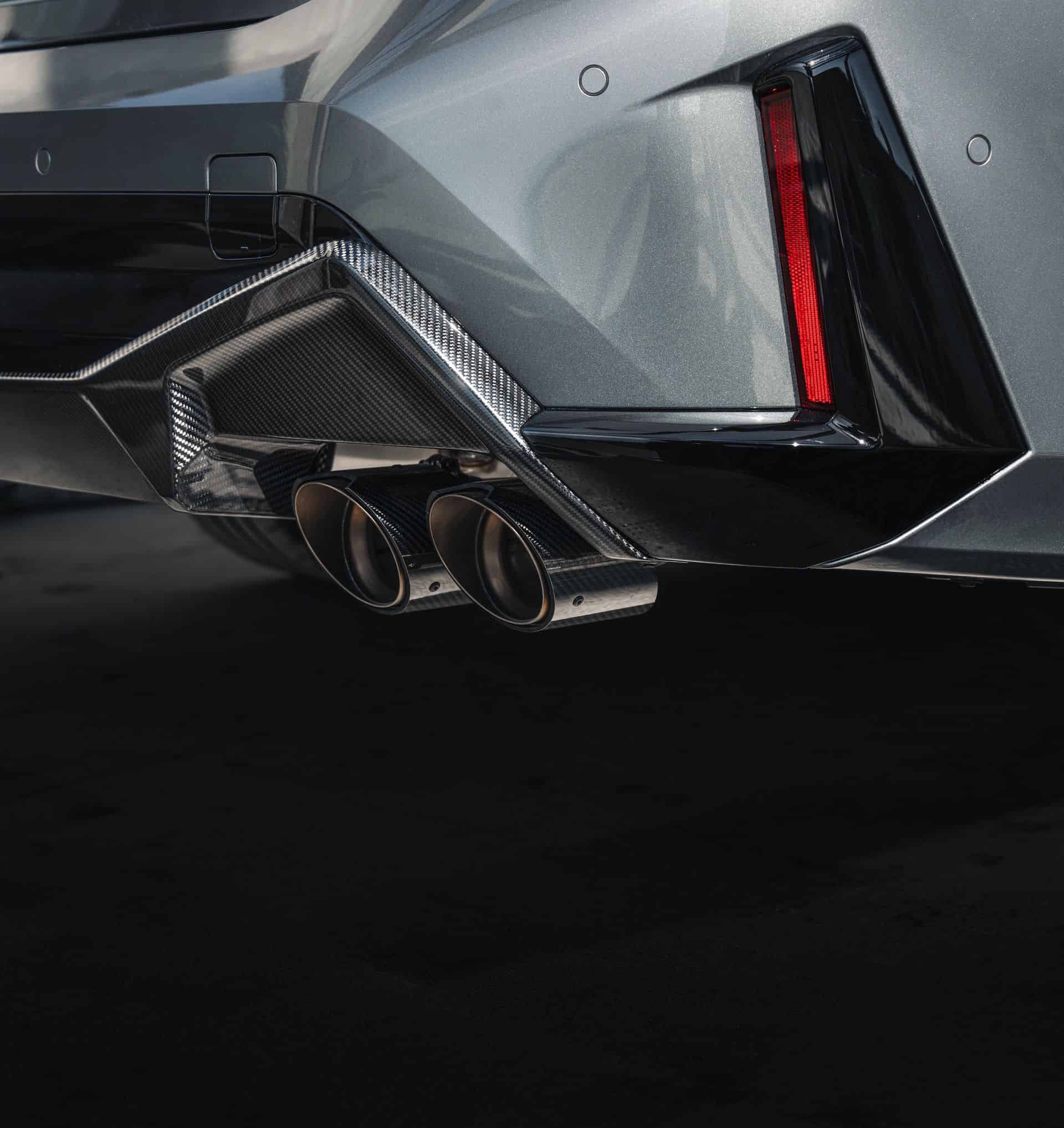
The M350 takes a more familiar path. Its carbon fiber rear spoiler has a center cutout flanked by two solid raised sections, closer to what BMW has offered in past M Performance catalogs. The front lip is piano black plastic, not carbon fiber, which tells you exactly where BMW drew the cost line between the two kits.
Where the M350 pulls ahead is at the rear. Quad carbon fiber exhaust tips sit inside a carbon fiber diffuser, the one advantage a combustion car will always hold over its electric sibling. A red tow hook strap adds a splash of color low on the bumper.
Silver M Performance wheels, carbon mirror caps with the tricolor M stripes, and carbon door sills complete the package. Both cars get winglets, side skirts, mirror caps, and door sills. But the philosophies diverge sharply from there.
BMW had an easy option here. It could have given the i3 M60 a conservative, aero-focused kit and let the M350 carry the visual muscle. Instead, it flipped the script.
The electric sedan got the wilder wing, the more aggressive cutout language, and the louder overall look. The gas car got the safer, more traditional treatment with better exhaust jewelry. That split says something about where BMW thinks its M Performance customer is headed.
The buyer who goes electric apparently wants to be seen, wants the car to announce itself visually in a way that compensates for the silence of the drivetrain. The M350 buyer already has the sound and the quad tips. They need less theater.
Pricing hasn’t been confirmed, and BMW hasn’t given firm availability dates despite publishing the full photo sets. Market rollouts, as always, will vary by region.
The bigger question is whether this two-track approach becomes BMW’s template going forward. As more of the lineup splits between combustion and electric variants sharing the same body, the M Performance division will have to keep deciding whether both versions get the same visual identity or whether each powertrain earns its own design language. With the 3 Series, they chose the latter.

Share this Story