
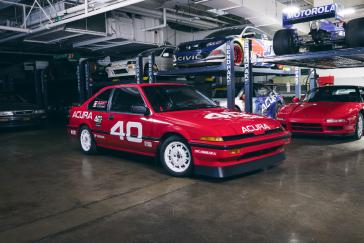


Forty years ago today, on March 27, 1986, a brand called Acura walked into a luxury market ruled by Germans and changed the game forever. Now, to mark the anniversary, Honda’s premium division is doing something far more interesting than a commemorative badge package — it rebuilt its first race car.
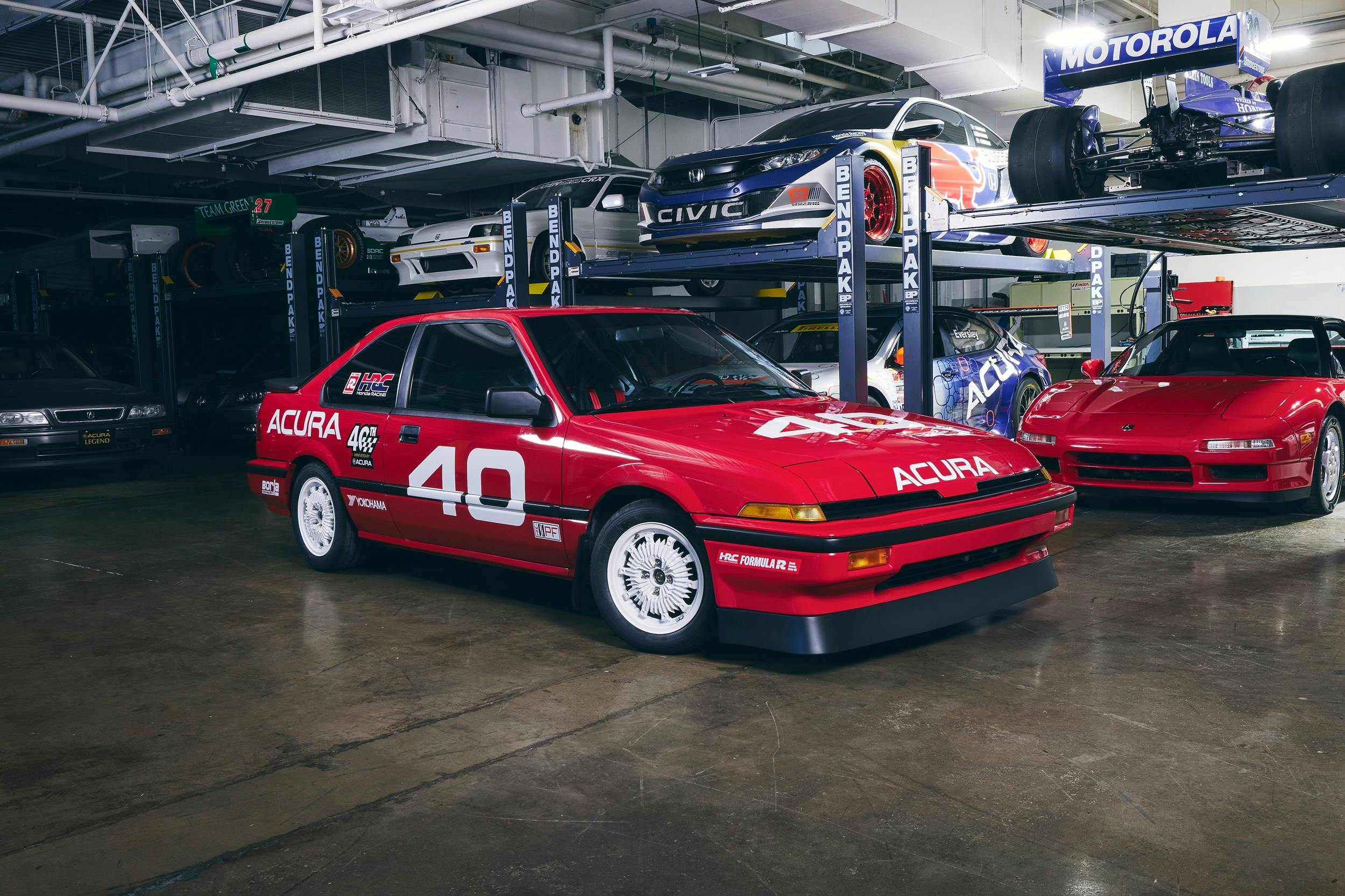
The Acura Integra 40 Racer is a first-generation Integra stripped to its essentials and rebuilt by Honda Racing Corporation US as a tribute to the Comptech No. 48 Integra that won consecutive IMSA International Sedan Series manufacturers’ and drivers’ championships from 1987 to 1990. It will debut at the 51st Acura Grand Prix of Long Beach wearing No. 40, Rio Red Metallic paint, and a very deliberate message about where the brand came from.
Under the hood sits a rebuilt D16A1, the original DOHC 1.6-liter four-cylinder, paired with a five-speed manual and a Torsen-type limited-slip differential. HRC US added stainless long-tube headers, a custom Borla exhaust, Tein coilovers, an adjustable panhard bar, and converted both the steering and brakes to manual. Inside you get OMP racing buckets, six-point harnesses, a custom roll cage, and nothing else. No stereo, no carpet, no rear seats. It rides on lightweight 14-inch Mugen wheels wrapped in Yokohama ADVAN semi-slicks.
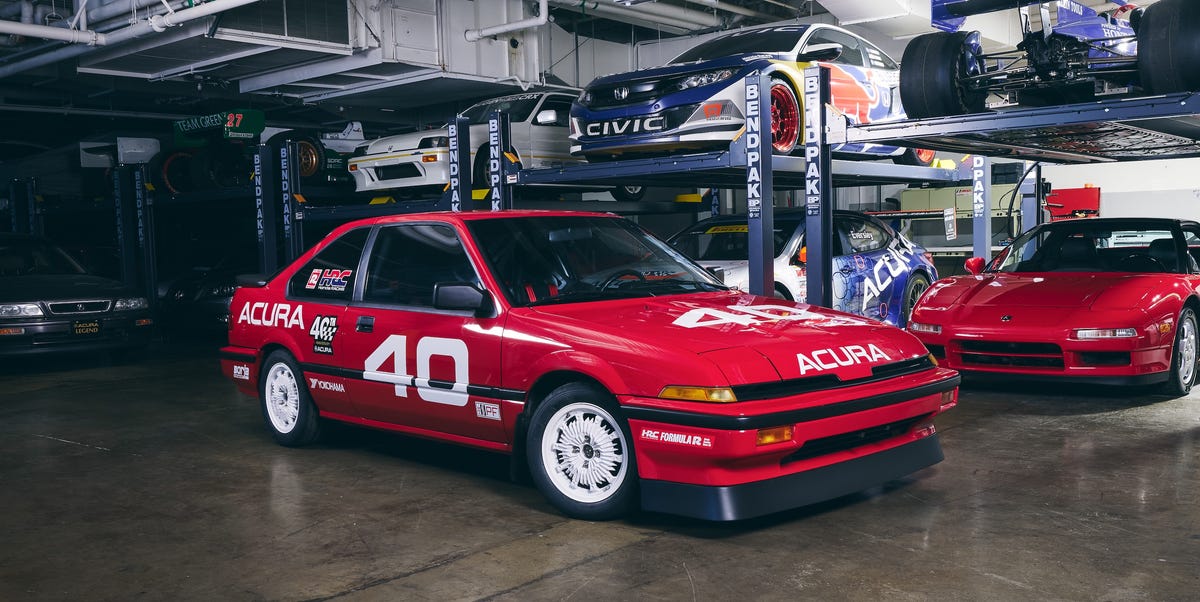
This is not a restomod vanity project. It’s a pointed reminder that Acura once built cars small enough to be thrilling and simple enough to be competitive with a 1.6-liter engine and skinny tires.
The brand’s origin story reads like a business school case study. In the early 1980s, American Honda watched its baby boomer customers defect to European luxury brands. Honda couldn’t stretch its mainstream image upscale, so it created a new channel — internally called “Channel 2” — and commissioned a San Francisco naming firm to coin something from the Latin root “acu,” meaning sharp or precise.
Acura launched with 60 dealers in 30 markets. By year’s end, it had 150. Within 12 months, it was the best-selling luxury import in America.
The Legend sedan and original Integra didn’t just compete — they detonated the existing order. Acura topped J.D. Power’s Customer Satisfaction Index every year for its first four years. By 1990, Lexus and Infiniti had followed Acura into the segment, and the Europeans were forced to recalibrate both product and pricing.
The NSX, introduced that same year with Ayrton Senna’s input and the first mass-produced aluminum monocoque, wasn’t just a supercar. It was a declaration.
That was then. Today’s Acura lineup consists of four models — the Integra sedan, the ADX, RDX, and MDX SUVs — and the brand recently confirmed a two-motor hybrid powertrain for the next-generation RDX, along with a new compact SUV in development. About 85 percent of Acuras sold in America last year were built here.
The pivot toward electrified crossovers is pragmatic and probably necessary. But there’s a tension in celebrating a 1.6-liter four-cylinder race car with manual everything while your current product plan is anchored by hybrid SUVs. Acura knows this.
That’s why the Integra 40 Racer exists — not as a production preview, but as a talisman, a physical object that says the brand still remembers what made people fall in love with it before the spreadsheets took over.
Whether that memory translates into anything customers can actually buy is another question entirely. For now, the little red Integra will sit in Long Beach, looking like the most exciting Acura in years, and nobody will be able to drive it home.
Share this Story